

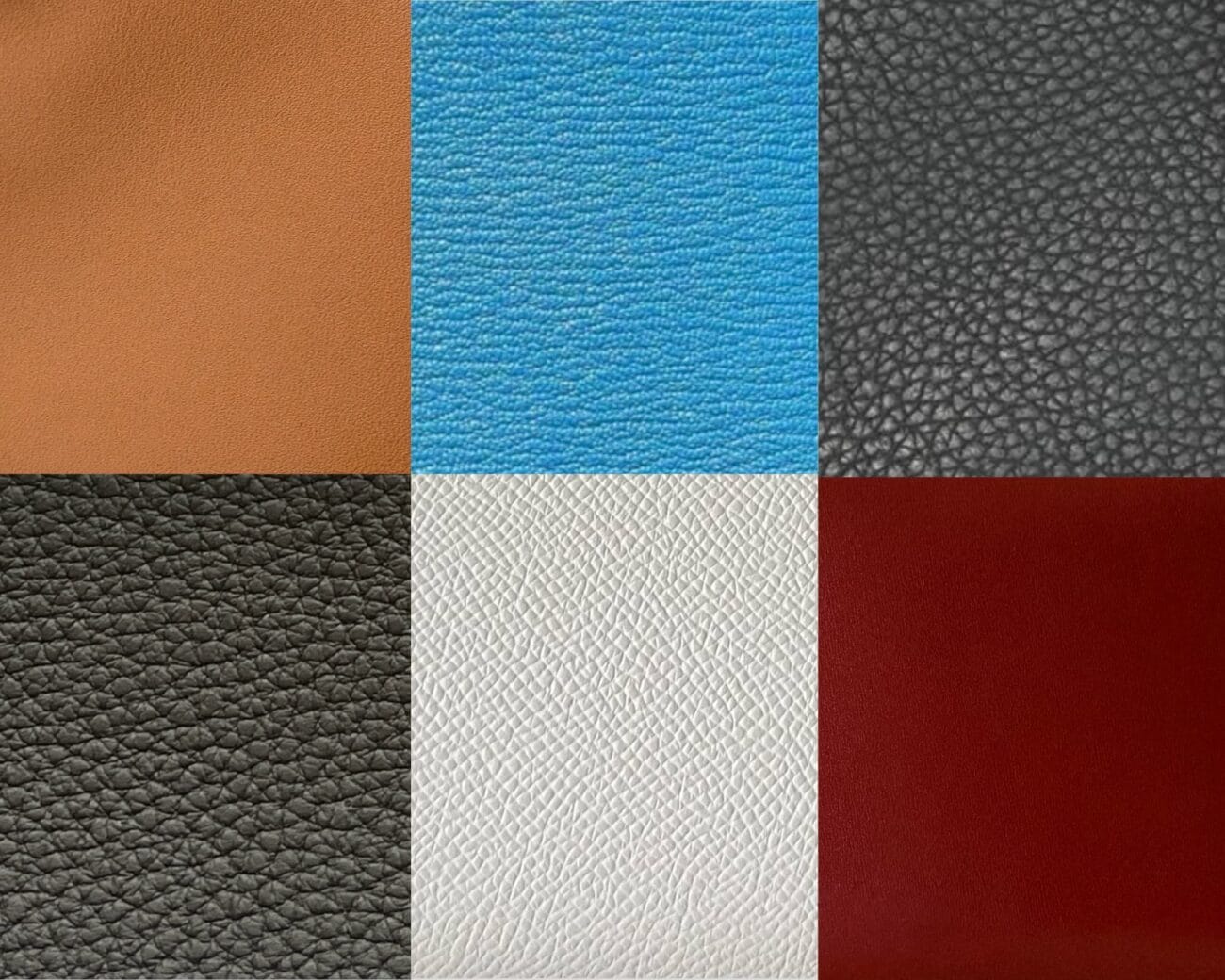
Hermès Leather Guide: Types, Durability, Comparisons & How to Choose the Right Leather
Hermès Leather Guide
This Hermès leather guide explains the most popular Hermès leather types, how they differ, which are the most durable, and how to choose the right leather for your Birkin or Kelly. But before comparing Togo, Epsom, Clémence or Swift, it’s worth understanding why Hermès bags command such extraordinary prices.
Why Are Hermès Bags So Expensive?
Most people assume they’re paying for the Hermès name.
They’re not.
The price of a Hermès bag reflects three things: exceptional craftsmanship, premium materials and time.
Every Birkin and Kelly is handcrafted by a single artisan from the first cut of leather to the final stitch. Each bag is assembled from more than forty individual leather pieces, carefully cut, shaped and saddle-stitched by hand. Rather than moving along a production line, one craftsperson is responsible for the entire bag, spending dozens of hours creating it with exceptional precision.
Every artisan also leaves an individual identification mark, allowing Hermès to trace who made the bag if it ever returns to the Maison for restoration or repair.
Craftsmanship, however, is only part of the story.
The quality of the leather is equally important. Hermès works with a remarkable variety of leathers, each offering a different balance of structure, softness, durability and ageing. The leather you choose will determine not only how your bag looks on the day you buy it, but also how it performs and develops character over the next ten or twenty years. Different leathers can completely change how the same Birkin or Kelly looks, feels and ages over time.
In this Hermés leather guide, we’ll compare the most popular Hermès leather types, explain their strengths and weaknesses, and help you choose the leather that best matches your lifestyle, preferences and long- term expectations.
The Most Popular Hermès Leather Types
While Hermès has produced dozens of different leathers over the decades, five remain the foundation of today’s collections. Togo, Clémence, Epsom, Swift and Chèvre account for the vast majority of modern Hermès bags and are the leathers most buyers compare before making a purchase. Each offers a different balance of structure, softness, durability and visual character, making the choice of leather almost as important as the choice of bag itself.
Togo
Best for: Everyday use, first-time buyers and long-term durability.
Togo is Hermès’ most recognised leather and remains the benchmark for modern collections. Its natural grain, visible veins and balanced structure make it one of the safest choices for both Birkin and Kelly bags. It is durable enough for everyday use while still feeling unmistakably luxurious. Over time, Togo develops character without losing its elegant appearance, which is why it remains one of the most popular choices on both the boutique and resale markets.
Most often seen on: Birkin 25, Birkin 30, Kelly Retourne.
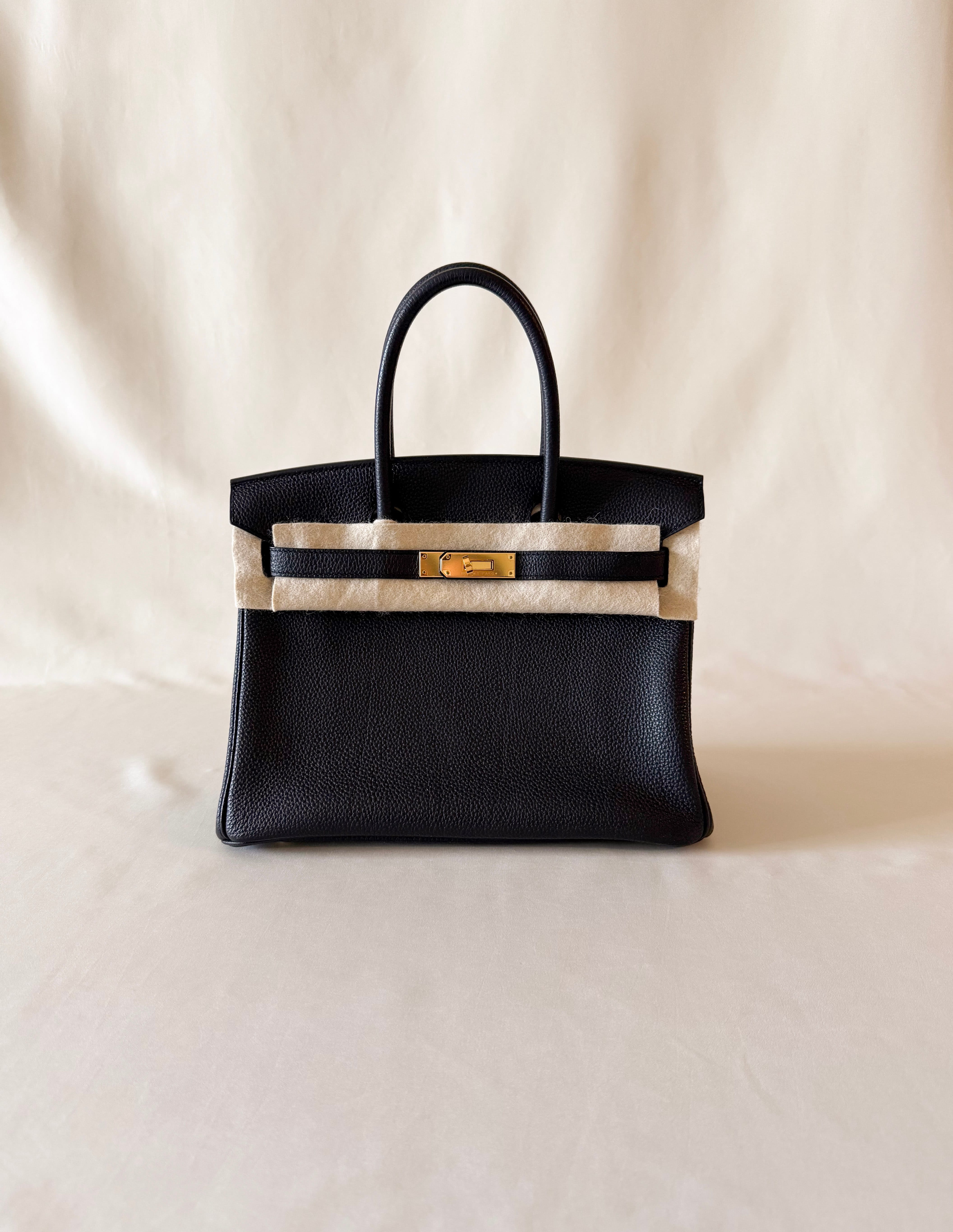
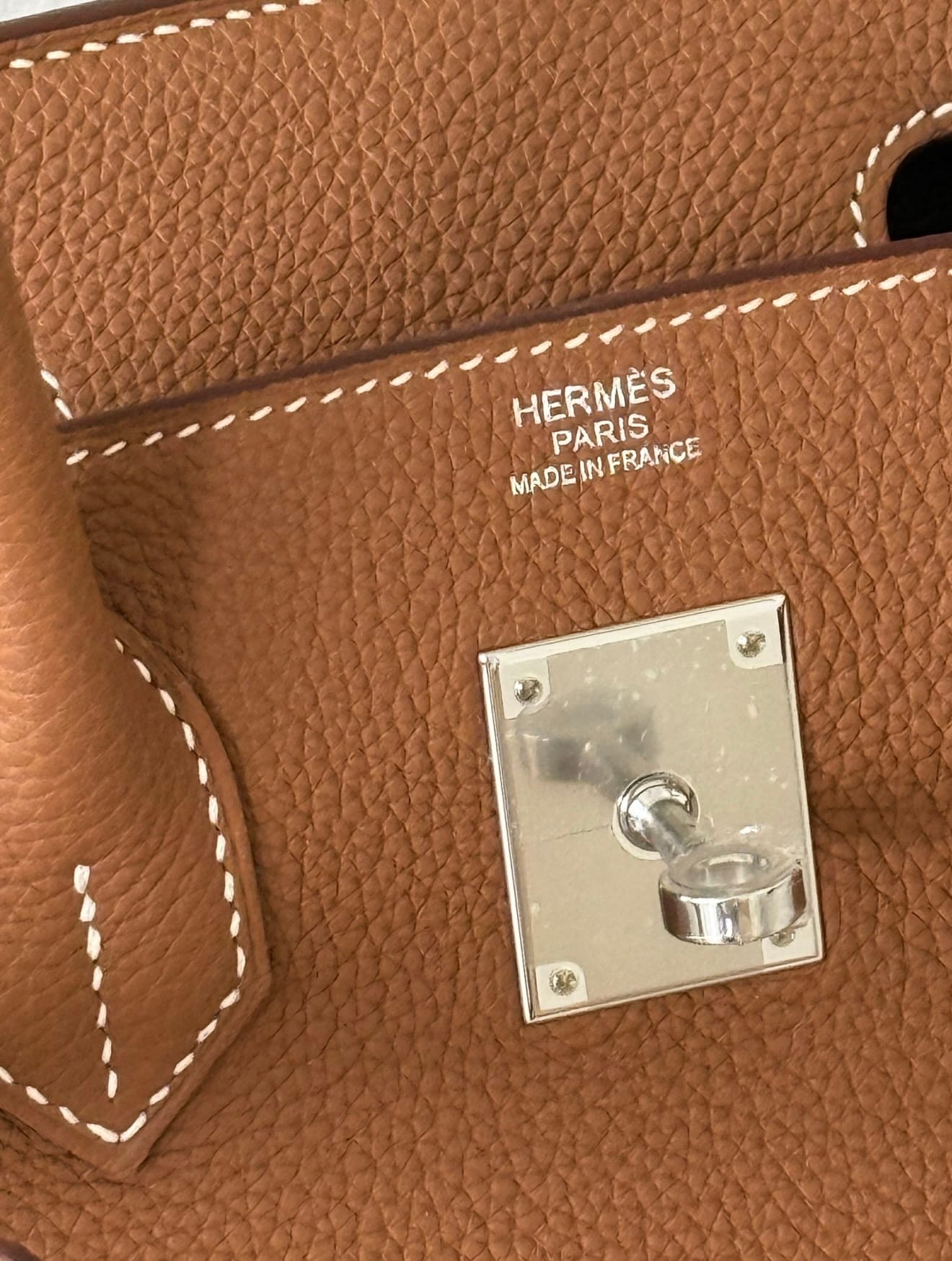
Togo leather features a slightly smaller, more irregular grain than Clémence, together with characteristic natural veins. It offers an ideal balance of structure, durability and everyday practicality while maintaining the elegant shape of a Birkin or Kelly.
Clémence
Best for: Relaxed silhouettes and collectors who prefer a softer look.
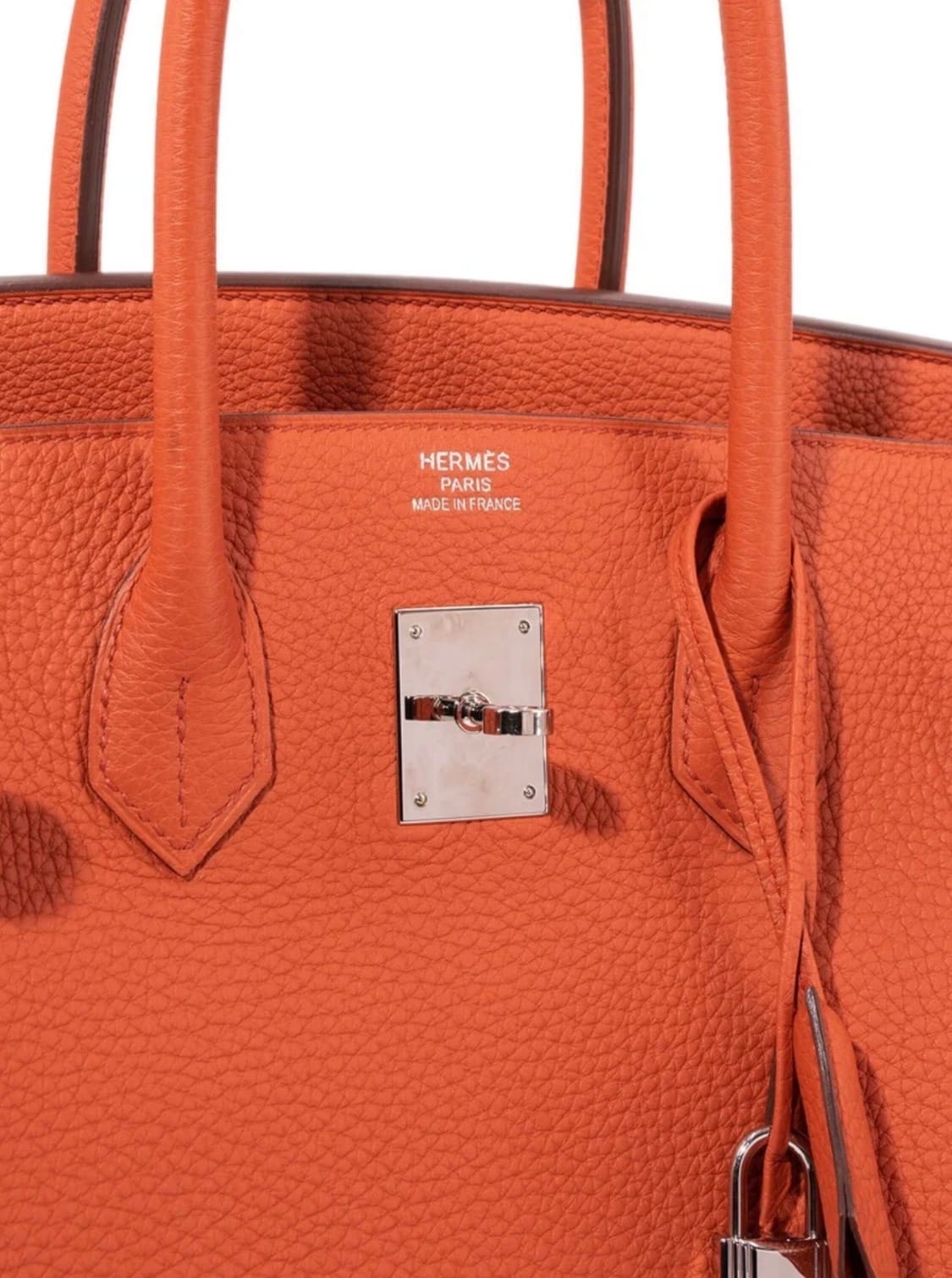
Clémence is immediately recognisable by its larger, flatter grain and softer touch. Compared with Togo, it feels heavier and gradually develops a relaxed, slouchier silhouette that many collectors appreciate. It is particularly admired on Birkin bags, where the leather’s natural drape creates an effortless, understated elegance.
Most often seen on: Birkin 30, Birkin 35 and larger casual styles.
Epsom
Best for: Structured bags, frequent travel and buyers who value shape retention.
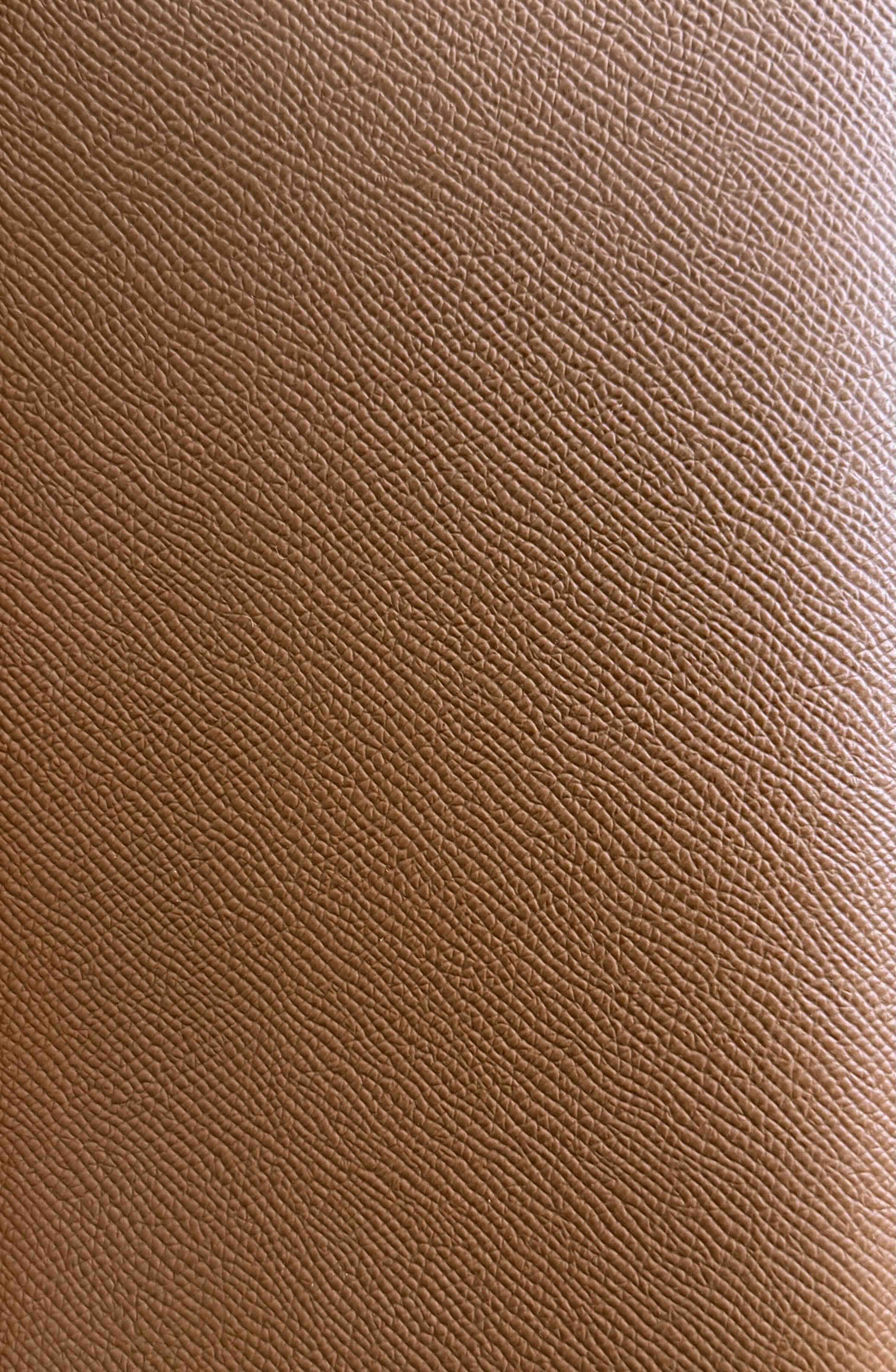
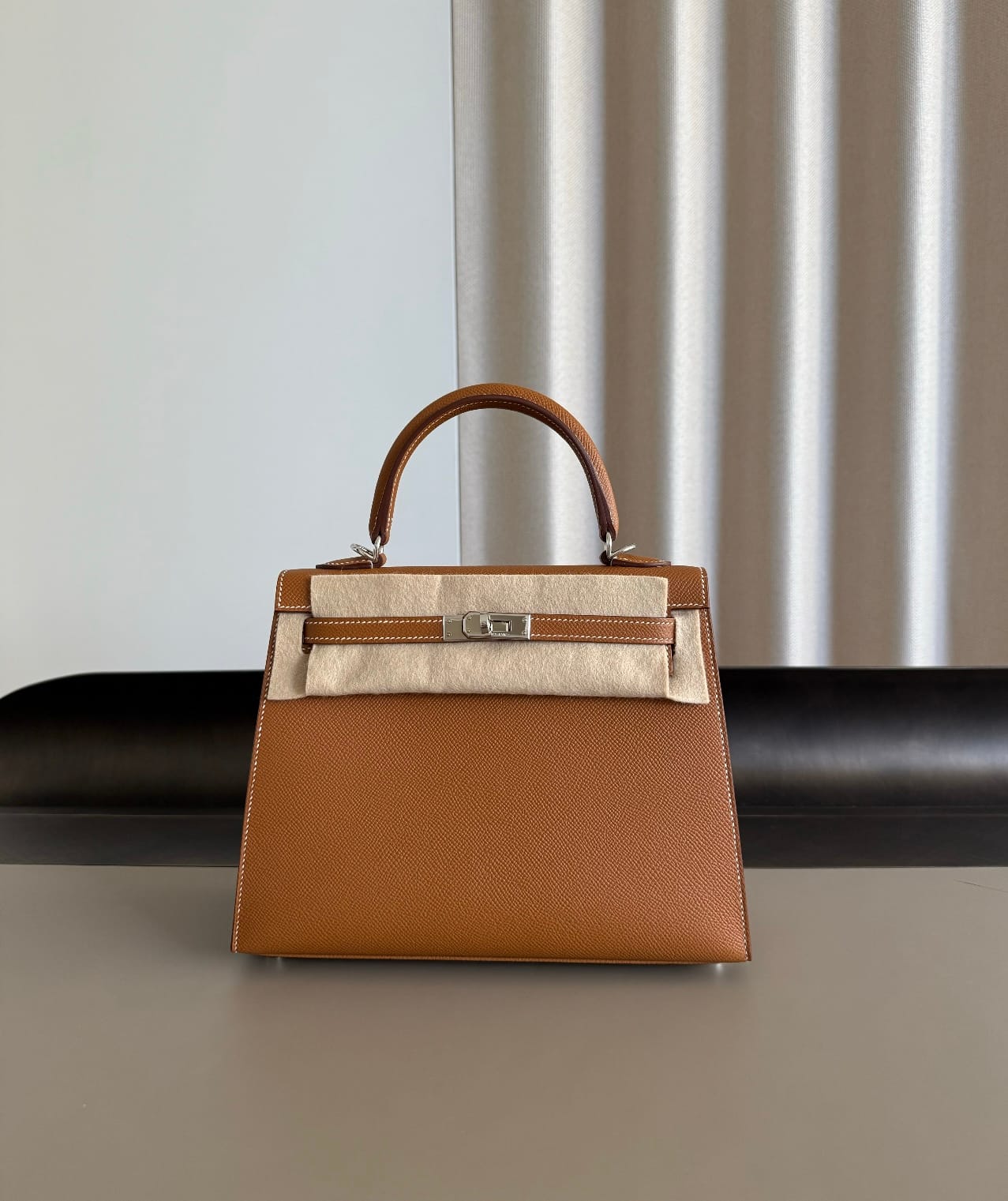
Epsom is an embossed calfskin rather than a naturally grained leather. It is lightweight, highly resistant to everyday wear and exceptionally good at maintaining crisp lines. These qualities have made it one of the preferred choices for Kelly Sellier, Mini Kelly and other structured Hermès designs. Buyers looking for a polished, architectural appearance often choose Epsom first.
Most often seen on: Kelly Sellier, Mini Kelly, Kelly Pochette and Constance.
Swift
Best for: Exceptional colours and collectors who value visual richness.
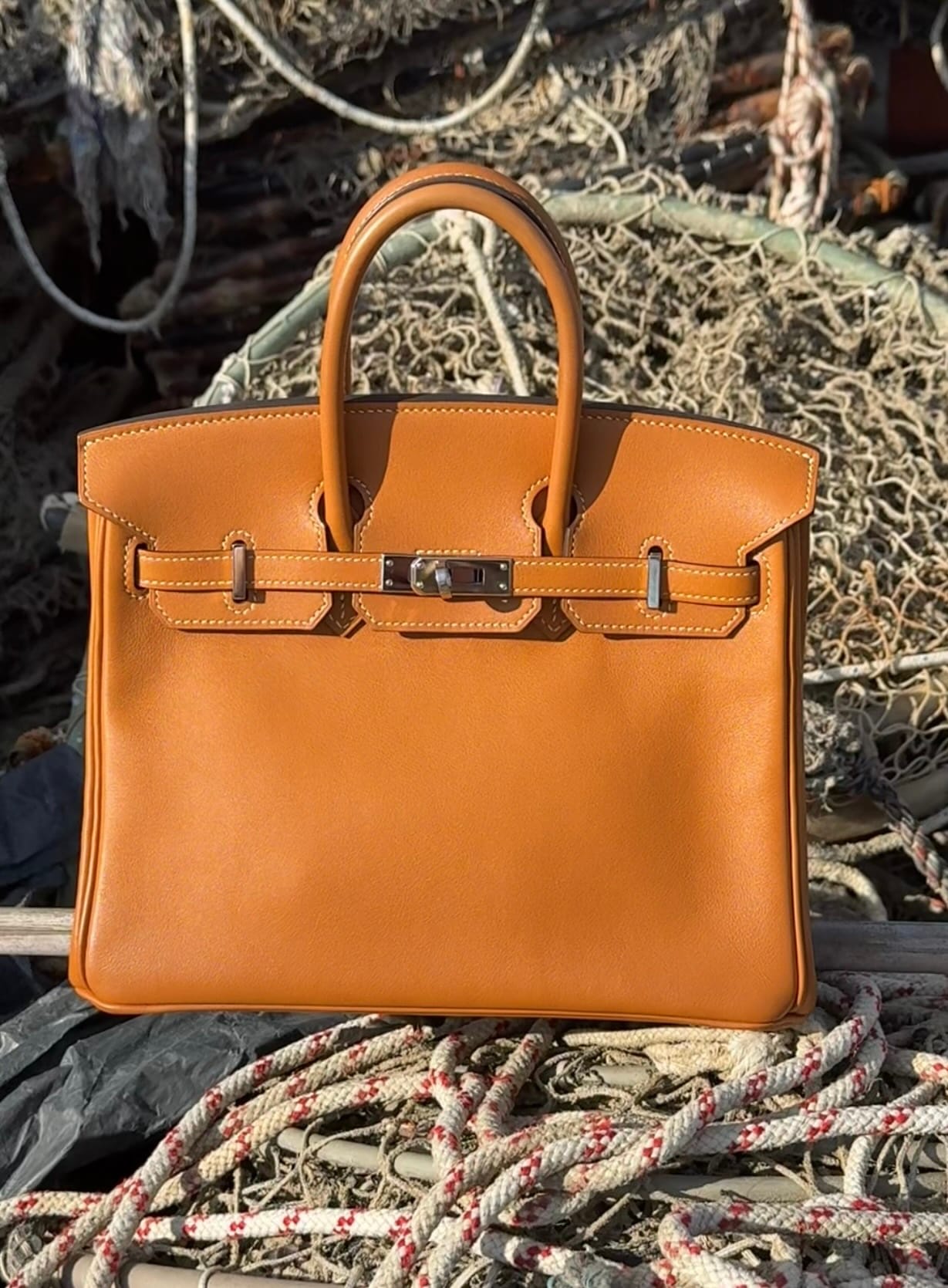
Swift offers one of the smoothest surfaces in the Hermès leather family. It reflects light beautifully, allowing colours to appear deeper, brighter and more saturated than on almost any other leather. Although softer and more susceptible to surface marks, Swift remains highly desirable for seasonal colours, limited editions and collectors who prioritise colour over maximum durability.
Most often seen on: Kelly 25, Birkin 25, Mini Kelly and limited seasonal releases.
Chèvre
Best for: Lightweight luxury and smaller Hermès bags.
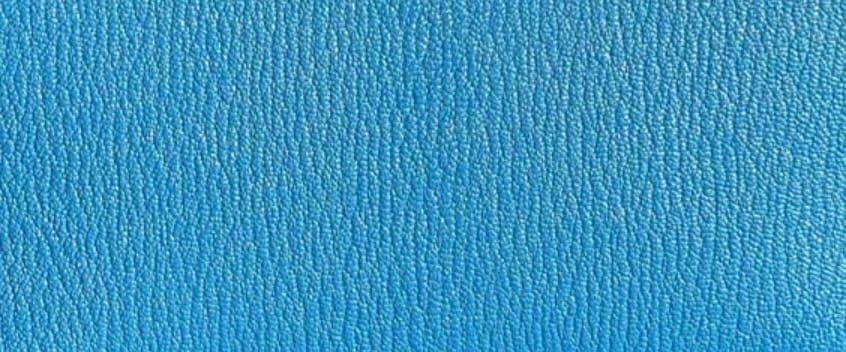
Chèvre combines remarkable strength with surprisingly low weight. Its subtle natural sheen, fine grain and ability to hold structure have made it a favourite for compact Hermès models. Many collectors appreciate Chèvre because it offers both elegance and durability while remaining lighter than many calfskins.
Most often seen on: Mini Kelly, Kelly Pochette, Constance and selected limited editions.
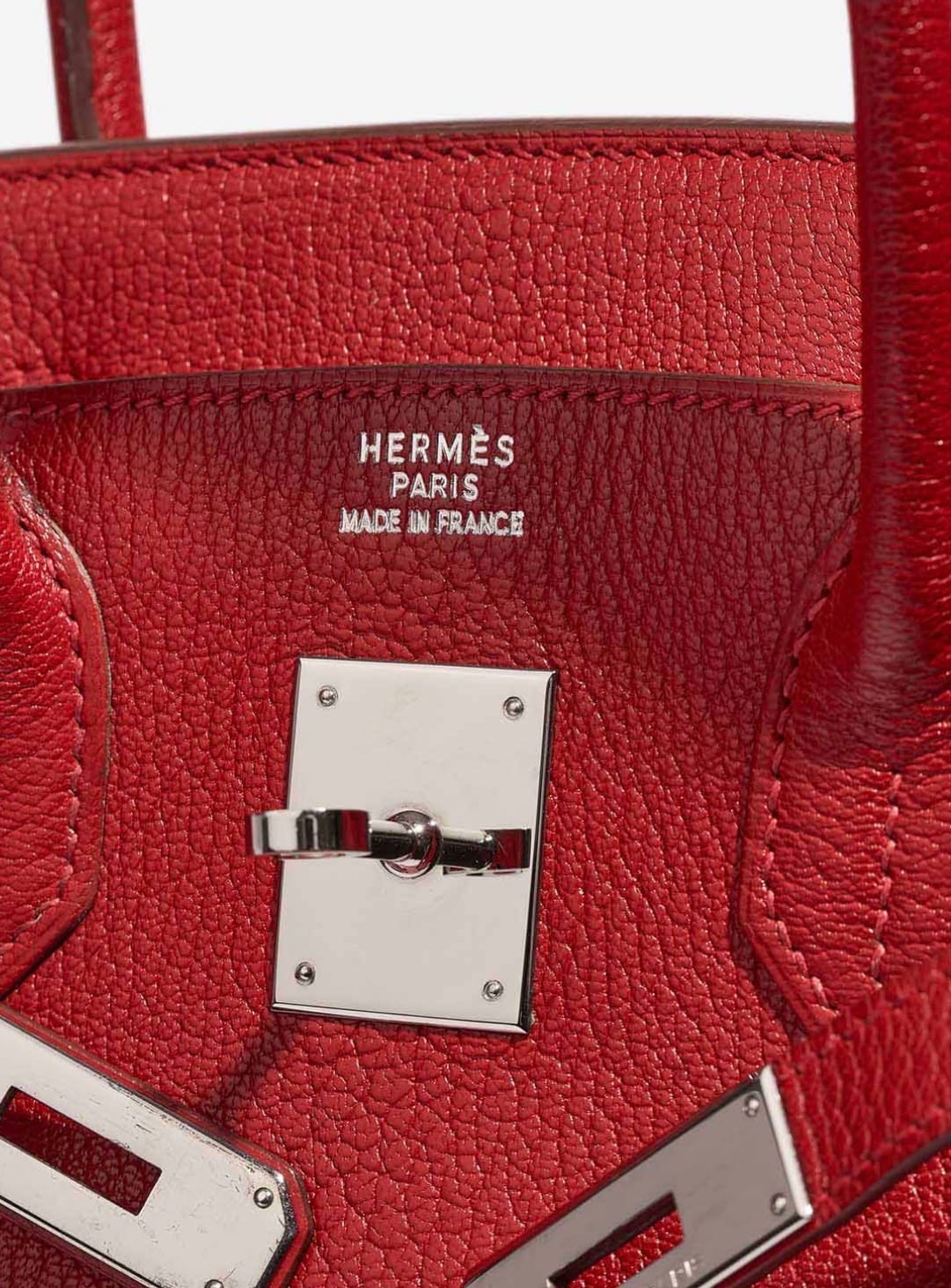
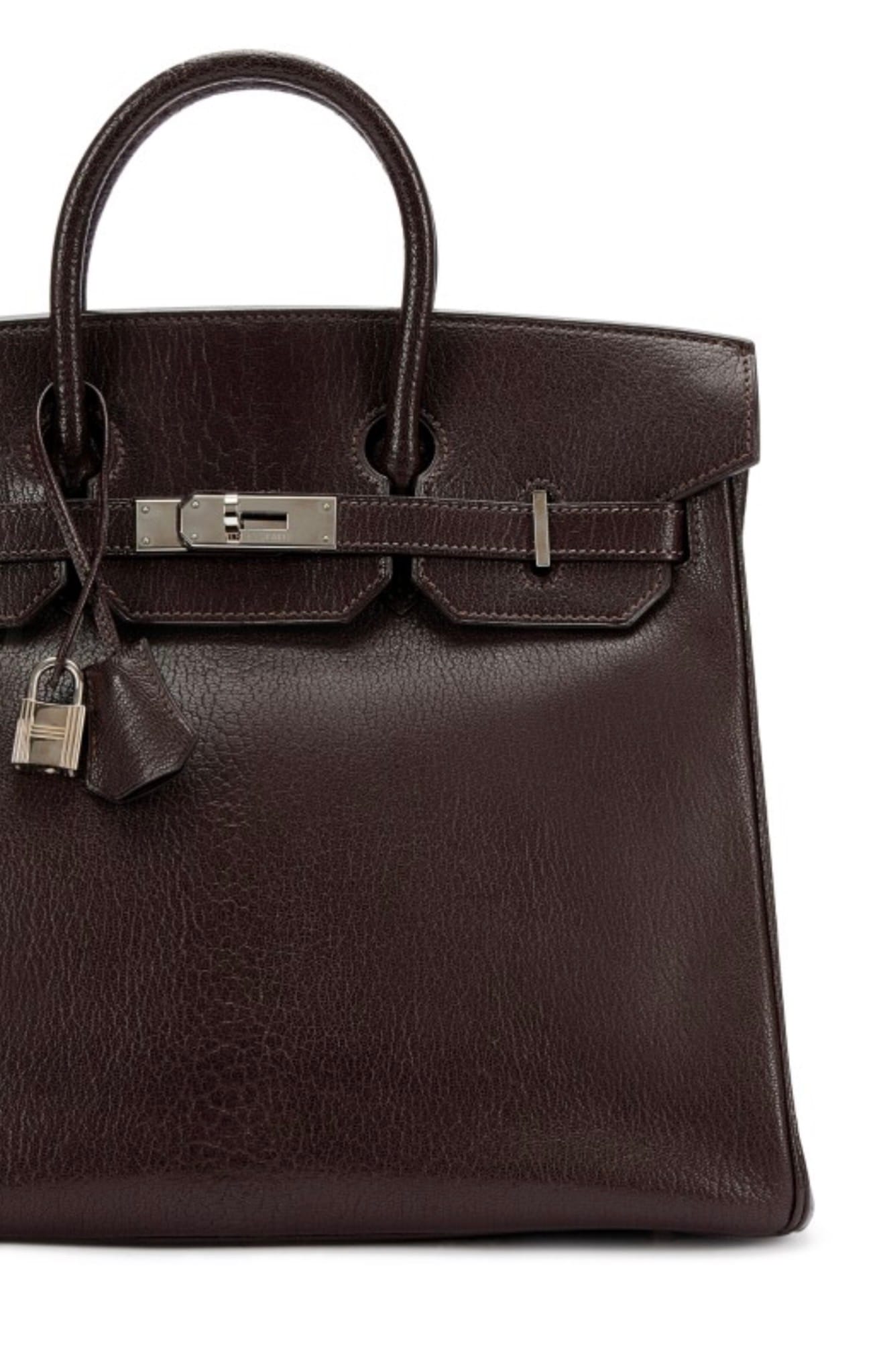
Box Calf
Best for: Collectors, vintage lovers and timeless elegance.
Box Calf is one of the oldest and most iconic Hermès leathers. It has a smooth, glossy surface with almost no visible grain, giving Birkin and Kelly bags a refined, formal appearance. Over time, Box develops a rich natural patina that many collectors consider part of its charm. While it is more prone to scratches than grained leathers, light marks often blend into the leather as it ages.
Most often seen on: Vintage Kelly, Birkin, Kelly Sellier and limited editions.
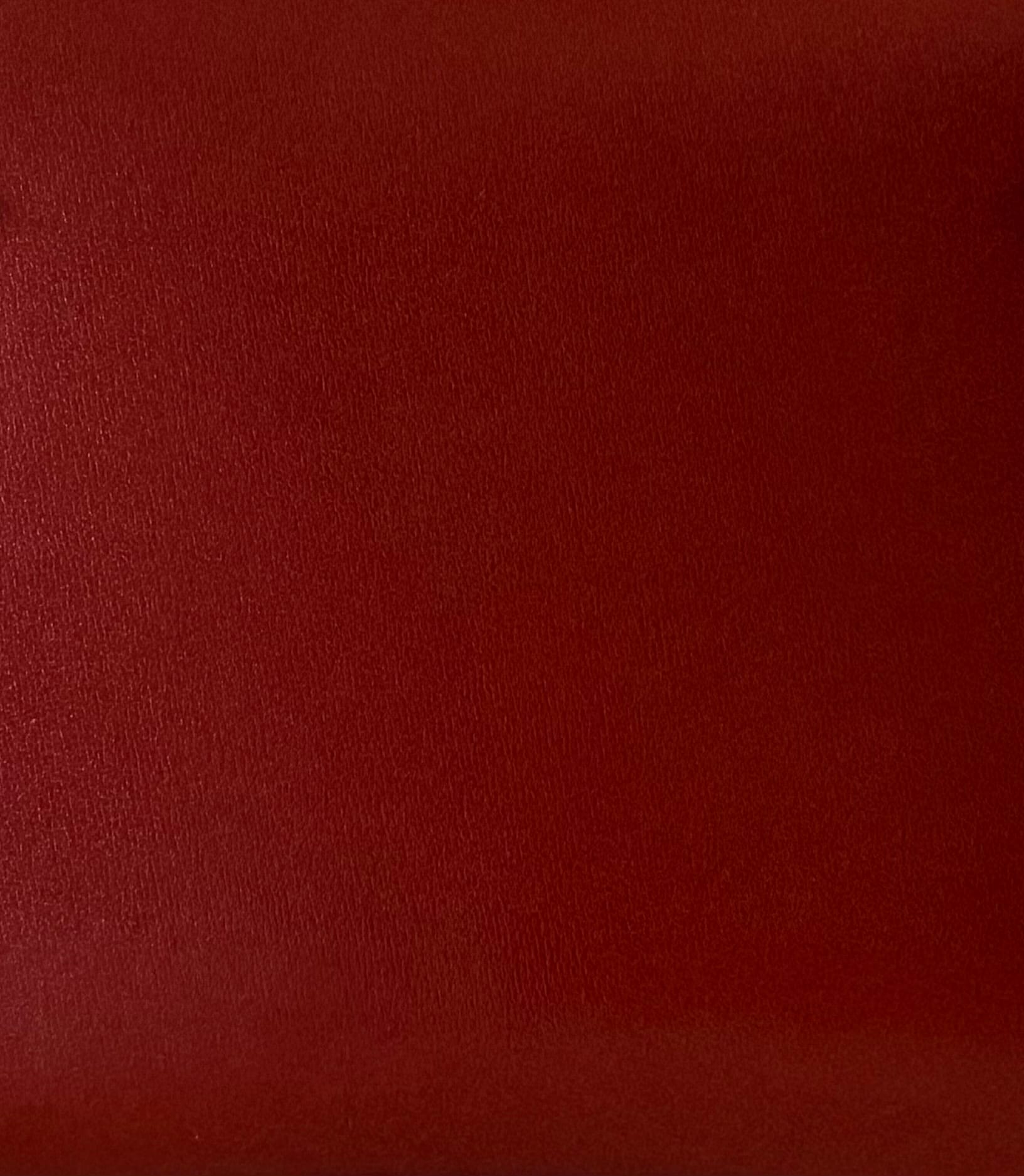
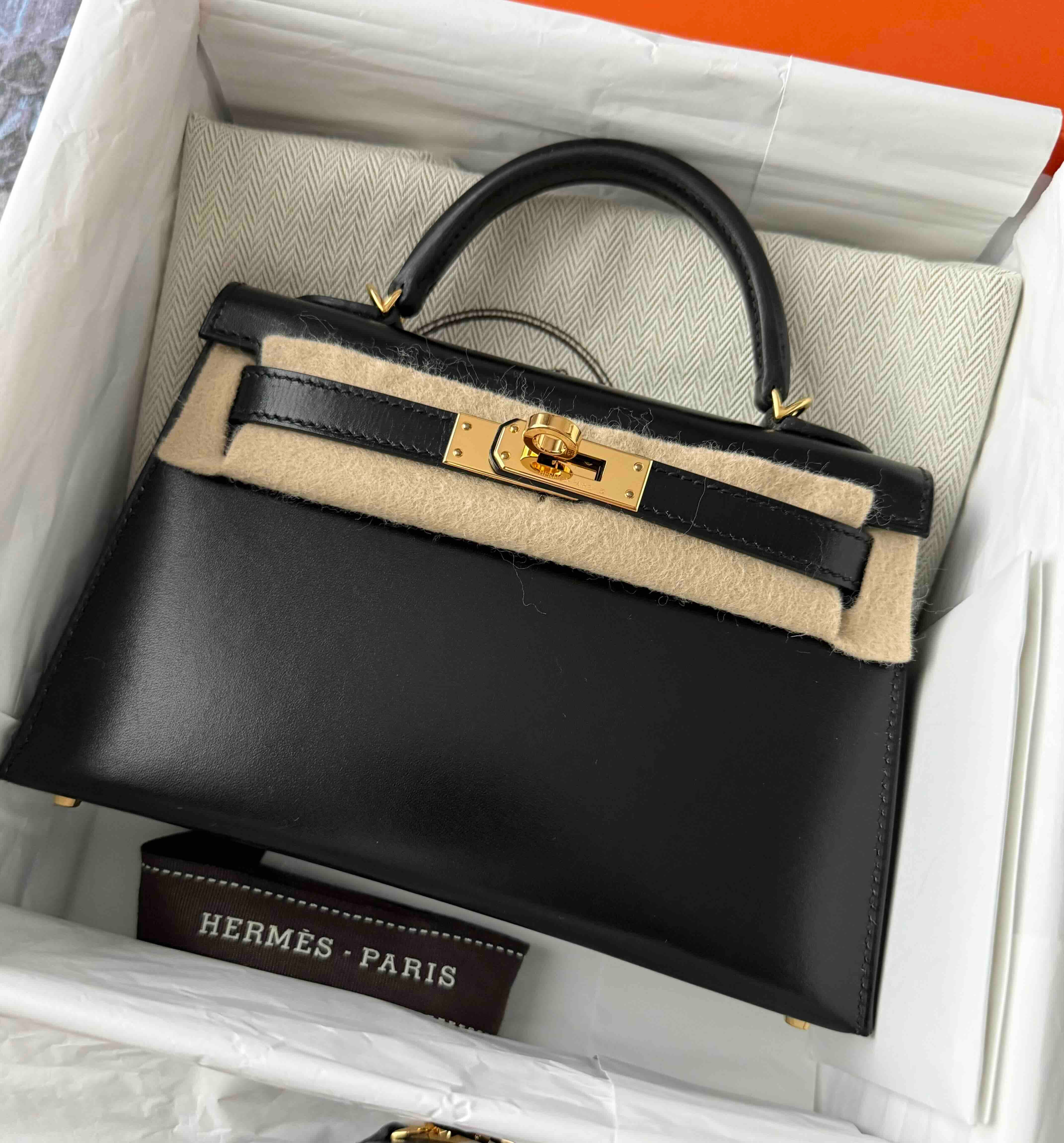
Box Calf is recognised by its smooth, glossy surface and almost invisible grain. Over time it develops a rich natural patina, making vintage Hermès bags even more distinctive and desirable among collectors.
Quick Reference
| If you value… | Choose… |
|---|---|
| Everyday durability | Togo |
| Soft relaxed feel | Clémence |
| Sharp structure | Epsom |
| Rich colours | Swift |
| Lightweight luxury | Chèvre |
| Timeless vintage elegance | Box Calf |
Other Hermès Leather Types
While Togo, Clémence, Epsom, Chèvre and Swift dominate today’s collections, Hermès continues to use several other leathers in smaller quantities. Some are reserved for specific models, while others appear only occasionally or in seasonal releases. Although less common, these leathers remain part of the Hermès craftsmanship and are appreciated by experienced collectors.
| Leather | Quick description |
|---|---|
| Barenia | Smooth natural saddle leather that develops a rich patina over time and easily shows scratches in its early years. |
| Barenia Faubourg | A modern evolution of Barenia with improved scratch resistance while preserving its elegant appearance. |
| Evercolor | Soft embossed calfskin with a fine grain, appreciated for its rich colours, supple feel and wide colour palette. |
| Evergrain | Fine embossed calfskin with a subtle texture, firmer feel and excellent resistance to everyday wear. |
| Chamonix | Smooth matte calf leather developed as a softer alternative to Box Calf. Today it is mainly found on vintage Hermès bags. |
| Madame | Fine embossed calfskin with a finer grain than Epsom, combining excellent structure with a more refined and elegant finish. |
| Sombrero | Smooth matte calfskin with a clean contemporary appearance and a refined minimalist finish. |
| Taurillon Novillo | Durable bull calf leather with a natural grain, occasionally used on larger Hermès bags. |
| Vache Naturelle | Untreated natural leather that gradually darkens and develops a unique patina with use and exposure to light. |
| Doblis | Luxurious suede leather with a soft velvety finish that requires careful handling. |
| Milo Lambskin | Exceptionally soft lambskin mainly used for Hermès charms and small leather accessories. |
Rare and Discontinued Hermès Leathers
Over the decades, Hermès has gradually retired some leather types as craftsmanship evolved and customer preferences changed. In many cases, there was no official replacement announced, but newer leathers naturally became their successors.
The table below shows the closest modern equivalents.
| Courchevel | Epsom | Similar embossed appearance with improved durability and a more modern finish. |
| Gulliver | Swift | Softer texture and deeper colour saturation appealed to modern collectors. |
| Ardennes | Togo / Clémence | Lighter weight and a more contemporary grain made these leathers more versatile. |
| Fjord | Togo | Similar natural grain with broader commercial appeal and easier production. |
| Vache Liegee | Modern calf leathers such as Togo | Production gradually shifted toward newer calfskins with greater consistency. |
Collector’s note: Discontinued Hermès leathers are often sought after by vintage collectors precisely because they are no longer widely available. Their rarity can make certain vintage bags especially desirable.
⸻
Before Choosing a Leather
Now that you know the characteristics of the most popular, less common and discontinued Hermès leathers, the next question is often even more important:
How do these leathers actually compare with one another?
In the next section, we’ll compare the most searched combinations to help you understand which leather best suits your lifestyle, aesthetic preferences and long-term goals.
| Comparison | Best if you want… | Main difference |
|---|---|---|
| Togo vs Clémence | Structure vs softness | Togo is lighter, firmer and shows visible natural veins. Clémence feels softer, heavier and develops a more relaxed silhouette over time. |
| Togo vs Epsom | Natural texture vs sharp structure | Togo has a natural grain and a softer feel. Epsom has an embossed grain, is lighter and keeps its shape exceptionally well. |
| Swift vs Epsom | Rich colours vs durability | Swift offers vibrant colour saturation and a buttery-soft touch but scratches more easily. Epsom is more resistant to daily wear and maintains crisp edges. |
| Box Calf vs Swift | Vintage elegance vs modern softness | Box Calf develops a beautiful patina and glossy finish over time. Swift remains matte, softer and showcases colours more vividly. |
| Chèvre vs Epsom | Luxury feel vs everyday practicality | Chèvre is lightweight with a subtle natural sheen and excellent colour depth. Epsom provides greater structure and is easier to maintain. |
| Madame vs Epsom | Refined elegance vs maximum durability | Madame has a finer embossed grain and a slightly softer appearance. Epsom feels firmer and generally offers better resistance to everyday wear. |
Exotic & Specialty Hermès Leathers
Beyond calfskin and goat leather, Hermès is also known for its exceptional exotic leathers and a number of highly collectible specialty finishes. These materials are produced in much smaller quantities and are often reserved for limited production or special orders.
Exotic leathers
- Crocodile Niloticus
- Crocodile Porosus
- Alligator Mississippiensis
- Ostrich
- Lizard
- Salvator Lizard
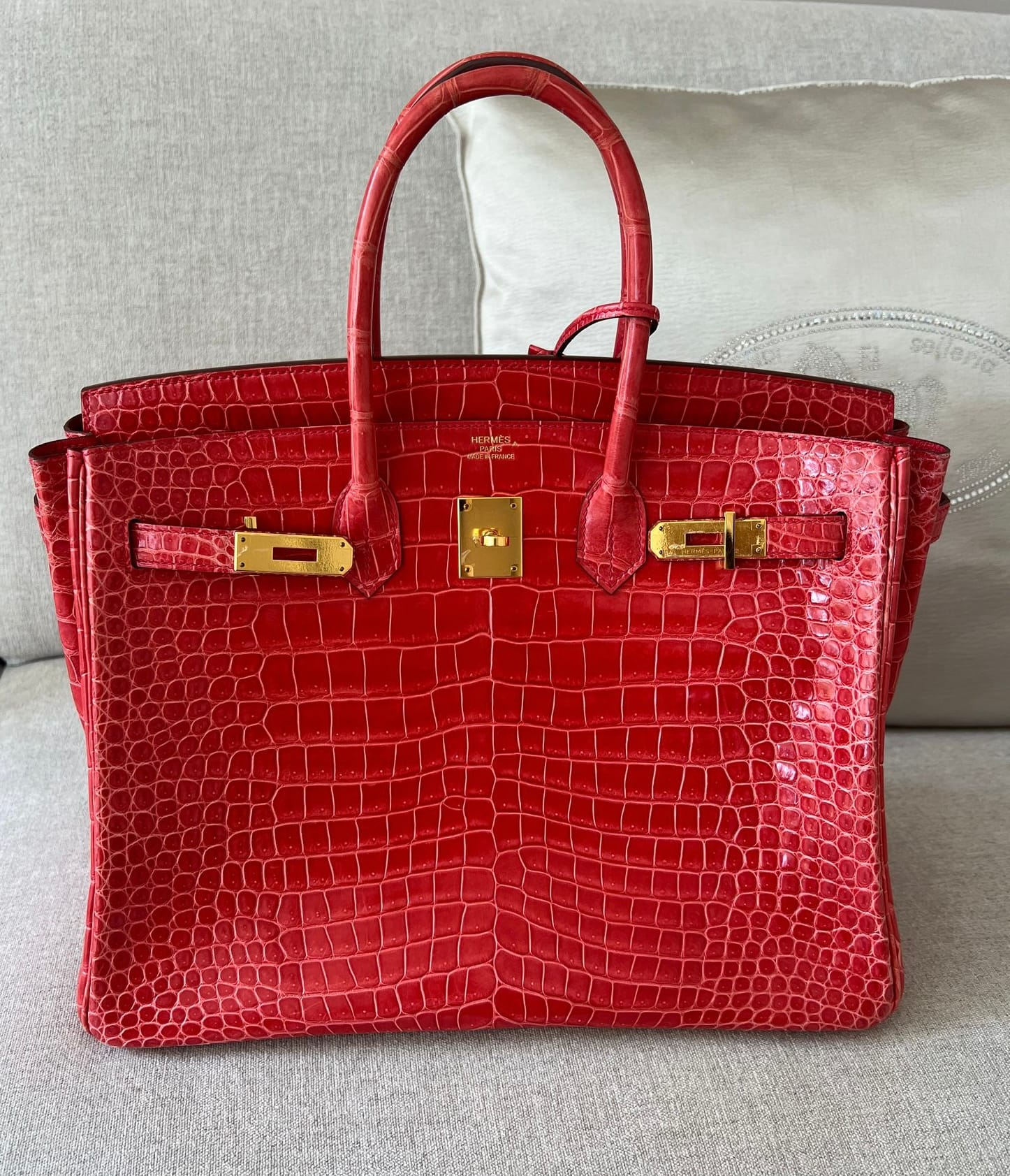
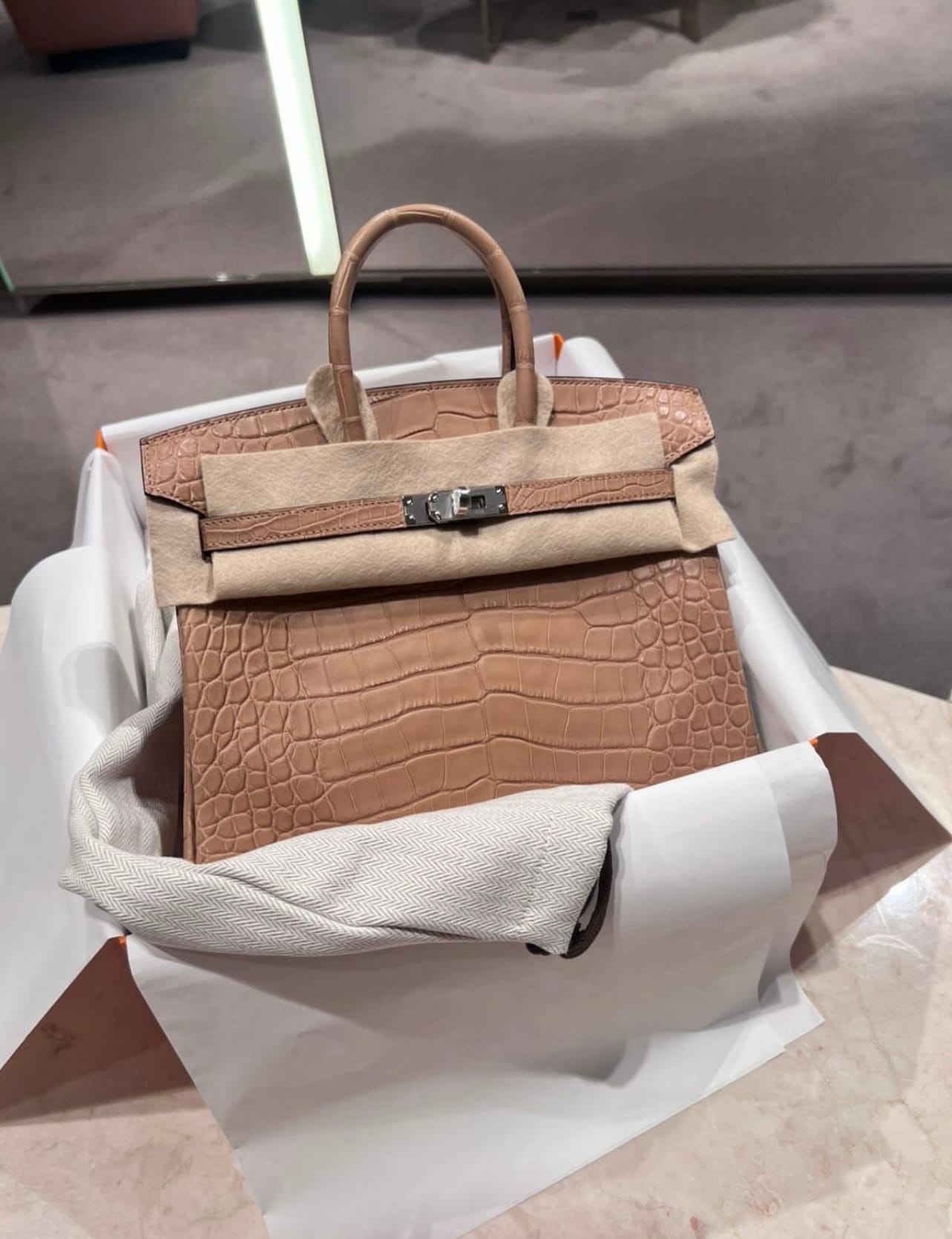
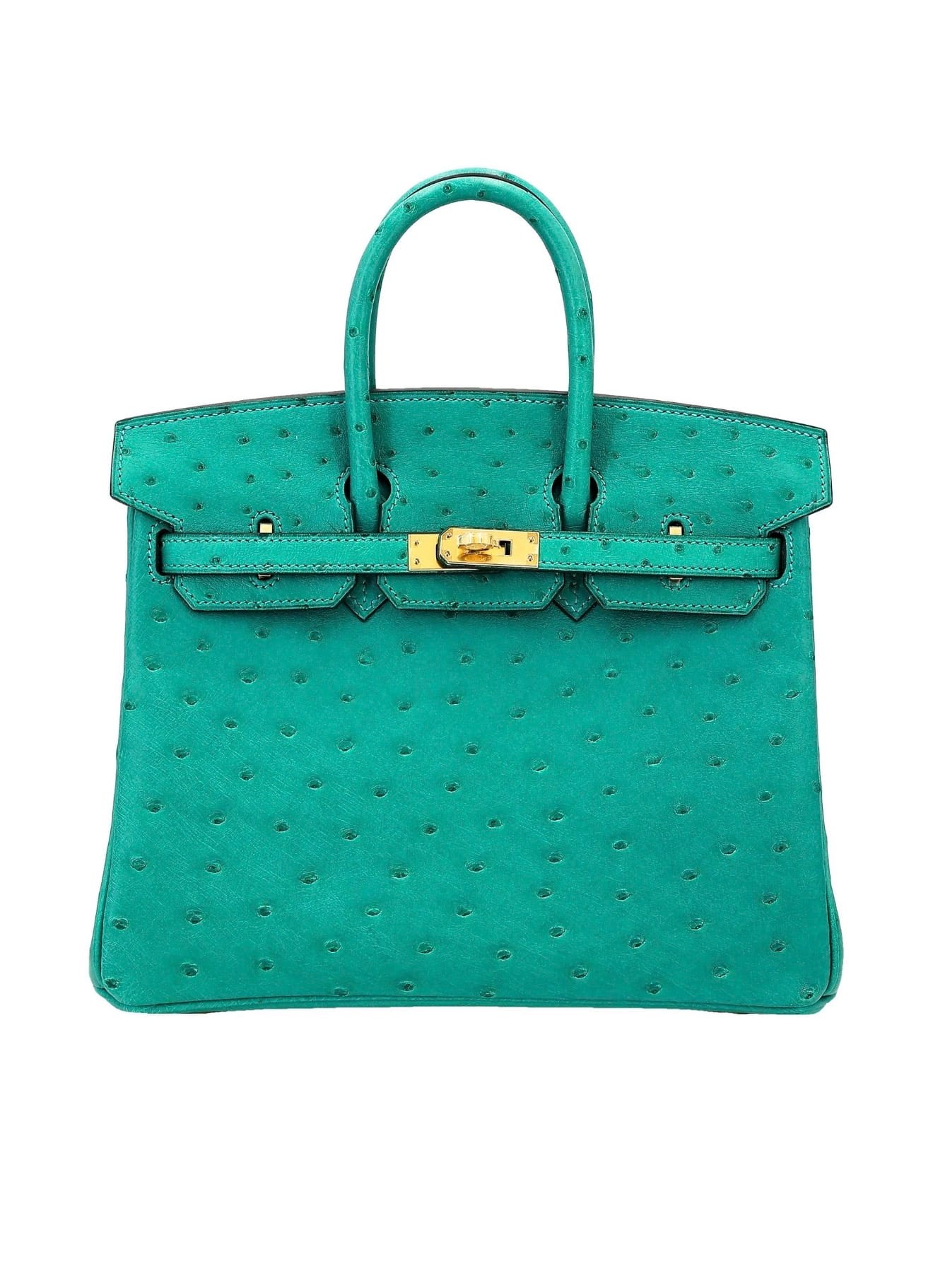
If you’re wondering how Hermès identifies exotic leathers, precious skins and special orders, read our complete Hermès Stamp Symbols Guide, where we explain the symbols used to identify crocodile, alligator, ostrich and other special materials.
Special concepts, finishes & colour treatments
- Himalaya
- So Black
- Dalmatian
- Buffalo
- Faubourg
- Ombre
Some of these are true leather types, while others are colours, finishes or special editions. They are often confused—even by experienced buyers— which is why we’ll explain the most common misconceptions in the next section.
Hermès Collectors Insights
Myths & Facts
Myth: Epsom is artificial leather.
Fact: Epsom is genuine calfskin. The grain is embossed during tanning, which gives it its distinctive uniform texture.
Myth: Veins on Togo mean poor quality.
Fact: The opposite is true. Natural veins are one of Togo leather’s defining characteristics and help distinguish it from embossed leathers.
Myth: Himalaya is a leather.
Fact: Himalaya is a colour gradient applied to crocodile leather, not a leather type itself.
Myth: Elephant Grey bags are made from elephant leather.
Fact: Elephant is simply the name of a Hermès colour. It has nothing to do with the leather used.
Myth: Dalmatian bags are made from animal hide.
Fact: Dalmatian is a printed calfskin pattern inspired by the famous spotted dog. No dog leather has ever been used by Hermès.
Myth: Box Calf scratches too easily and isn’t durable.
Fact: Box Calf is often misunderstood. While its smooth surface makes fine scratches more visible than grained leathers like Togo or Epsom, this does not mean it is fragile. On the contrary, Box Calf is one of Hermès’ most prestigious heritage leathers. With time, it develops a rich patina rather than simply wearing out, which is why beautifully preserved vintage Box Calf bags remain highly sought after by collectors today.
Myth: Faubourg is a leather type.
Fact: Faubourg is not a leather. It refers to a special Hermès concept or edition inspired by the Faubourg Saint-Honoré flagship boutique and may combine different materials, colours and craftsmanship.
Myth: Ombre is a specific Hermès leather.
Fact: Ombre is not a leather type. It describes a colour gradient or shading effect applied to selected Hermès creations rather than the leather itself.
Many Hermès names refer to colours, finishes, concepts or limited editions rather than leather types. Understanding this distinction makes it much easier to interpret product descriptions and compare bags accurately.
Collector Insight:
Why Box Calf Remains So Desirable?
Many of the most iconic So Black Hermès bags have been crafted in Box Calf. Its smooth surface absorbs black dye exceptionally well, creating a deep, elegant monochrome look that perfectly complements black PVD hardware. This combination has become one of the most recognizable and collectible aesthetics in Hermès history.
Why Collectors Love Box Calf?
While first-time buyers often choose Togo or Epsom for their practicality, experienced collectors frequently gravitate toward Box Calf. Its smooth finish, elegant patina and timeless appearance make it one of Hermès’ most respected heritage leathers. Rather than seeing fine scratches as flaws, many collectors view them as part of the leather’s character and history.
Why Swift Is Loved by Collectors?
Swift tells a completely different story. Collectors value it for its exceptional ability to showcase colour. Bright seasonal shades, pastels and limited-edition colours appear richer, deeper and more luminous on Swift than on almost any other Hermès leather. For this reason, many experienced collectors deliberately choose Swift when colour—not structure—is the main attraction.
Why Barenia Ages Beautifully?
Unlike most smooth leathers, Barenia is naturally rich in oils. Rain may temporarily darken the surface, but once the leather dries, the marks often fade away on their own. Rather than trying to keep Barenia looking brand new, collectors appreciate how it gradually develops a unique patina that reflects years of use.
Buffalo’s Unique Grain.
One of the most fascinating characteristics of Buffle Skipper is the way it absorbs dye. The centre of each rounded grain naturally appears darker than its edges, creating remarkable depth and movement across the leather. Many collectors compare this effect to tiny caviar beads catching the light—an unofficial nickname inspired by its unique appearance rather than an official Hermès term.
The same leather is also known for performing surprisingly well in the rain, with owners reporting that water often dries without leaving noticeable marks.
Collector’s Eye
Can experienced collectors recognise the leather from across the room?
The answer is often yes. The crisp edges of Epsom, the visible veins of Togo, the silky reflection of Swift, the glossy elegance of Box Calf and the bold grain of Buffalo each create a distinct visual identity long before you touch the bag.
There Is No “Best” Hermès Leather
One collector may appreciate the crisp structure of Epsom, another the natural grain of Togo, while someone else searches only for Box Calf or brightly coloured Swift. The “best” leather is simply the one that matches what you value most—durability, structure, colour, softness or collectibility.
Which Hermès Buyer Are You? 8 Buying Mindsets We’ve Seen Over the Years
After years of working with Hermès buyers, we’ve noticed that most people don’t choose bags the same way. Understanding your buying mindset can often make choosing the right leather much easier.
1. The “One Perfect Bag” Buyer
“I’m only buying one Hermès, so it has to be perfect.”
You want everything at once: the perfect colour, the perfect leather, flawless condition, a full set—and ideally below market price.
Because every detail feels equally important, you may spend months comparing listings, contacting multiple sellers and waiting for an opportunity that rarely exists.
Best advice: Decide which criteria matter most. In the resale market, the perfect combination of price, condition and rarity is exceptionally rare.
2. The First-Time Investor
“I want my first Hermès to hold its value.”
You’re buying with resale potential in mind. Your focus is on proven combinations with consistent demand rather than unusual colours or rare leathers.
You’ll usually gravitate towards Black, Gold or Etoupe in Togo or Epsom, choosing timeless combinations that have historically remained desirable.
3. The Experienced Owner
“I already know what works for my lifestyle.”
You’ve owned Hermès before, and experience has replaced excitement.
Perhaps your Birkin 35 turned out to be too large, or your Mini Kelly too small for everyday use. Now you choose bags you’ll actually carry rather than those everyone else wants.
Comfort, practicality and personal style matter more than trends.
4. The Modern Collector
“Every new addition has to deserve its place.”
You’re building a carefully curated collection.
Condition is extremely important. You usually look for excellent or like- new bags, preferably with a full set, because every piece should feel exceptional. Rather than replacing bags, you add new ones thoughtfully, making sure each purchase complements what you already own.
5. The Heritage Collector
“I’m collecting history as much as handbags.”
You’re fascinated by discontinued leathers, vintage Hermès craftsmanship and combinations that can no longer be purchased from boutiques.
Box Calf, Ardennes, Courchevel or other discontinued materials may excite you far more than another brand-new classic.
For you, character and history often matter more than perfection.
6. The Professional Investor
“Luxury handbags are an asset class.”
This is very different from buying a single investment bag.
Professional investors understand liquidity, market cycles, pricing trends and buyer demand. They regularly buy and sell, making decisions based on market data rather than personal preference.
Their goal isn’t simply to own beautiful bags—it’s to build and manage a high-performing portfolio.
7. The Romantic
“I buy the bag that makes me smile.”
You buy emotionally.
Perhaps it’s Sakura in Swift, Rouge H in Box Calf or an unexpected seasonal colour that captures your attention. You know another leather may be more practical, but the emotional connection matters more.
For you, luxury should feel personal.
8. The Quiet Luxury Buyer
“I don’t need the most popular combination.”
You’re confident in your own taste.
You don’t automatically choose the combination everyone is searching for. Instead, you look for colours, sizes and leathers that naturally fit your wardrobe and lifestyle.
Your purchases are driven by long-term enjoyment rather than trends or social recognition.
Conclusion
There is no single “best” Hermès leather.
The best leather is the one that fits the way you live, the way you dress, and the way you experience luxury.
Your buying mindset will probably evolve over time. Many people begin by searching for one perfect bag. Later, they start buying with experience rather than emotion. Some eventually become collectors, appreciating different leathers for different reasons.
And that’s perhaps the most rewarding part of the Hermès journey. At some point, you stop asking:
“Which Hermès leather is the best?”
And you start asking:
“Which Hermès leather is missing from my collection?”
FAQ
1. Which Hermès Leather Is Best for Everyday Use?
For everyday use, Togo and Clemence are generally considered the best choices.
- Togo offers an excellent balance of softness, durability and scratch resistance.
- Clemence feels softer and more relaxed but is still durable enough for daily wear.
2. Which Hermès Leather Scratches the Least?
If scratch resistance is your priority, Epsom is one of the best options thanks to its embossed grain, which helps disguise minor marks.
Togo and Chèvre Mysore are also highly resistant to everyday wear.
3. Which Hermès Leather Is the Lightest?
Among the most commonly used Hermès leathers, Epsom and Chèvre Mysore are generally the lightest.
They are often chosen for larger bags because they reduce overall weight while maintaining structure.
Swift is also relatively lightweight, whereas Clemence is one of the heaviest leathers due to its soft, full-bodied character.
4. Which Hermès Leather Keeps Its Shape Best?
If maintaining structure is your priority, Epsom is widely regarded as the best choice.
Its embossed finish and firm construction help bags retain their shape for many years.
Togo also holds its form well while offering a softer appearance. Clemence, by comparison, naturally relaxes over time, making it ideal for collectors who prefer a more casual silhouette.
5. Which Hermès Leather Is Best for a First Bag?
For a first Hermès bag, most collectors choose Togo or Epsom.
Togo offers a softer, more relaxed look with excellent durability, while Epsom is lighter, highly structured and particularly easy to care for.
Both leathers are timeless, versatile and available across many of Hermès’ most iconic models, making them excellent choices for first-time buyers.
6. How Can You Tell Alligator from Crocodile Leather? The easiest way is to look at the centre of each scale.
• Alligator has smooth scales without visible pores.
• Niloticus crocodile has a small pore in the centre of every scale. Porosus crocodile also has visible pores but displays a finer, more regular scale pattern.
7. Which Hermès Exotic Leather Is the Most Valuable?
Generally, Porosus crocodile is considered the most valuable Hermès exotic leather because of its exceptionally fine, symmetrical scales and limited availability. However, rarity, colour, condition and the specific bag model often have an even greater impact on market value. For example, a Himalayan Niloticus Birkin or Kelly may sell for more than many Porosus bags because of its extraordinary desirability among collectors.
Continue Your Hermès Journey
If you’re still exploring the world of Hermès, these guides may help:
- Hermès Hardware Guide – Gold, Palladium, Brushed Palladium, Ruthenium and more.
- Hermès Blind Stamp Guide – Learn how to identify the production year of your bag.
- Hermès Front Stamp Guide – Understanding logos, embossing and craftsmanship.
- How to Store a Hermès Bag – Protect your investment for years to come. Looking for the right Hermès bag?
Explore our curated Hermès collection or contact us for personalised advice on choosing the leather that best matches your lifestyle.