

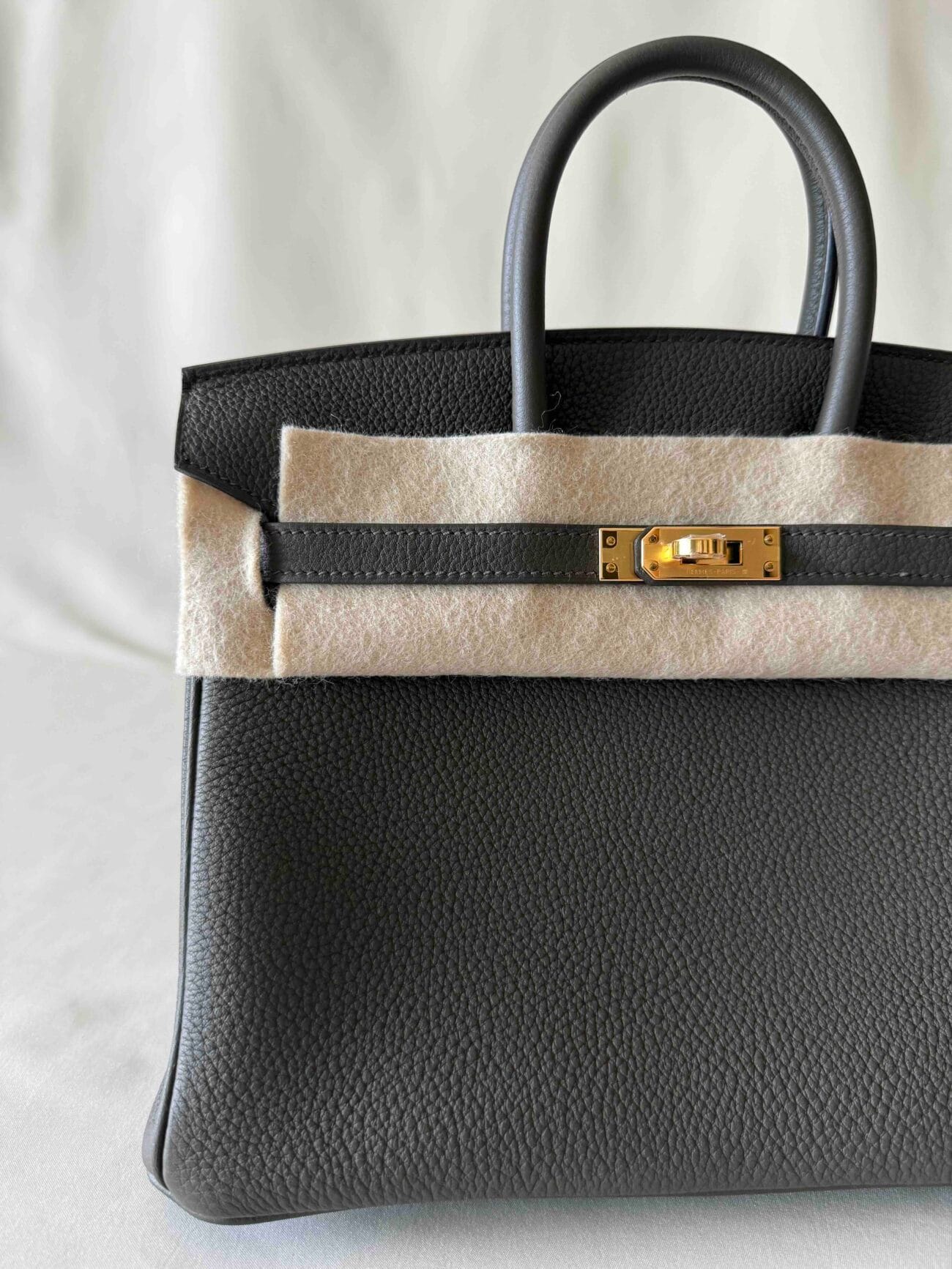
Hermès Hardware Guide: History, Types, Codes & Collector’s Insights
Last updated: July 2026
Introduction
When people think about a Hermès bag, they usually notice the leather, the colour or the silhouette first. Yet one of the elements that defines its character is often overlooked: the hardware.
Far more than a decorative detail, Hermès hardware is an essential part of the Maison’s design language. It shapes the personality of every bag, reflects different periods in Hermès history and, in many cases, influences collector demand and long-term market value.
A Kelly in Noir with Gold Hardware conveys timeless elegance. The same Kelly with Palladium Hardware feels clean and contemporary. Replace both with So Black Hardware and the bag takes on an entirely different identity.
This is precisely what makes Hermès hardware so fascinating.
Over the decades, Hermès has introduced new finishes, revived archival designs and experimented with innovative surface treatments while remaining faithful to its heritage. Some finishes have become enduring classics. Others disappeared for years before quietly returning in modern collections. A select few have achieved legendary status among collectors.
Understanding Hermès hardware therefore means much more than recognising different metal colours. It means understanding craftsmanship, historical evolution and the subtle details that distinguish an exceptional Hermès bag.
Hermès hardware guide explain how each one is constructed, trace its history, decode the abbreviations and internal hardware codes used by collectors, and highlight the authentication details recognised by experienced specialists.
Whether you are purchasing your first Kelly or expanding a carefully curated Hermès collection, understanding the story behind the hardware will allow you to appreciate these remarkable bags from an entirely new perspective.
Who This Hermès hardware guide For?
This Hermès hardware guide is designed for:
- First-time Hermès buyers choosing between different hardware finishes.
- Collectors comparing rarity, history and long-term desirability.
- Buyers researching authenticity before investing in a Hermès bag.
- Readers interested in the craftsmanship and evolution of Hermès hardware.
- Anyone looking to better understand the terminology used by collectors, auction houses and luxury resellers.
Table of Contents
- Hermès Hardware Abbreviations & Internal Codes
- Gold Hardware
- Palladium Hardware
- Rose Gold Hardware
- Permabrass Hardware
- Brushed Gold & Brushed Palladium
- Ruthenium Hardware
- So Black Hardware
- Guilloché Hardware
- Lacquered Hardware
- Diamond Hardware
- Electrum Hardware
- The Rarest Hermès Hardware
- Which Hermès Hardware Holds Its Value Best?
- How Hermès Hardware Is Made
- Care Tips & Authentication Details
- Frequently Asked Questions
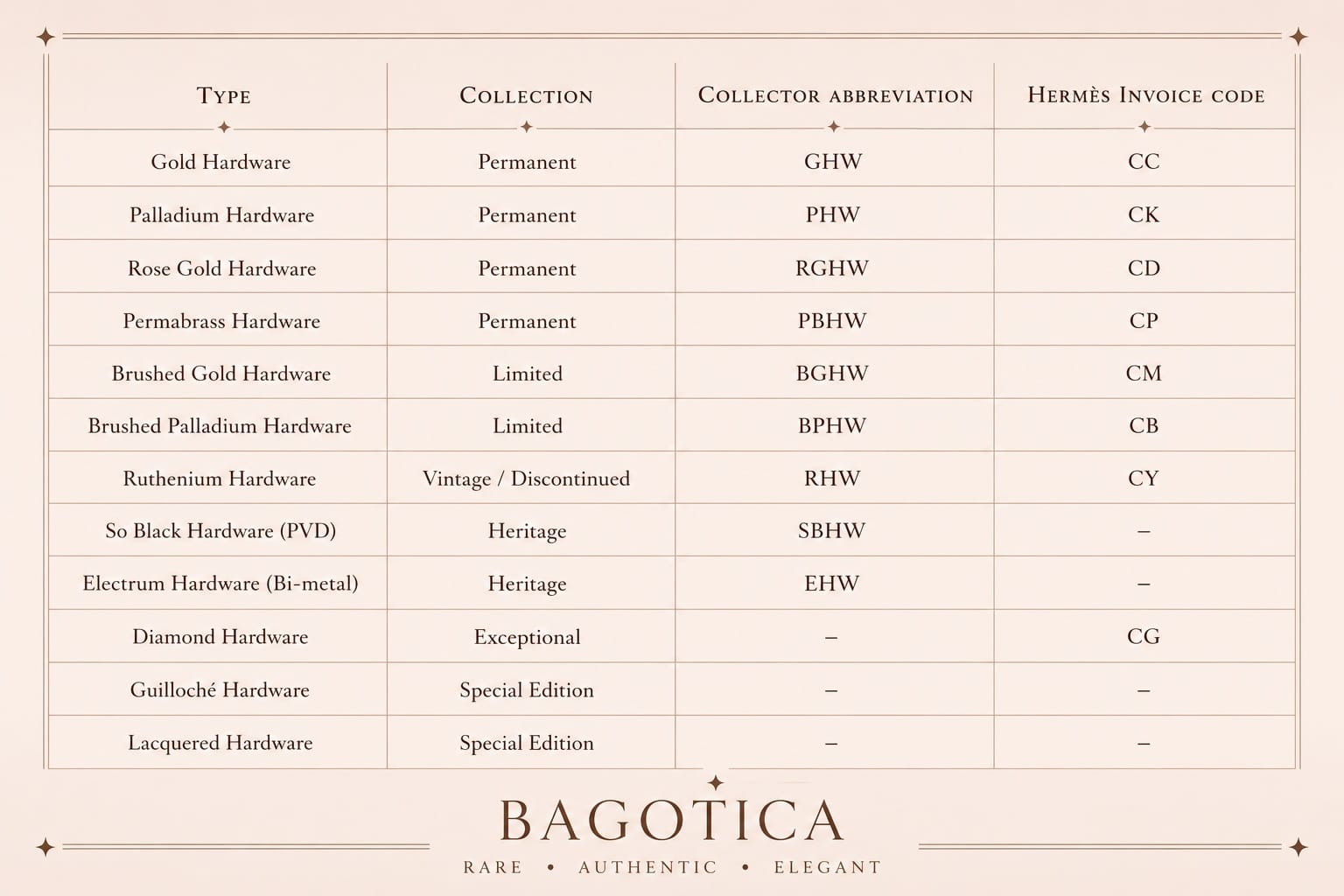
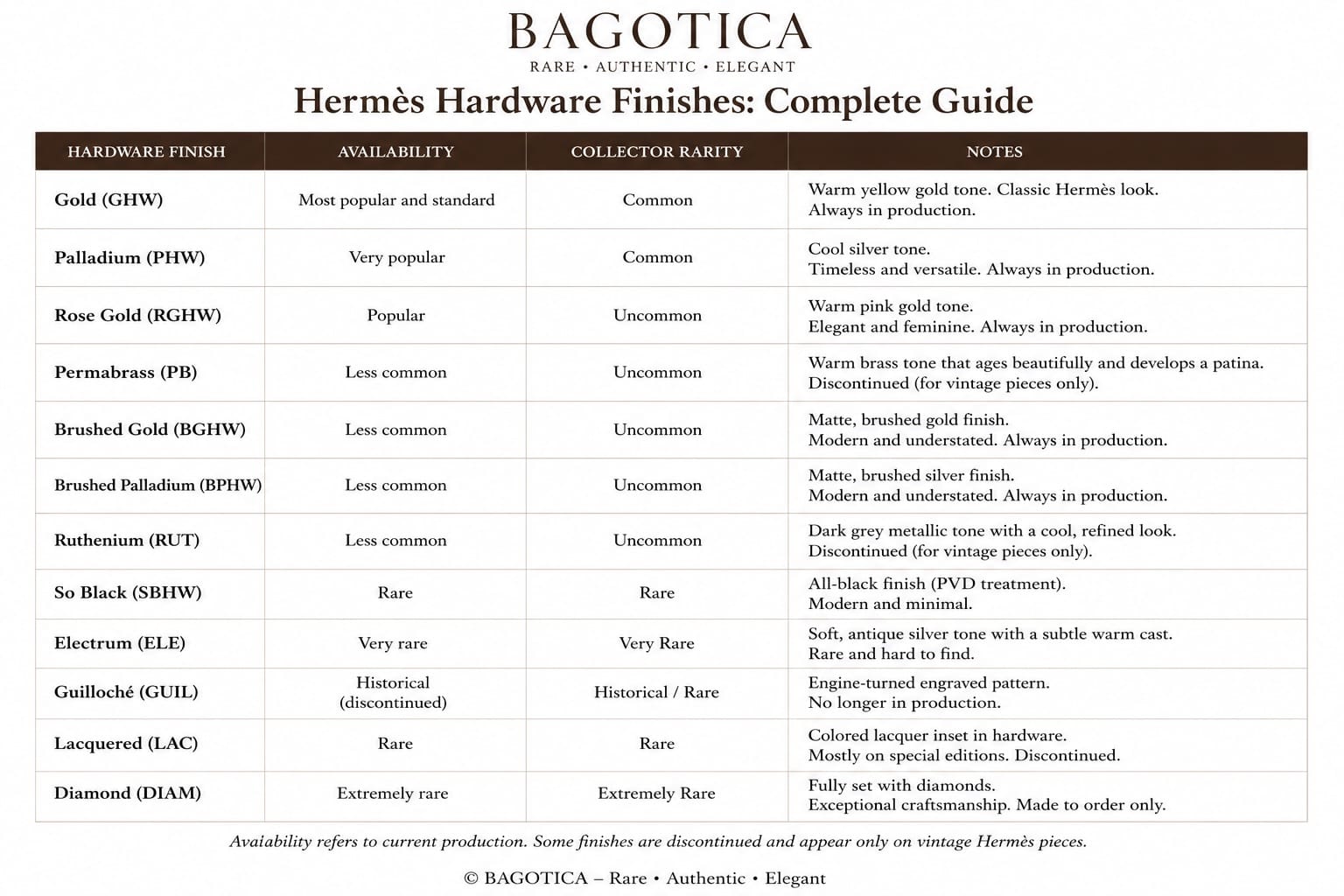
Hermès Hardware Abbreviations & Internal Codes
Collectors usually refer to Hermès hardware using abbreviations such as GHW or PHW, while Hermès boutiques, repair centres and specialist documentation may use internal production codes.
Understanding both systems makes it easier to read auction catalogues, resale listings, collector discussions and boutique paperwork.
Notes
Hermès has never officially published a complete reference list of hardware codes. The codes shown above are the most consistently documented in boutique paperwork, repair documentation and trusted collector resources.
SBHW (So Black Hardware) and EHW (Electrum Hardware) are abbreviations widely used by collectors and luxury resellers. Hermès itself does not publicly use these collector abbreviations in its marketing materials.
Some finishes, including Guilloché Hardware and Lacquered Hardware, do not have consistently documented public internal codes and are generally identified by name rather than by code.
In This Hermès Hardware Guide, You’ll Learn
In this comprehensive guide, you’ll discover:
Professional care recommendations to help preserve your hardware for years to come.
The construction of Hermès hardware and the materials used beneath each finish.
The history of every hardware type, including when it first appeared and when iconic finishes returned to Hermès collections.
The differences between Gold, Palladium, Rose Gold, Permabrass, So Black, Electrum and other rare finishes.
Collector abbreviations and Hermès internal hardware codes used in boutique paperwork and specialist documentation.
Authentication details that experts examine when assessing an authentic Hermès bag.
Which hardware finishes are considered the rarest and hold the strongest collector value.
Gold Hardware (GHW)
Quick Facts
Collector abbreviation: GHW
Hermès internal code: CC
Base metal: Solid brass
Finish: High-carat gold plating
Status: Permanent Hermès collection
Best known for: The most iconic and timeless Hermès hardware finish
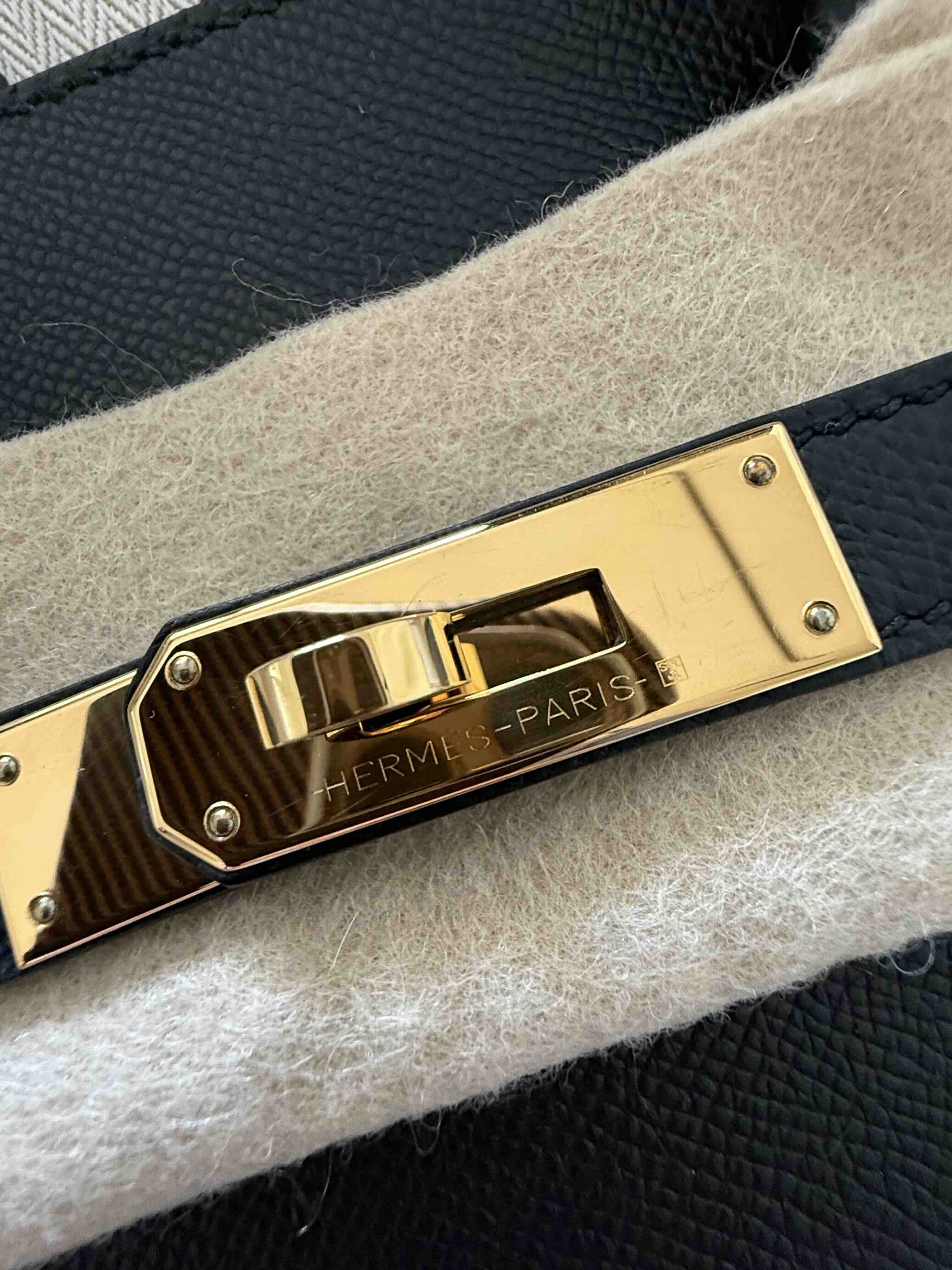
Gold Hardware is the most iconic and recognisable finish in the Hermès universe. For decades, it has been closely associated with the House’s heritage, giving Birkin and Kelly bags their unmistakable warm and timeless appearance.
Historically, Gold Hardware has never disappeared from the Hermès collection. Unlike limited finishes that appear for only a few seasons, GHW has remained a permanent part of the Maison’s catalogue since the earliest generations of Kelly and Birkin bags. It continues to be the benchmark against which every new hardware finish is compared.
Contrary to a common misconception, modern Hermès Gold Hardware is not made from solid gold. Each hardware component is crafted from solid brass before being finished with a layer of precious gold plating. The brass core provides exceptional strength and durability, while the gold plating creates the rich colour and lustre collectors admire. This construction explains why worn Gold Hardware may occasionally reveal a lighter-coloured metal beneath the surface—the visible base is brass rather than solid gold.
Because Hermès has never officially published its manufacturing specifications, the exact plating process remains proprietary. Auction houses and luxury specialists generally describe modern Gold Hardware as using high-carat gold plating over a solid brass core. While Hermès has never officially confirmed the exact composition, it is commonly estimated to be approximately 23.5-karat with a gold layer of around 3 microns. Experienced restorers also believe that many vintage Hermès bags received a thicker layer of gold plating than modern examples. Today’s manufacturing prioritises consistency, colour accuracy and long-term durability rather than simply increasing the thickness of the plating.
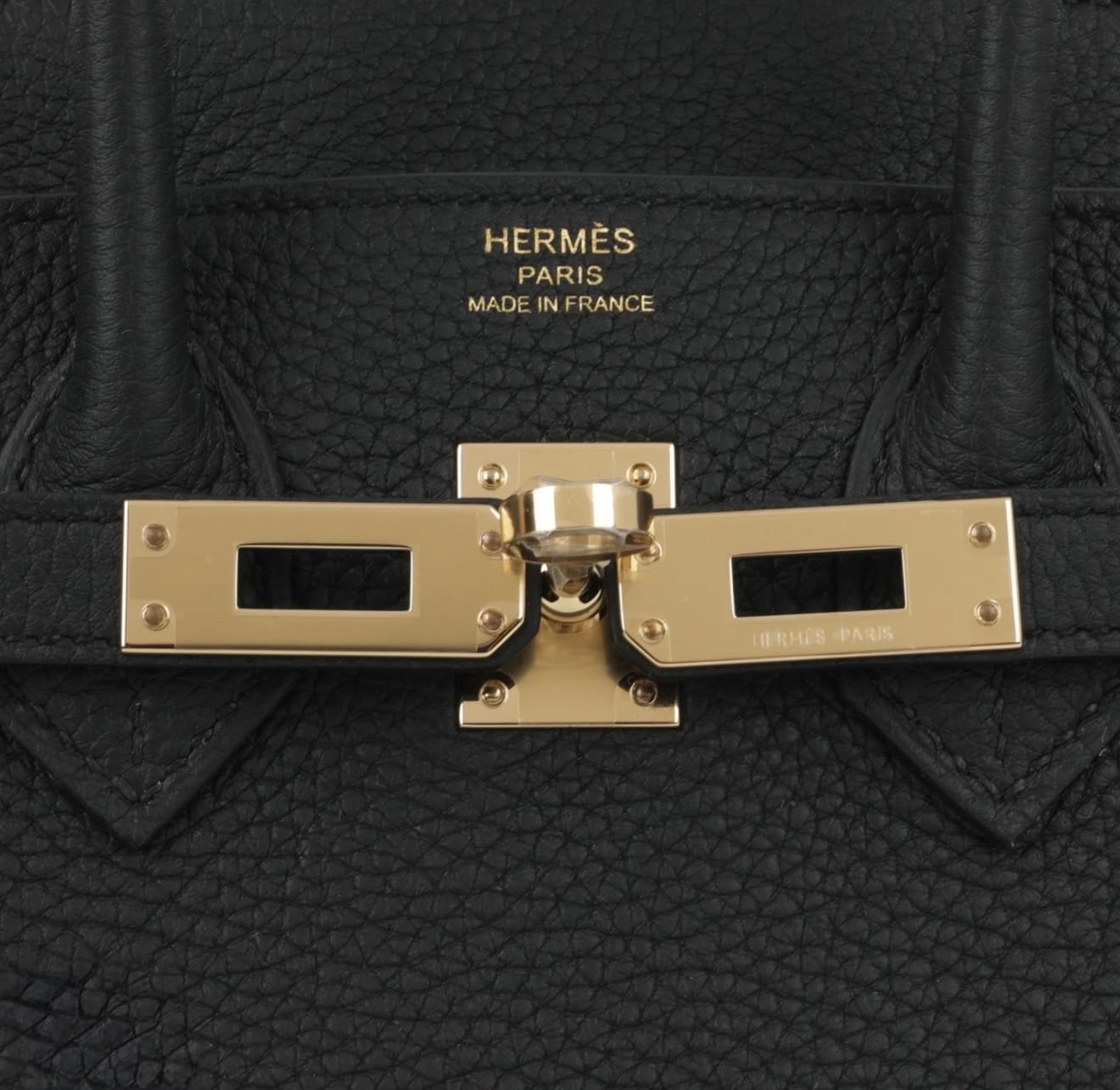
One subtle authentication detail often overlooked by new collectors is the small hallmark engraved next to the Hermès Paris stamp on bags fitted with Gold Hardware. This tiny square-shaped maker’s mark is unique to Gold Hardware and is absent from Palladium and several other finishes. Although discreet, it is one of many details that authentication specialists examine during a professional inspection.
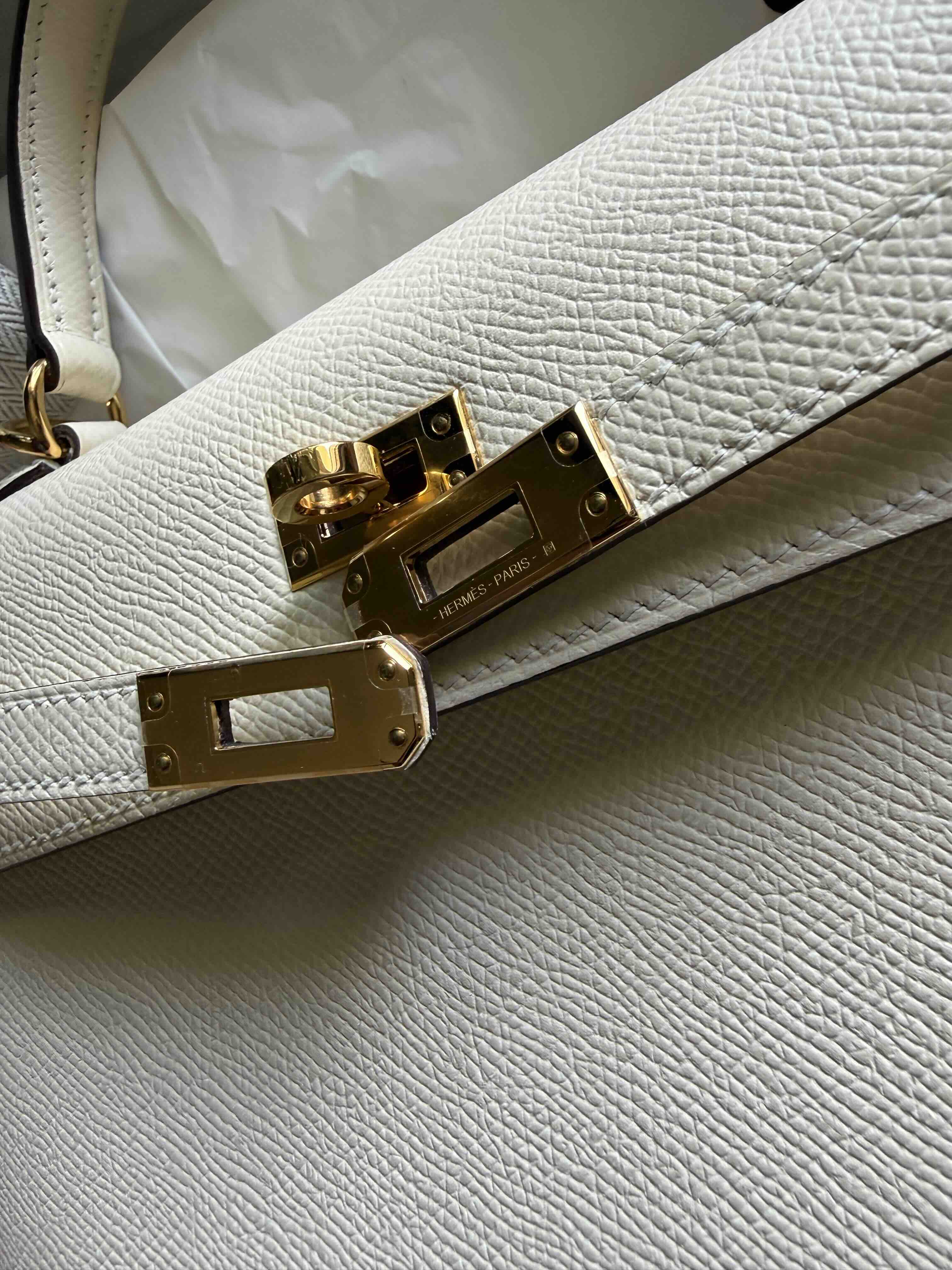
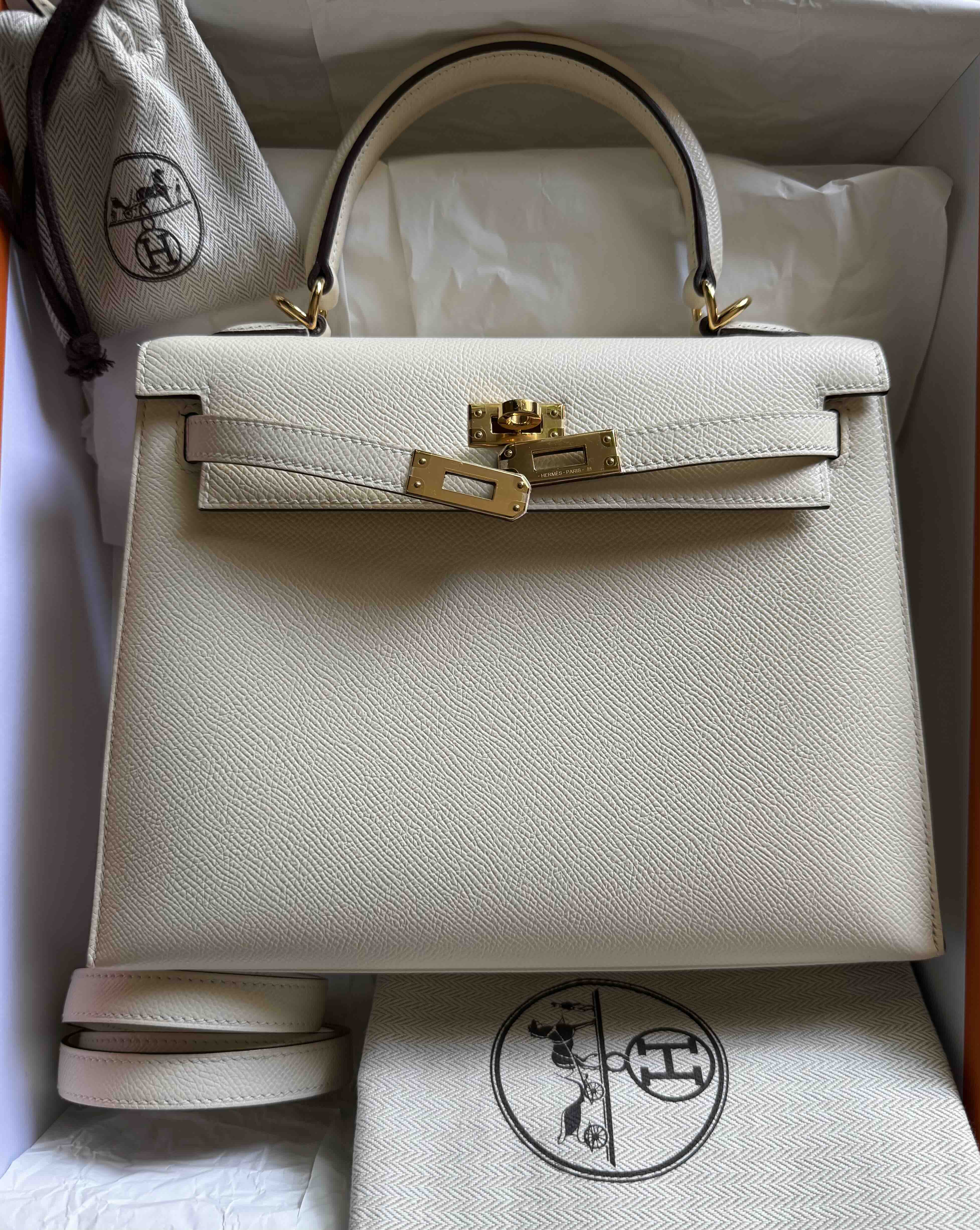
From a collector’s perspective, Gold Hardware remains the benchmark of the Hermès collection. It appeals to the broadest audience, is instantly recognisable worldwide and consistently performs well on the secondary market. Whether paired with Noir, Gold, Étoupe or Rouge H leather, GHW has remained the Maison’s most enduring and universally admired finish for decades.
Collector’s Insight
Gold Hardware has never gone out of fashion. While Hermès regularly introduces new finishes and seasonal innovations, GHW remains the reference point of the entire collection. For many collectors, owning at least one Kelly or Birkin with Gold Hardware is considered essential before exploring rarer finishes such as So Black, Electrum or Guilloché.
Palladium Hardware (PHW)
Quick Facts
Collector abbreviation: PHW
Hermès internal code: CK
Base metal: Solid brass
Finish: Palladium plating
Metal family: Platinum group
Status: Permanent Hermès collection
Best known for: A cool, contemporary finish with exceptional resistance to tarnishing.
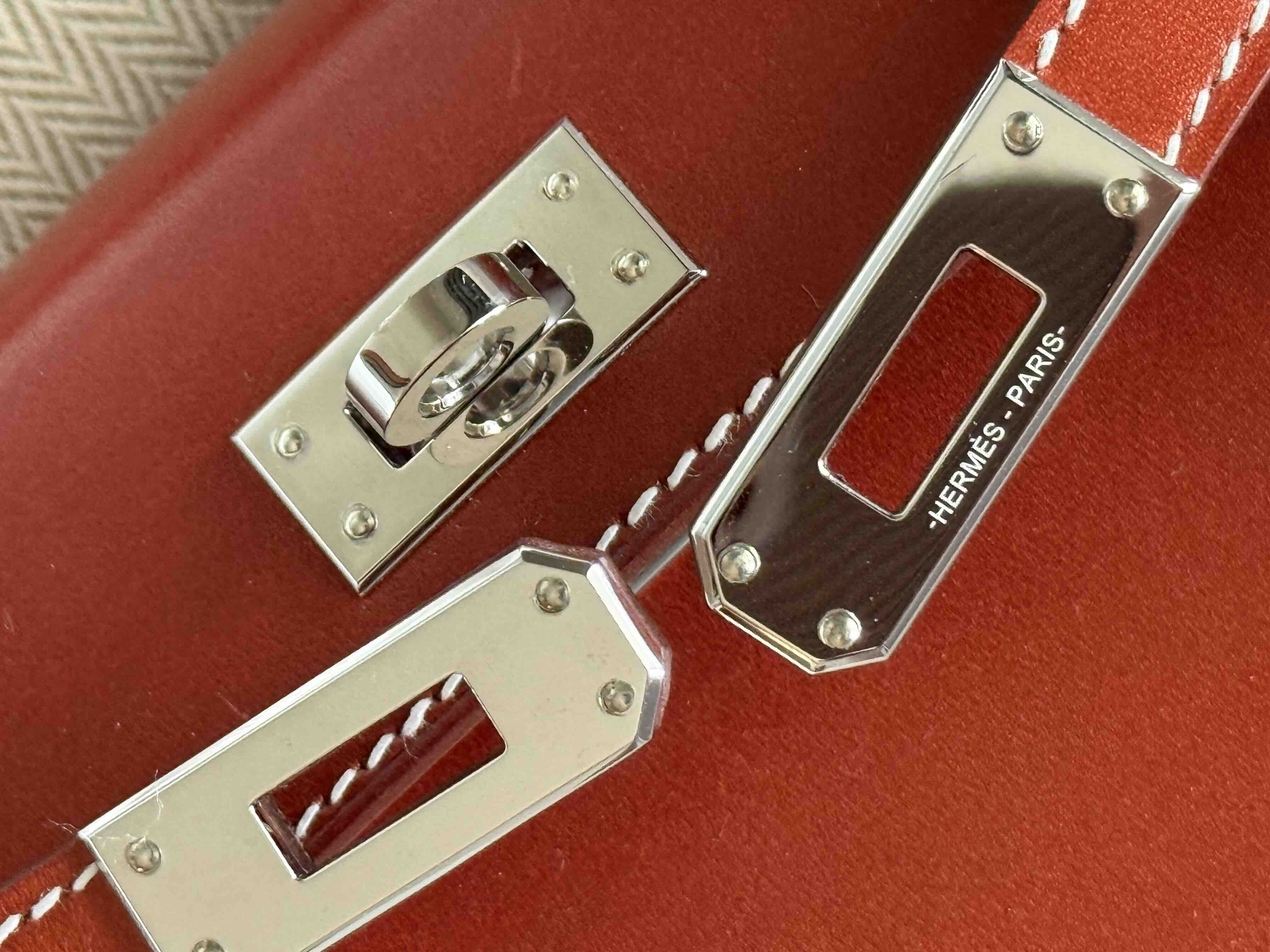
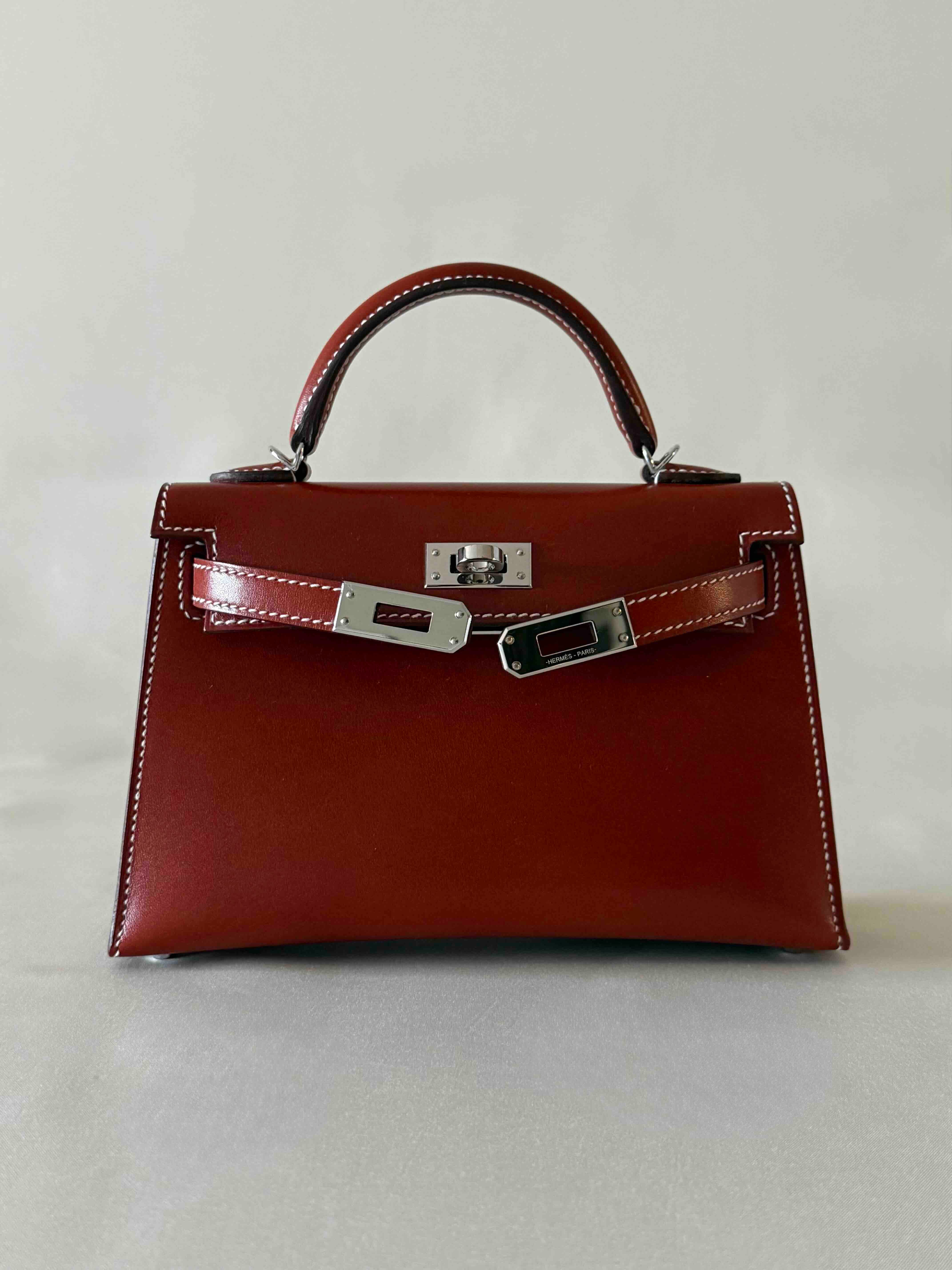
Palladium Hardware has become one of the most sought-after finishes in the modern Hermès collection. With its crisp silver tone and mirror-like shine, it offers a contemporary alternative to the warmth of Gold Hardware while preserving the timeless elegance that defines every Hermès bag.
Although Palladium Hardware first appeared decades ago, it became one of Hermès’ defining finishes during the early 2000s, when cooler colour palettes and minimalist styling gained worldwide popularity. Shades such as Étoupe, Gris Meyer, Beton, Craie, Bleu Nuit, Vert Foncé and Noir helped establish PHW as the modern alternative to traditional Gold Hardware, giving classic Hermès silhouettes a cleaner, more architectural appearance.
Contrary to a common misconception, Palladium Hardware is not made from solid palladium. Like virtually all Hermès hardware, each component begins as solid brass before receiving its final precious-metal finish.
Because Hermès has never officially published its manufacturing specifications, the exact finishing process remains proprietary. Luxury specialists generally describe Palladium Hardware as a solid brass core finished with a thin layer of palladium, commonly estimated at around 2 microns. Palladium belongs to the platinum-group metals and is naturally brighter, harder and significantly more resistant to tarnishing than sterling silver, making it one of Hermès’ lowest-maintenance finishes.
One of the most common misconceptions is that Palladium Hardware is simply “silver hardware.” In reality, Hermès has never produced sterling silver hardware for its classic Birkin and Kelly bags. Palladium has a cooler tone, greater hardness and superior resistance to oxidation, allowing it to retain its bright finish with minimal maintenance.
Because palladium naturally resists oxidation, authentic Hermès Palladium Hardware rarely develops the yellowing or dark tarnish commonly associated with silver jewellery. This is one reason many collectors choose PHW for bags they intend to carry frequently.
Unlike Gold Hardware, Palladium Hardware does not feature the small square hallmark engraved next to the Hermès Paris stamp. This subtle difference is one of many details authentication specialists examine during a professional inspection.
Today, Palladium Hardware stands alongside Gold Hardware as one of Hermès’ two permanent signature finishes. While GHW remains the historical icon of the Maison, PHW has become the preferred choice for collectors seeking a contemporary, understated aesthetic that pairs effortlessly with both neutral and monochromatic colour palettes.
Collector’s Insight
Many first-time Hermès buyers hesitate between Gold Hardware and Palladium Hardware. While Gold emphasises tradition and warmth, Palladium creates a quieter, more contemporary aesthetic that pairs beautifully with both neutral and deep colours. Rather than one being “better,” the choice often comes down to personal style. Among European collectors, PHW has become one of the most versatile and universally appreciated finishes.
Rose Gold Hardware (RGHW)
Quick Facts
Collector abbreviation: RGHW
Hermès internal code: CD
Base metal: Solid brass
Finish: Rose gold plating
Status: Permanent contemporary Hermès finish
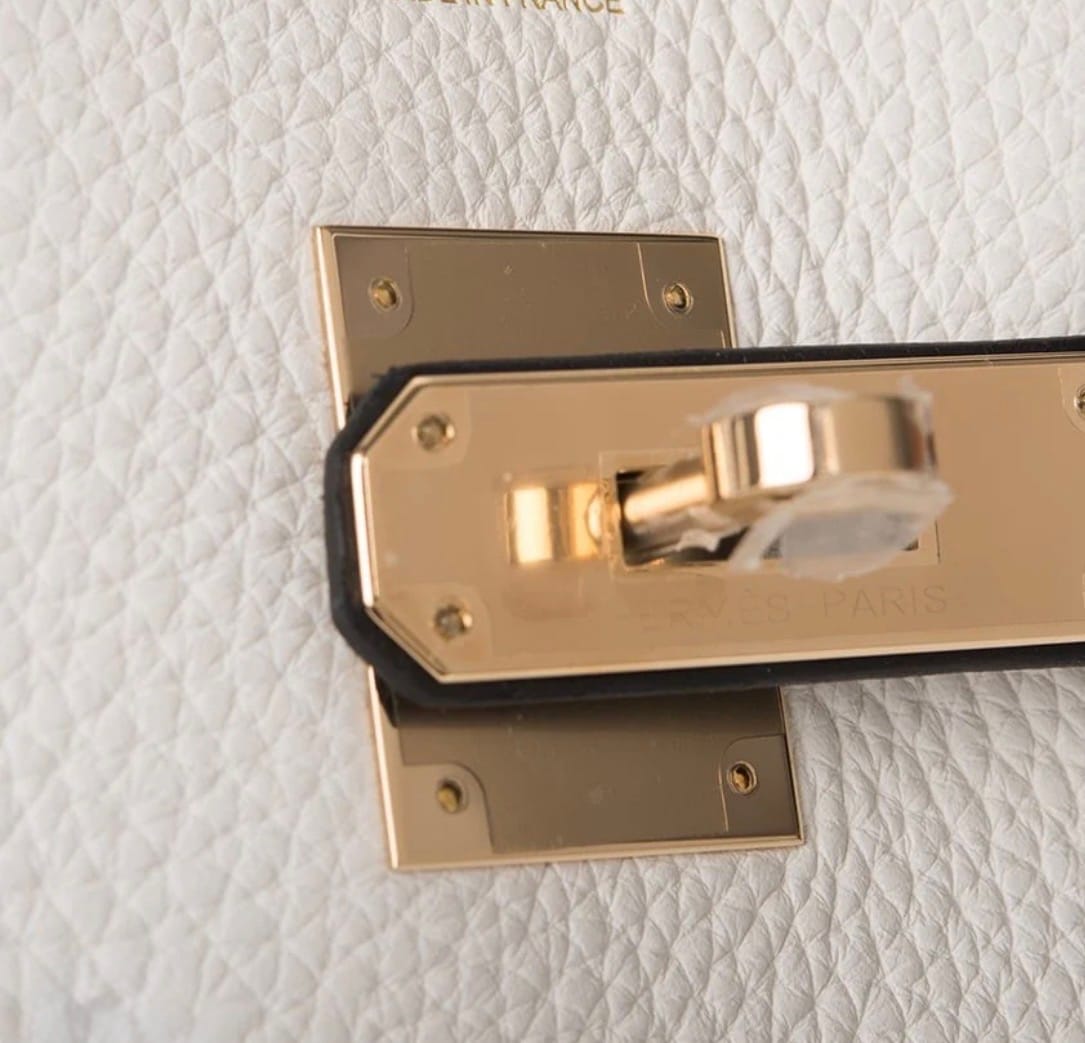
Best known for: A soft, warm metallic finish that perfectly balances classic elegance with a contemporary aesthetic.
Rose Gold Hardware is one of Hermès’ most refined modern finishes, combining the timeless warmth of classic Gold Hardware with a softer, more understated character. Its delicate blush tone complements many of the Maison’s contemporary leather colours, making it especially popular among collectors seeking a subtle alternative to traditional yellow gold.
Although Rose Gold Hardware is one of Hermès’ newer permanent finishes, it reflects the Maison’s gradual evolution towards softer colour palettes during the 2010s. As pastel leathers and muted neutrals became increasingly popular, Hermès introduced Rose Gold Hardware to bridge the gap between the warmth of Gold Hardware and the cool minimalism of Palladium. Today, it has become an established finish rather than a limited seasonal experiment.
Unlike what its name may suggest, Rose Gold Hardware is not made from solid rose gold. Like nearly all Hermès hardware, each component begins as solid brass before receiving a proprietary precious-metal finish. Hermès does not disclose the exact composition of its plating, but specialists agree that the distinctive pink-gold tone is created through the plating process itself rather than by using solid rose gold. This construction preserves exceptional durability while producing the elegant blush colour collectors admire.
Rose Gold Hardware pairs beautifully with many of Hermès’ most sophisticated shades, including Mauve Sylvestre, Nata, Craie, Beton, Gris Perle, Rose Sakura, Vert Fizz and other modern pastel colours. Rather than drawing attention to itself, it enhances lighter leathers with warmth and depth while maintaining the clean lines of the bag.
Because Rose Gold Hardware is produced in noticeably smaller quantities than traditional Gold or Palladium Hardware, it is often perceived as slightly more exclusive. Highly desirable combinations—particularly Kelly and Birkin bags in neutral or pastel colours fitted with RGHW—frequently command stronger demand on the secondary market.
Collector’s Insight
Collectors often describe Rose Gold Hardware as the perfect middle ground between the richness of classic Gold Hardware and the cool elegance of Palladium. Its softer metallic tone gives Hermès bags a contemporary yet timeless appearance that photographs beautifully in both natural and artificial light.
Although Rose Gold Hardware is no longer considered a rare finish, the most desirable combinations remain surprisingly difficult to source. Kelly 25, Mini Kelly and Birkin 25 in shades such as Nata, Craie, Beton, Gris Perle or Mauve Sylvestre fitted with RGHW continue to sell quickly and often achieve premium prices on the resale market.
Permabrass Hardware (PBHW)
Quick Facts
Collector abbreviation: PBHW
Hermès internal code: CP
Base metal: Solid brass
Finish: Champagne-toned Permabrass finish
First introduced: Early 2000s
Status: Limited recurring Hermès finish
Best known for: Its elegant champagne tone that bridges Gold and Palladium Hardware.
Permabrass Hardware occupies a unique place in the Hermès universe. Neither distinctly gold nor truly silver, it offers a warm champagne tone that bridges the two classic finishes. Appreciated for its understated elegance, Permabrass has become one of Hermès’ most versatile hardware options for collectors seeking subtle luxury.
Introduced in the early 2000s, Permabrass reflected Hermès’ desire to expand beyond the traditional choice of Gold or Palladium Hardware. Rather than replacing either classic finish, it introduced an entirely new aesthetic—one designed for collectors who preferred balance over contrast. Since then, Permabrass has remained a recurring finish within the Hermès collection, although it is produced in significantly smaller quantities than the Maison’s two classic hardware options.
Despite its name, Permabrass is not unfinished brass. Like virtually all Hermès hardware, every component begins as a solid brass core before receiving its proprietary metallic finish. Hermès has never disclosed the exact composition of the coating, but specialists agree that the champagne appearance results from the finishing process rather than exposed brass. The finish was specifically developed to offer the warmth of gold while reducing the strong yellow tone associated with traditional Gold Hardware.
Its muted champagne colour pairs exceptionally well with Gold, Étoupe, Etain, Gris Tourterelle, Craie, Beton and other neutral Hermès leathers. Rather than dominating the overall appearance of the bag, Permabrass quietly complements the leather, creating one of the most balanced and understated combinations in the Maison’s palette.
Because Permabrass Hardware is produced in noticeably smaller quantities than Gold or Palladium Hardware, collectors actively search for desirable combinations on the secondary market. While it rarely commands the dramatic premiums associated with So Black or Diamond Hardware, its relative scarcity and timeless versatility have earned it a loyal following among experienced Hermès collectors.
Collector’s Insight
Among experienced Hermès collectors, Permabrass is often described as the perfect balance between Gold and Palladium Hardware. It offers the warmth of Gold Hardware without its brighter yellow tone and the neutrality of Palladium without its cooler appearance.
For collectors who regularly wear both yellow and white jewellery, Permabrass is frequently considered the most versatile hardware finish, pairing effortlessly with either metal while maintaining the understated elegance that defines Hermès.
Brushed Hardware (BGHW & BPHW)
Best known for: A refined satin finish that offers a contemporary alternative to traditional mirror-polished Hermès hardware.
Quick Facts
- Collector abbreviations: BGHW (Brushed Gold Hardware), BPHW (Brushed Palladium Hardware)
- Hermès internal codes: CM (Brushed Gold), CB (Brushed Palladium)
- Base metal: Solid brass
- Finish: Satin-brushed precious metal plating
- Appearance: Soft, low-reflection surface
- Availability: Limited production
- Authentication note: The brushed texture is factory-applied and should appear perfectly even across every hardware component.
Brushed Hardware represents one of Hermès’ most discreet modern finishes. Rather than introducing a new metal colour, the Maison reinterpreted its classic Gold and Palladium Hardware through an entirely different surface treatment. Instead of a mirror-polished finish, the hardware receives a delicate satin brushing that diffuses light and creates a softer, more understated appearance.
Introduced as collectors increasingly embraced minimalist luxury, Brushed Hardware reflects Hermès’ philosophy that elegance does not always require brilliance. The satin finish enhances the architectural lines of Kelly and Birkin bags while allowing the leather itself to remain the visual focus.
Like all standard Hermès hardware, both Brushed Gold Hardware and Brushed Palladium Hardware begin with a solid brass core before receiving their respective precious-metal plating. Only after the plating process is complete does Hermès create the distinctive brushed texture through a highly controlled finishing technique. The result is not a different metal but a completely different visual character.
Although the two finishes share the same brushed texture, they create noticeably different impressions.
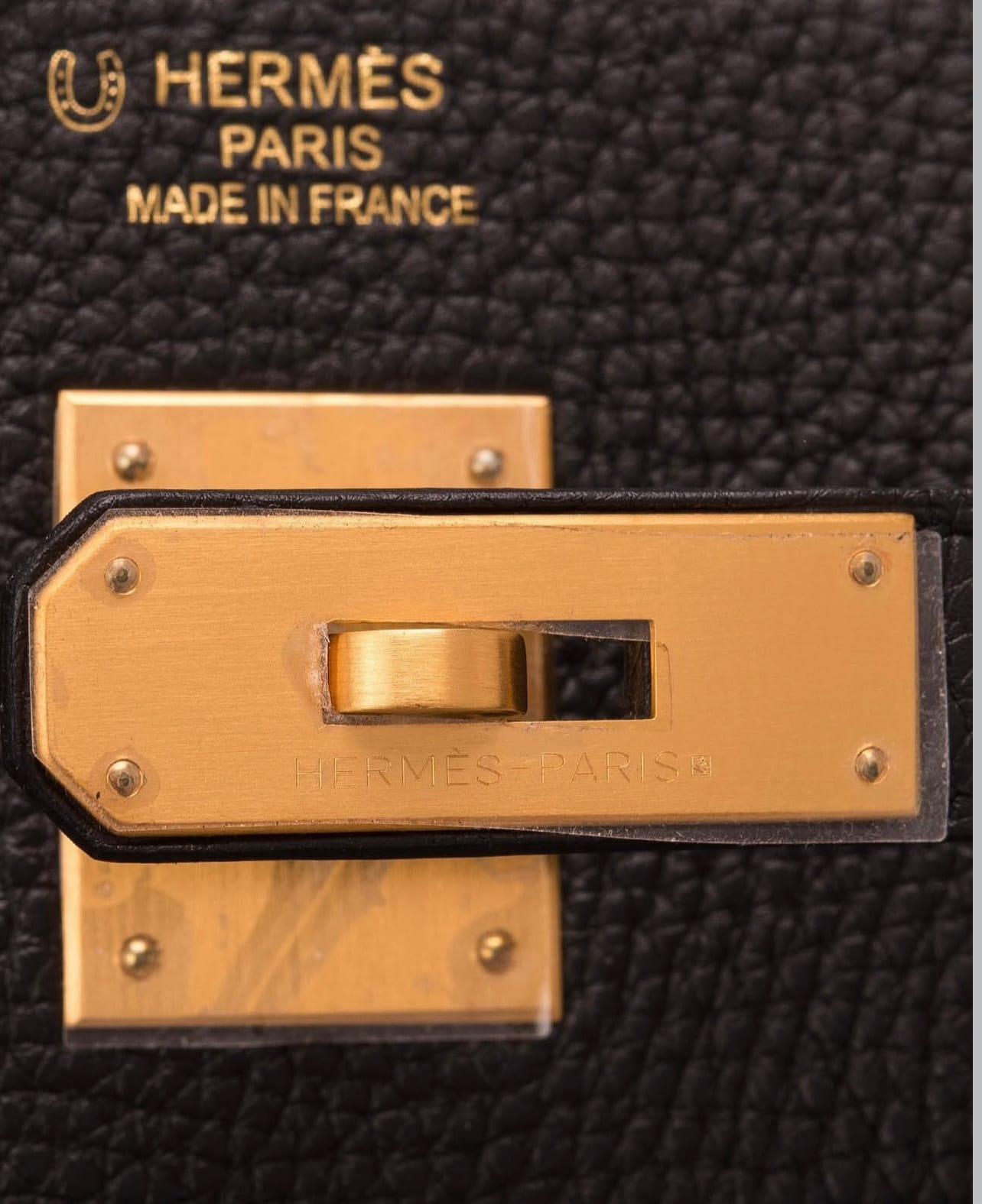
Brushed Gold Hardware (BGHW) preserves the warmth of traditional Gold Hardware while reducing its reflective shine, making it particularly elegant on colours such as Gold, Fauve, Noir and Rouge H.
Brushed Palladium Hardware (BPHW) offers a cooler, contemporary interpretation with a satin silver appearance that pairs beautifully with Étoupe, Beton, Gris Meyer, Craie and other neutral shades.
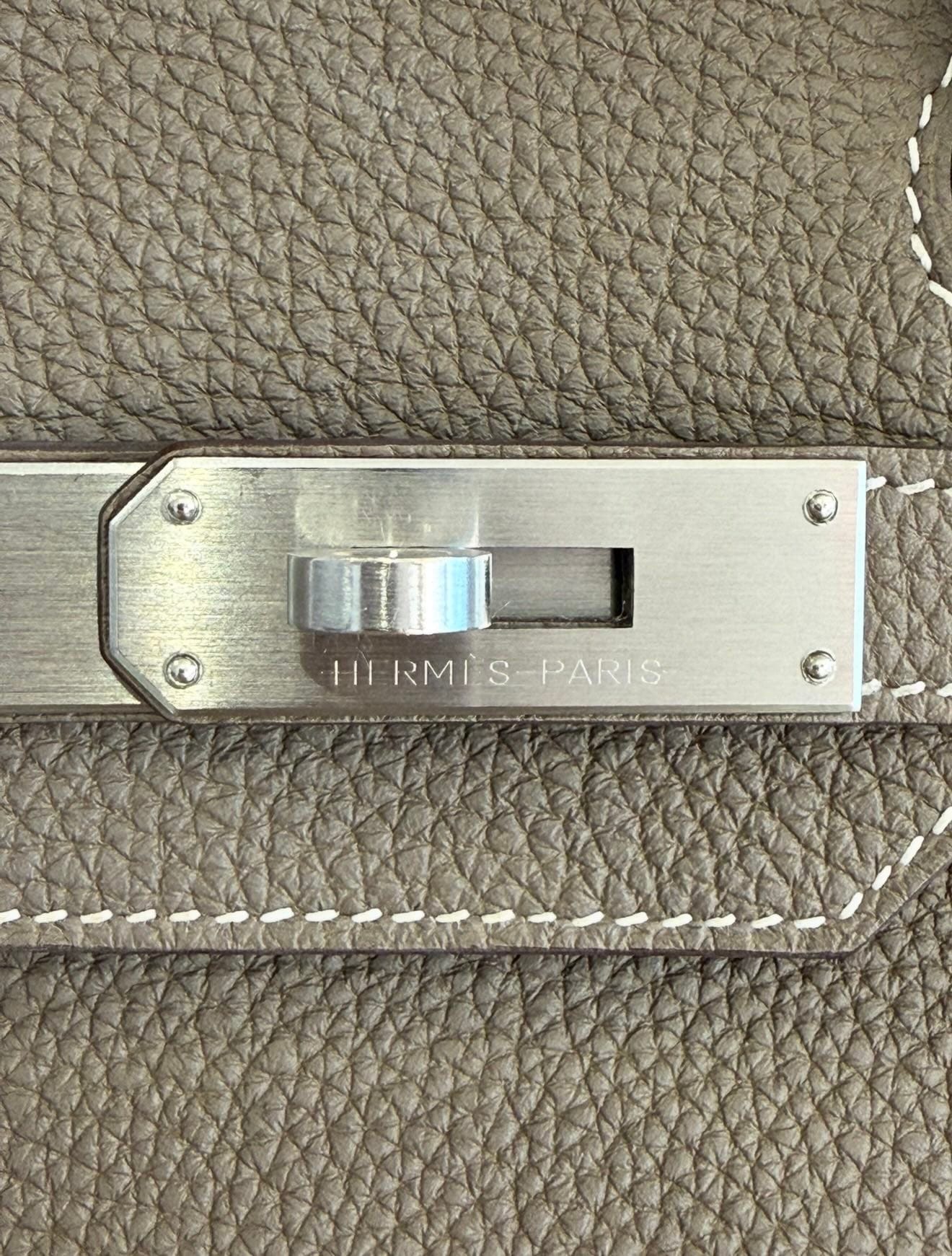
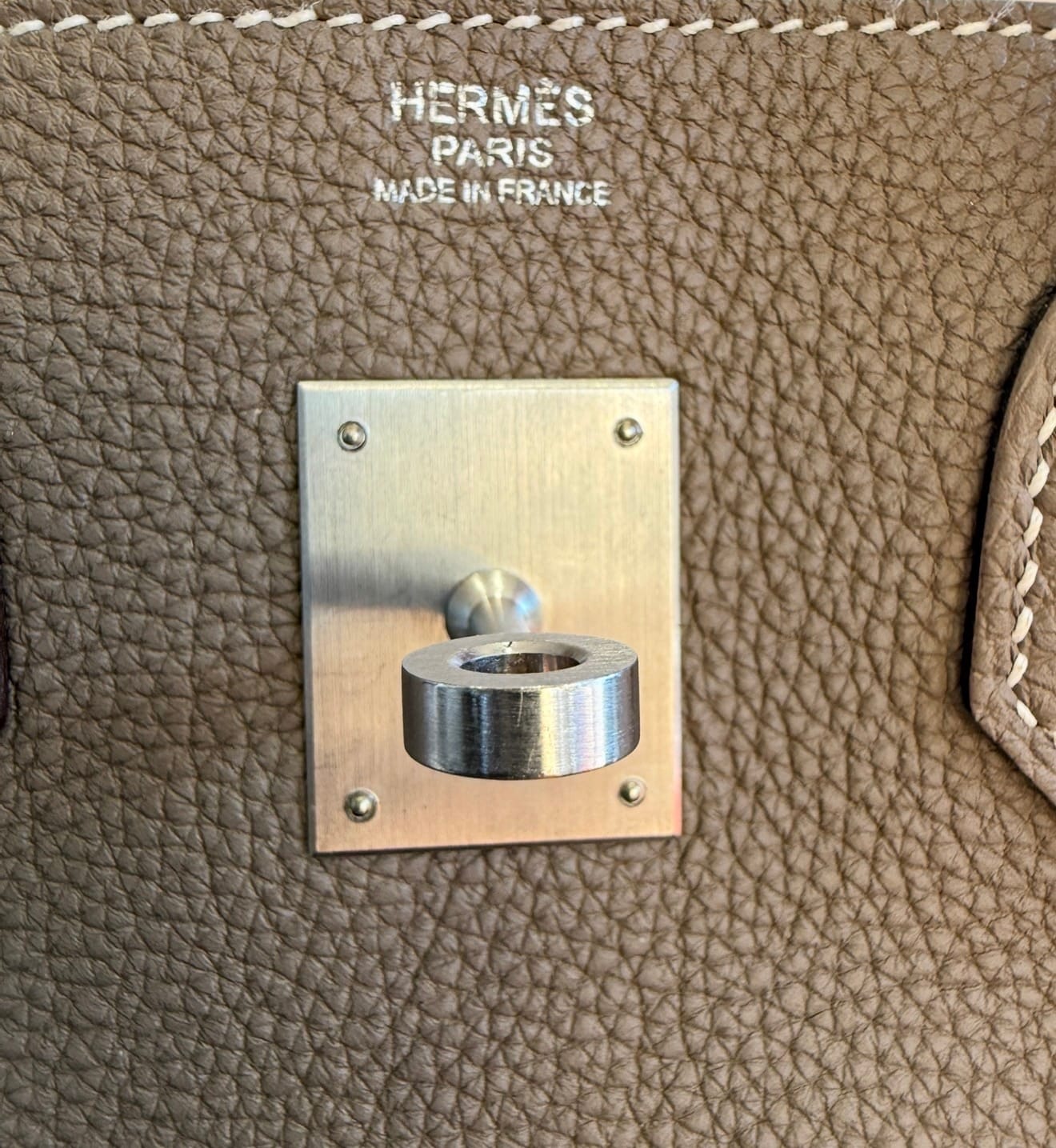
Because the satin surface diffuses reflections, fingerprints and very light hairline marks are often less visible than on highly polished hardware. However, the brushed texture itself should never be aggressively polished, as doing so may permanently alter the original factory finish.
Collector’s Insight
Collectors often consider Brushed Hardware one of Hermès’ most sophisticated finishes because it feels intentionally understated rather than overtly luxurious. While polished Gold and Palladium Hardware remain the Maison’s iconic classics, BGHW and BPHW appeal to buyers who appreciate subtle craftsmanship and contemporary design. Produced in considerably smaller numbers than their polished counterparts, both finishes remain highly desirable among experienced Hermès collectors.
Ruthenium Hardware (RHW)
Best known for: A dark gunmetal-grey finish with a stronger, edgier character than Palladium Hardware.
Quick Facts
- Collector abbreviation: RHW
- Hermès internal code: CY
- Base metal: Solid brass
- Finish: Ruthenium-toned precious metal plating
- Appearance: Dark gunmetal grey
- Availability: Rare / limited production
- Most associated with: Lizard Hermès bags, selected darker styles and collector pieces
- Authentication note: Ruthenium should not be confused with tarnished Palladium or So Black PVD.
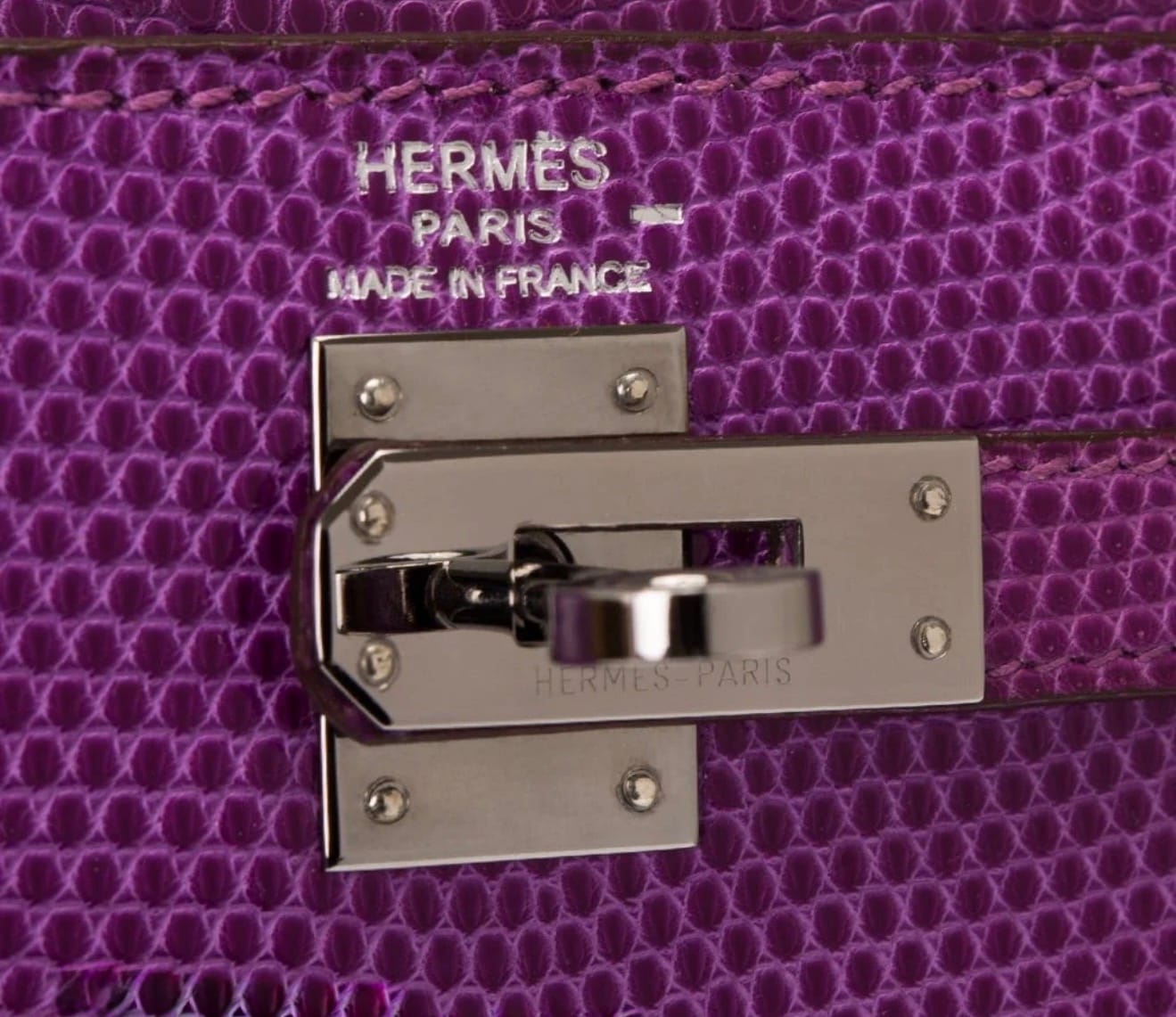
Ruthenium Hardware is one of the most distinctive and least common Hermès finishes. Visually, it sits far from the brightness of Palladium and the warmth of Gold. Its tone is darker, deeper and closer to gunmetal grey, giving the bag a more contemporary and sometimes almost masculine character.
Collectors often describe Ruthenium as the “edgier” alternative to Palladium. It keeps a metallic reflection, but the colour is moodier and more dramatic. This makes it especially striking on dark leathers, exotic skins and structured silhouettes.
Historically, Ruthenium appears only in limited periods of Hermès production. Several collector sources associate it particularly with bags produced around 2004–2007, and it is often mentioned in connection with lizard Hermès bags. Unlike Gold or Palladium, it never became a broad permanent classic, which is why it remains difficult to find today.
Like most Hermès hardware, Ruthenium Hardware is understood to be built on a solid brass core before receiving its final precious-metal finish. Ruthenium itself belongs to the platinum group of metals, like palladium, but its visual effect is much darker and more graphite-like.
Ruthenium should not be confused with So Black Hardware. So Black is a black PVD-coated aesthetic connected with a very specific Hermès collector story. Ruthenium, by contrast, remains a metallic gunmetal finish with visible reflection and a different collector profile.
Collector’s Insight
Ruthenium is not usually the first hardware choice for classic Hermès buyers, but that is exactly what makes it interesting. It appeals to collectors who already know Gold, Palladium and Rose Gold and want something rarer, darker and less predictable. Its market is narrower than So Black, but for the right buyer, Ruthenium gives a Hermès bag a powerful and highly distinctive identity.
So Black Hardware (SBHW)
Best known for: The most iconic all-black Hermès hardware ever created and one of the Maison’s most collectible modern finishes.
Quick Facts
- Collector abbreviation: SBHW (So Black Hardware)
- Base metal: Solid brass
- Finish: Black PVD (Physical Vapour Deposition) coating
- First introduced: Fall/Winter 2010
- Designer: Jean Paul Gaultier
- Availability: Extremely limited
- Most associated with: Noir Box Calf, Matte Alligator, Matte Crocodile
- Authentication note: Original So Black hardware features a black PVD finish rather than painted or anodised metal.
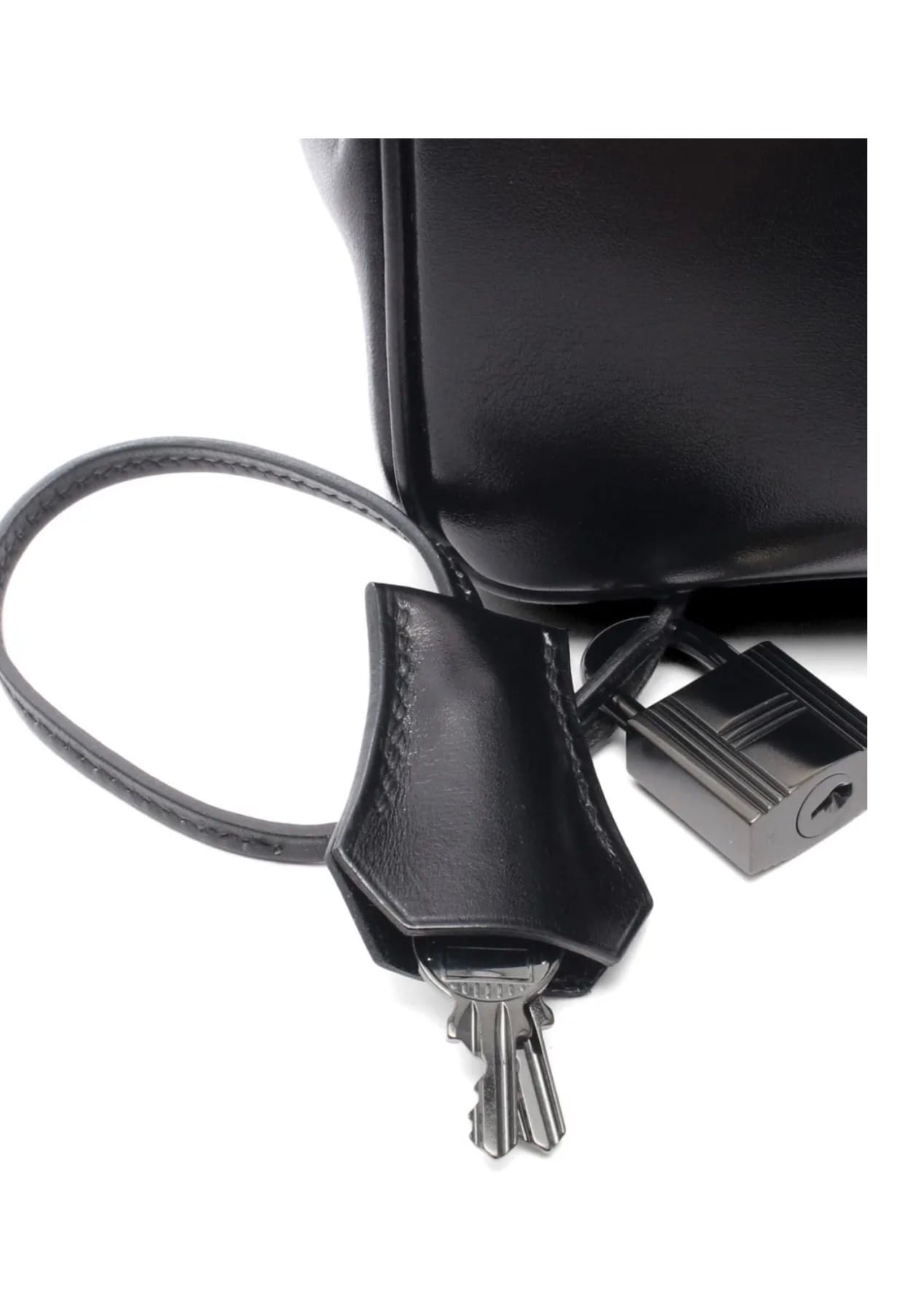
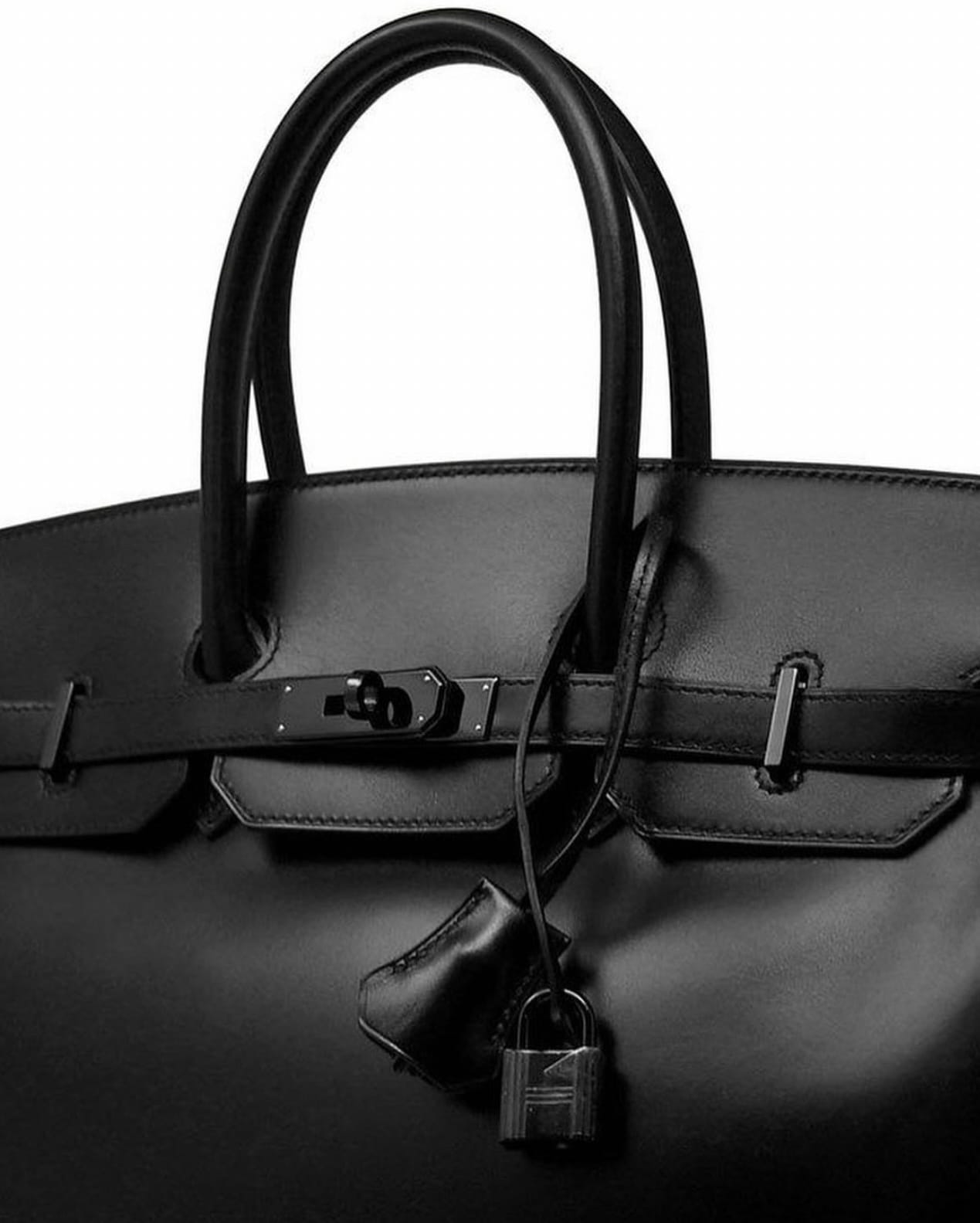
So Black Hardware is widely regarded as one of the most desirable modern Hermès finishes ever produced. Unlike traditional Gold or Palladium Hardware, every visible metal component—including the plaques, touret, lock, keys and feet—is finished in deep black, creating a completely monochromatic aesthetic that shifted the focus from the hardware to the silhouette and craftsmanship of the bag itself.
The So Black collection debuted during the Fall/Winter 2010 runway show, marking Jean Paul Gaultier’s final season as Artistic Director of Hermès womenswear. Rather than celebrating luxury through gold or silver accents, Gaultier proposed a radical vision: black leather paired with black hardware, black glazing and even black packaging. The collection immediately became one of the most memorable releases of his tenure and is now considered a milestone in modern Hermès history.
Unlike standard Hermès hardware, So Black uses a black PVD (Physical Vapour Deposition) coating, an advanced surface treatment that creates an exceptionally deep black finish while preserving the crisp lines of the hardware. The process differs completely from traditional gold or palladium plating and was chosen to achieve a seamless monochromatic appearance.
Production numbers were extremely limited, and many early So Black bags quickly disappeared into private collections. What initially divided opinion has since become one of the most sought-after collector editions. Today, pristine examples regularly achieve substantial premiums over comparable classic Birkin and Kelly bags, particularly when found in Matte Alligator, Matte Niloticus Crocodile or Box Calf leather.
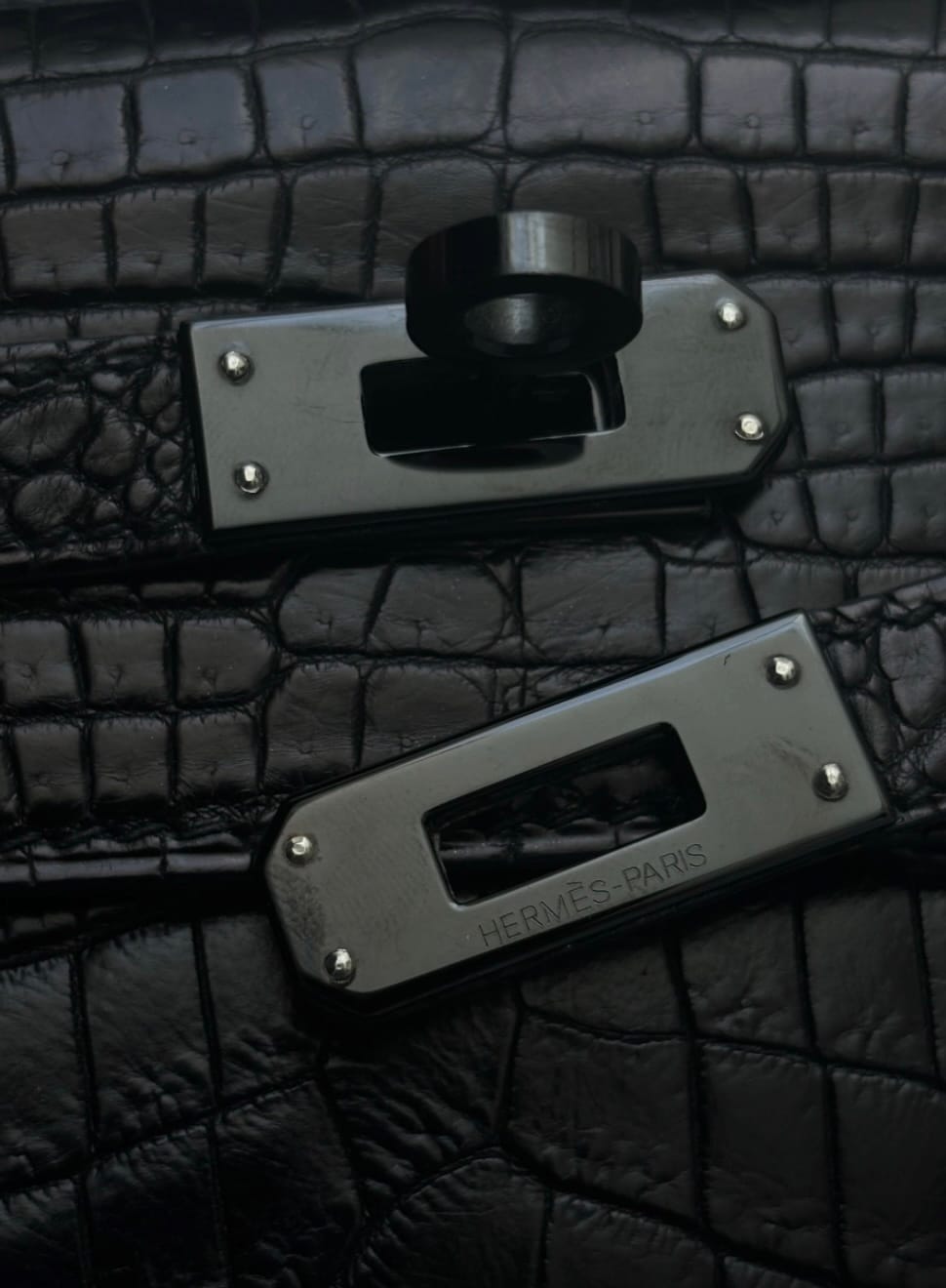
Collectors should also be aware that early glossy PVD-coated So Black hardware can show wear differently from traditional Hermès finishes. Unlike Gold or Palladium Hardware, damaged PVD cannot simply be polished back to its original appearance, making overall condition especially important in determining market value.
Collector’s Insight
Among experienced Hermès collectors, So Black is often viewed as the ultimate expression of modern Hermès design. It is not simply another hardware finish—it represents a specific moment in the Maison’s creative history and the final artistic statement of Jean Paul Gaultier at Hermès. More than a decade after its debut, demand continues to exceed supply, making original So Black Kelly and Birkin bags some of the most coveted contemporary Hermès pieces on the secondary market.
Note: Modern Hermès bags with black hardware are not automatically part of the original So Black Collection. Collectors generally reserve the term So Black for the limited edition introduced by Jean Paul Gaultier in Fall/Winter 2010 and its recognised heritage reissues.
Guilloché Hardware
Best known for: Decorative engraved hardware inspired by traditional fine jewellery and watchmaking.
Quick Facts
- Common name: Guilloché Hardware
- Base metal: Solid brass
- Finish: Precious metal plating with decorative guilloché engraving
- Appearance: Fine geometric engraved pattern
- Availability: Limited production
- Authentication note: Hermès does not publicly assign a standard collector abbreviation or invoice code for Guilloché Hardware.
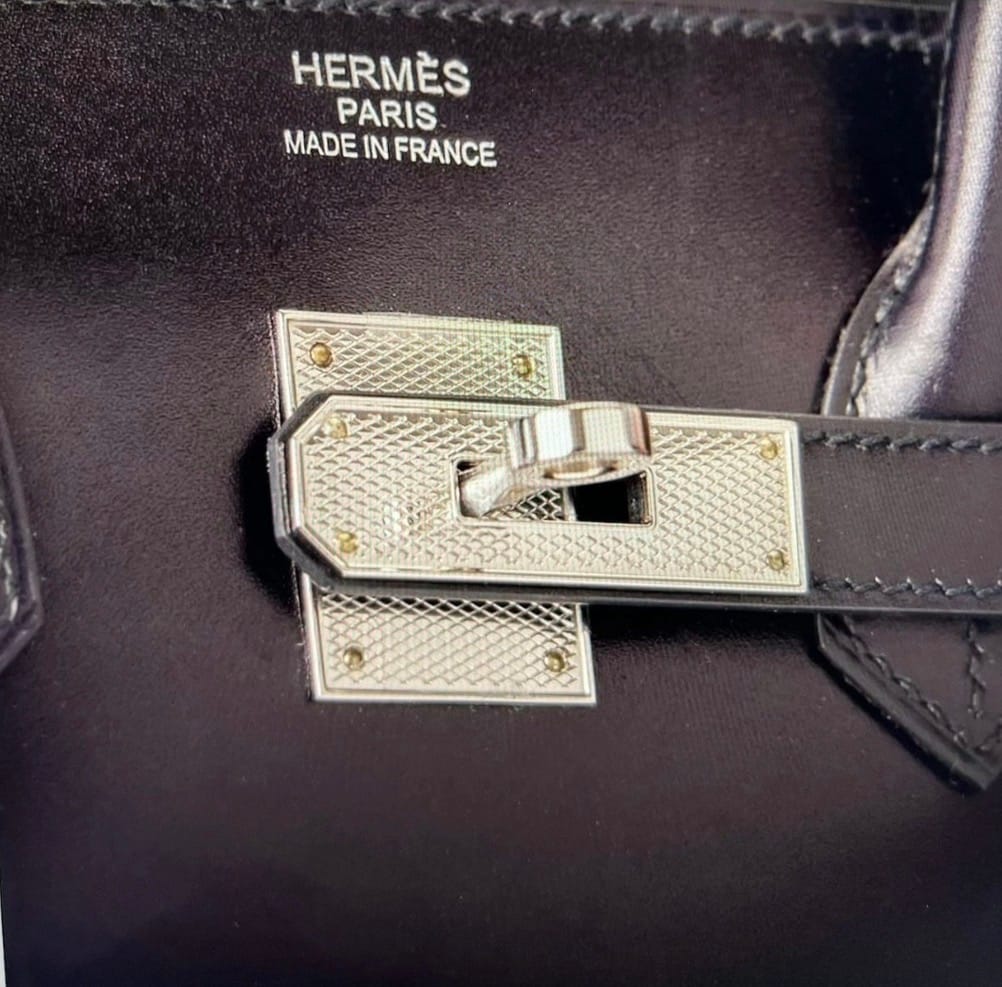
Unlike other Hermès hardware finishes, Guilloché is defined not by its colour but by its intricate engraved surface. The name comes from the traditional guilloché engraving technique, long associated with haute horlogerie and fine jewellery, where precise geometric patterns are engraved into metal to create depth and changing reflections.
Rather than introducing a new precious-metal finish, Hermès applies this decorative engraving after the hardware has received its final plating. As light moves across the surface, the engraved pattern produces subtle reflections that cannot be achieved with smooth polished hardware.
Because Guilloché Hardware has appeared only on selected limited collections, it remains one of the least frequently encountered Hermès finishes. Its appeal lies not in rarity alone but in the exceptional level of craftsmanship required to execute the engraving consistently across every hardware component.
Collector’s Insight
Guilloché Hardware is appreciated by collectors who value craftsmanship over visual impact. Rather than drawing attention through colour, it rewards close inspection, making it one of Hermès’ most refined decorative finishes.
Lacquered Hardware
Best known for: Colour-coated hardware created for highly limited artistic Hermès editions.
Quick Facts
- Common name: Lacquered Hardware
- Base metal: Solid brass
- Finish: Precious-metal hardware with coloured lacquer coating
- Availability: Extremely limited
- Authentication note: Most examples appear only on special collections and should always correspond with the original Hermès production.
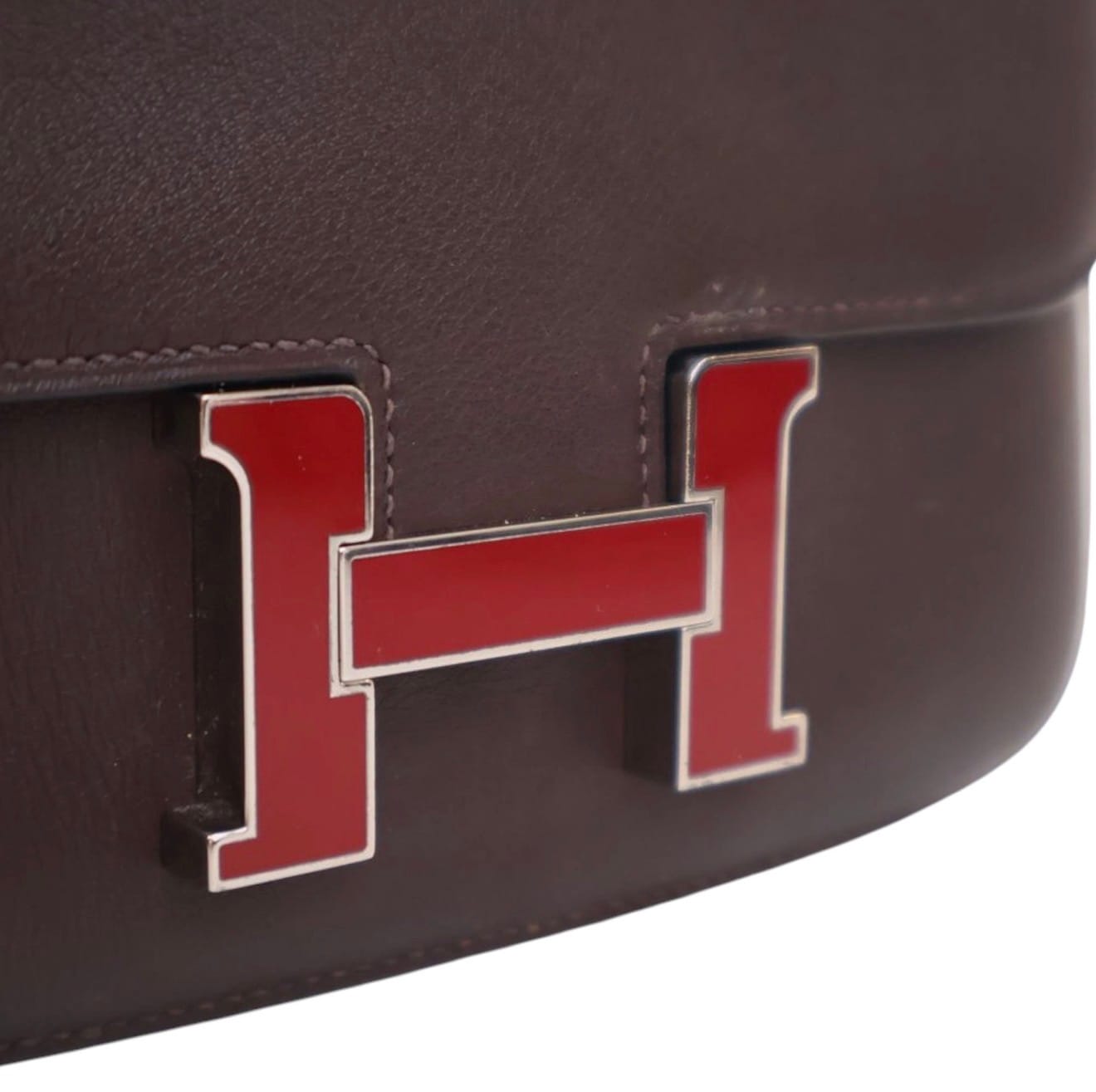
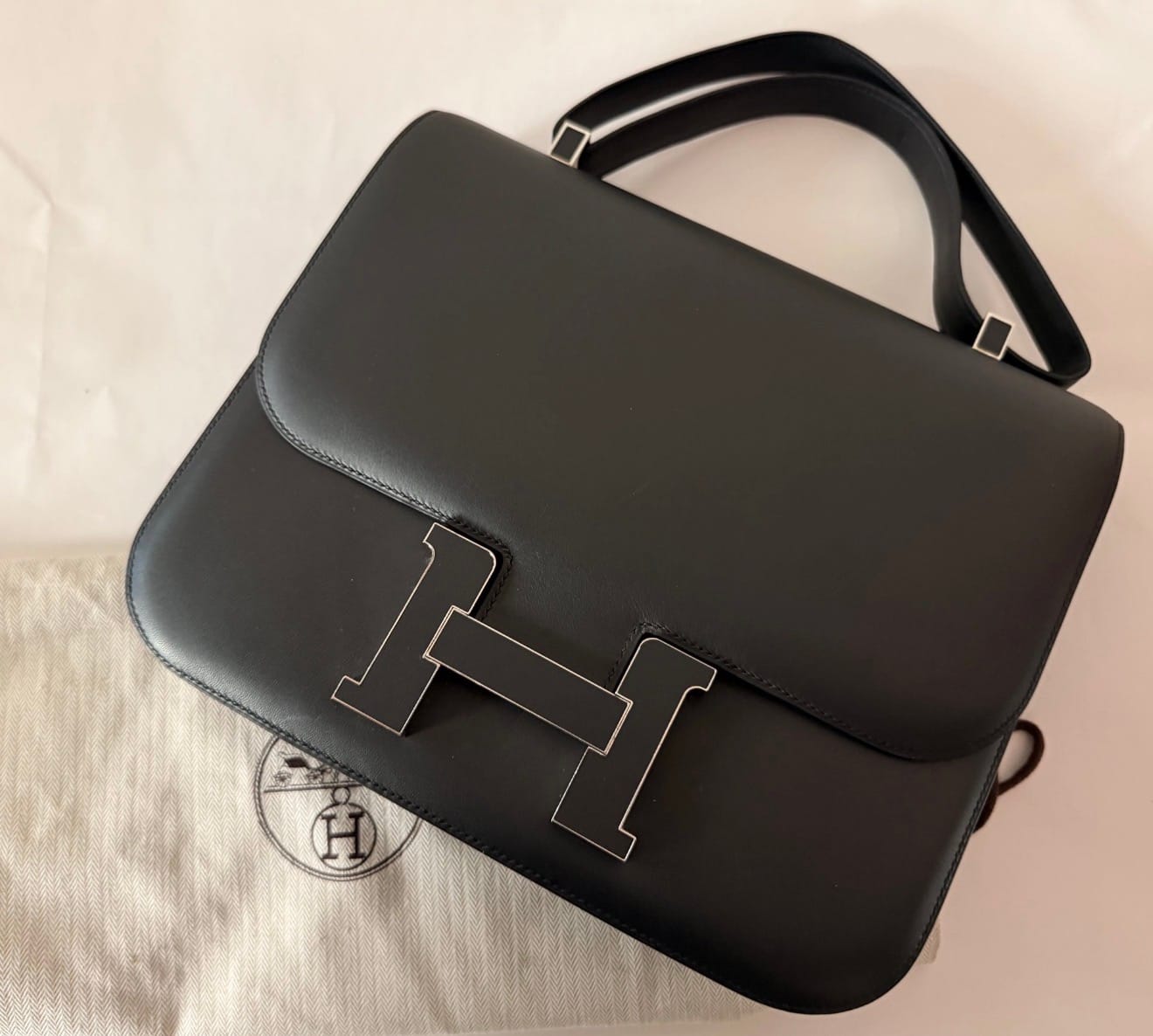
Lacquered Hardware represents one of the most unusual decorative finishes ever produced by Hermès. Instead of highlighting the natural colour of the metal, selected hardware components receive a coloured lacquer coating, allowing the hardware to become an integral part of the overall artistic design.
Unlike Gold, Palladium or Permabrass, Lacquered Hardware has never been a permanent catalogue option. It appears only on highly limited editions where colour plays a central role in the creative concept. As a result, collectors encounter it only occasionally on the secondary market.
Because the coloured lacquer forms part of the original finish, any chips, cracks or restoration work can significantly affect collectability. Preserving the original lacquer is therefore particularly important for long-term value.
Collector’s Insight
Most Hermès collectors will never own a bag with Lacquered Hardware simply because production numbers are extremely small. While it does not command the universal demand of So Black, its rarity and artistic character make it highly desirable among collectors who specialise in unusual Hermès editions.
Electrum Hardware (EHW)
Best known for: A rare bi-metal hardware combining warm gold and cool palladium tones in a single Hermès design.
Quick Facts
- Collector abbreviation: EHW (Electrum Hardware)
- Appearance: Bi-metal finish combining Gold and Palladium Hardware
- Configuration: Gold tourets with Palladium plaques and complementary hardware elements
- Availability: Rare and highly collectible
- Authentication note: Electrum should display a deliberate factory combination of gold and palladium components, not replacement parts from different bags.
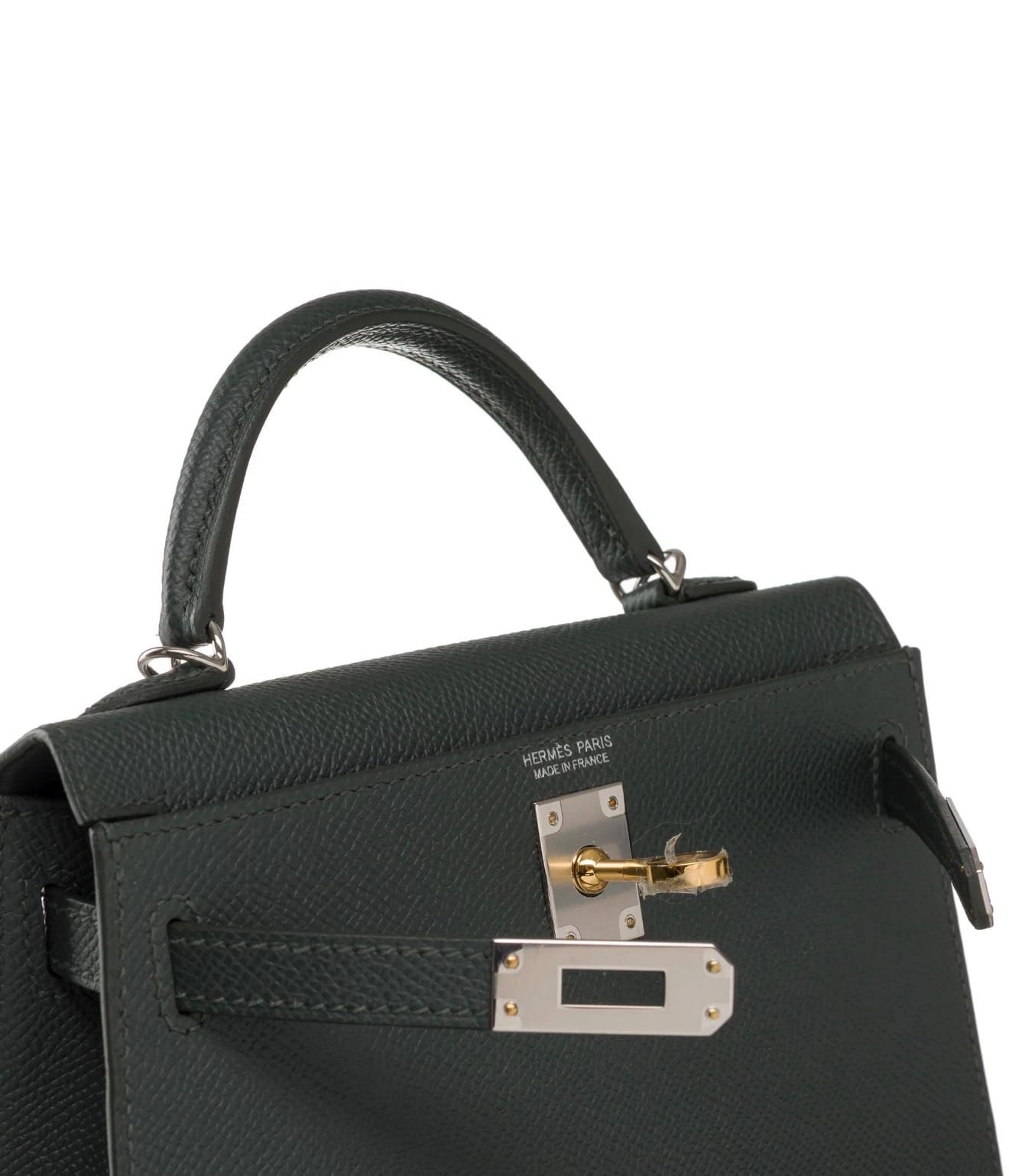
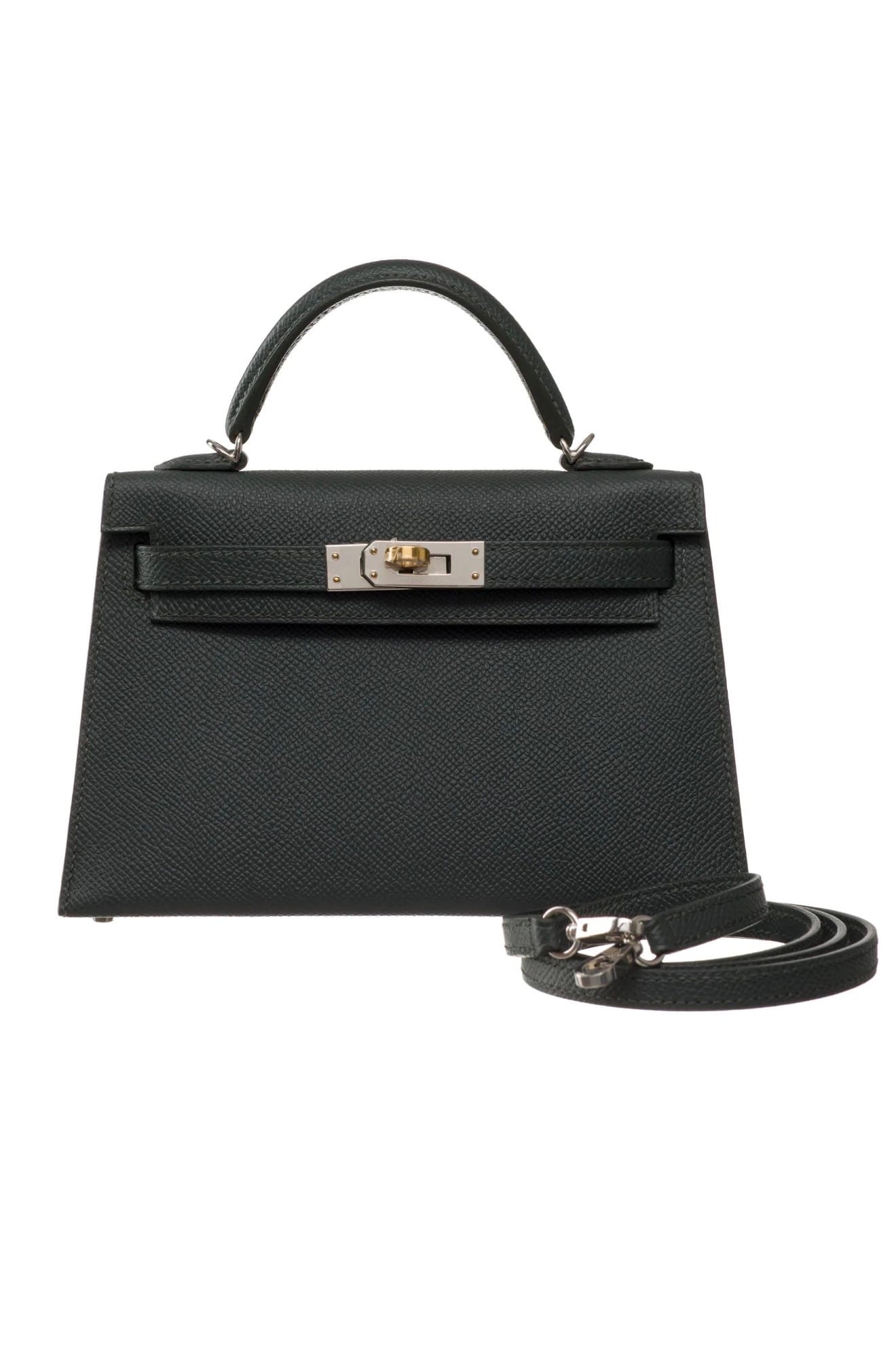
Electrum Hardware is one of the rarest and most distinctive hardware configurations ever produced by Hermès. Rather than choosing between Gold Hardware and Palladium Hardware, the Maison intentionally combines both finishes on a single bag. The result is a sophisticated bi-metal aesthetic that immediately distinguishes Electrum from every standard Hermès hardware option.
Unlike common mixed-metal repairs sometimes seen on vintage bags, authentic Electrum Hardware is an original factory configuration. The most recognisable feature is the combination of gold tourets with palladium plaques, creating a subtle contrast that feels balanced rather than decorative. This intentional pairing allows the hardware to complement both yellow and white jewellery while adding an additional layer of visual depth.
The name Electrum is itself a reference to history. In the ancient world, electrum described a naturally occurring alloy of gold and silver that was widely used for jewellery and some of the earliest coins. Hermès adopted the name not because its hardware is made from that alloy, but because the concept perfectly reflects the harmonious combination of two precious metallic tones.
Electrum first appeared as a limited Hermès concept and has returned on several occasions in carefully selected collections. Rather than becoming a permanent hardware option like Gold or Palladium, it has remained an occasional heritage finish, reinforcing Hermès’ tradition of revisiting archival ideas instead of constantly inventing entirely new ones. Each reappearance has been welcomed enthusiastically by collectors, particularly those looking for details that immediately distinguish a bag from more familiar configurations.
Like all standard Hermès hardware, Electrum begins with solid brass components before receiving their respective precious-metal finishes. Each element is individually plated according to its intended colour before being assembled into the final bi-metal configuration. This makes Electrum considerably more complex to manufacture than standard single-finish hardware.
Because Electrum combines warm and cool metallic tones, it pairs exceptionally well with neutral Hermès colours such as Gold, Étoupe, Craie, Beton, Gris Tourterelle and Noir. Many collectors also appreciate its versatility, as it complements both yellow-gold and white-metal jewellery without favouring one over the other.
Collector’s Insight
Electrum occupies a unique position in the Hermès collector market. It is neither a permanent classic like Gold Hardware nor a dramatic statement like So Black. Instead, it appeals to experienced collectors who appreciate subtle rarity and historical references. Because production has always been limited and reintroductions have been infrequent, authentic Electrum bags remain difficult to source and attract strong interest whenever they appear on the secondary market.
Diamond Hardware (DHW)
Best known for: The most exclusive Hermès hardware, combining precious metals with hand-set diamonds.
Quick Facts
- Collector abbreviation: DHW (Diamond Hardware)
- Base metal: Varies by collection
- Standard finish: 18k white gold-plated hardware set with diamonds
- Exceptional Collection: Solid 18k white gold hardware with hand-set diamonds
- Availability: Extremely rare
- Authentication note: Genuine Diamond Hardware is found only on exceptionally rare Hermès creations and is always accompanied by appropriate documentation.
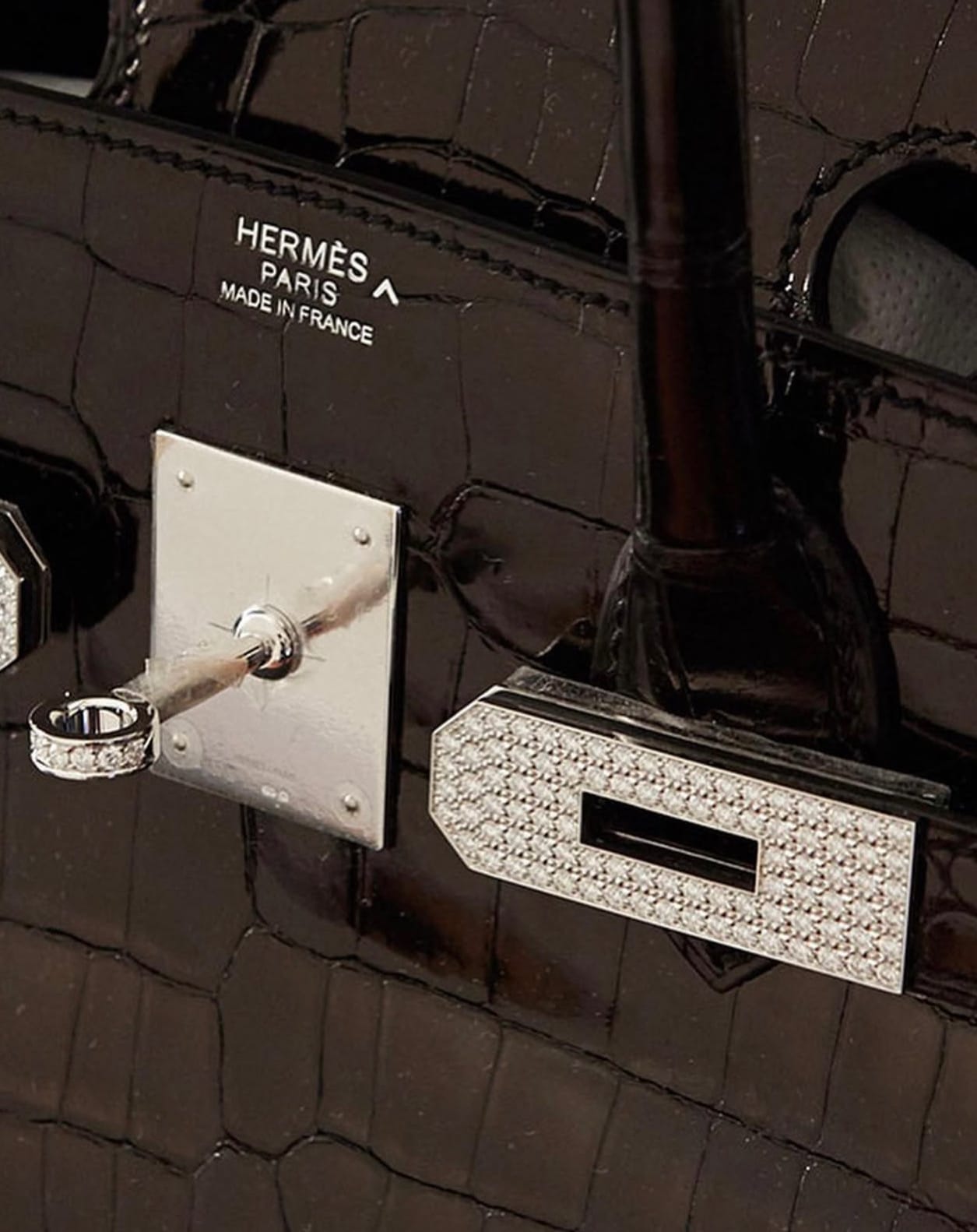
Diamond Hardware represents the highest level of Hermès craftsmanship. Rather than serving as a decorative variation of standard hardware, it transforms the bag into a true piece of high jewellery. Every diamond is individually set by hand, reflecting the same level of precision found in the Maison’s finest jewellery collections.
Unlike standard Gold or Palladium Hardware, Diamond Hardware is produced in extremely limited numbers. Most collectors will never encounter one in person, making it one of the rarest hardware options ever offered by Hermès.
Not all Diamond Hardware is constructed in the same way. Luxury specialists generally describe standard Diamond Hardware as 18-karat white gold-plated hardware set with brilliant-cut diamonds. These pieces already represent exceptional craftsmanship and are produced only in very limited quantities.
However, Hermès’ most extraordinary creations belong to the Exceptional Collection. On these handbags—including some of the legendary Himalaya Birkin and Himalaya Kelly models—the standard plated brass hardware is replaced with solid 18-karat white gold components. The plaques, pontets, spindle plate, lock and keys are crafted from solid white gold before being meticulously set with brilliant-cut diamonds.
Some Exceptional Diamond bags contain more than 170 grams of 18-karat white gold and over 10 carats of diamonds, placing them among the most valuable handbags ever created by Hermès. These masterpieces are produced in extraordinarily small numbers and frequently achieve record prices at international auctions.
Because every diamond is individually set into precious metal, Diamond Hardware requires specialised servicing and should never be polished or repaired using techniques intended for standard plated hardware.
Collector’s Insight
For most Hermès collectors, Diamond Hardware represents the ultimate expression of rarity rather than everyday luxury. These bags are purchased as investment pieces, museum-quality collectibles and heirloom objects. While Gold and Palladium Hardware define the classic Hermès aesthetic, Diamond Hardware occupies an entirely different category—where fine leather craftsmanship meets haute joaillerie.
💎 Did You Know?
Many collectors assume every Hermès Diamond Hardware bag uses plated hardware. In reality, the Maison’s Exceptional Collection replaces standard plated components with solid 18-karat white gold hardware, into which each diamond is individually hand-set. This exceptional construction is one of the reasons why the rarest Himalaya Birkin and Kelly bags have become some of the most valuable handbags ever sold.
Frequently Asked Questions
What is Hermès hardware made of?
Hermès hardware is traditionally crafted from solid brass before receiving its final finish, such as Gold, Palladium, Permabrass, Ruthenium or other specialty coatings. The solid brass core contributes to the durability, weight and premium feel of Hermès bags.
Is Hermès Gold Hardware made of real gold?
No. Standard Hermès Gold Hardware (GHW) is not made from solid gold. It is crafted from solid brass and finished with a precious gold coating developed by Hermès for durability and colour consistency. The exception is Diamond Hardware, which uses solid 18-karat white gold with individually hand-set diamonds.
What is the most popular Hermès hardware?
Gold Hardware (GHW) and Palladium Hardware (PHW) remain the two most popular finishes because they complement the widest range of Hermès leather colours and styles.
Which Hermès hardware is the rarest?
Diamond Hardware, So Black Hardware, Electrum Hardware and certain discontinued finishes are among the rarest Hermès hardware variations and are usually produced in very limited quantities.
What is the difference between Gold Hardware and Permabrass?
Gold Hardware has a rich yellow-gold appearance, while Permabrass features a softer champagne-gold tone. Both are classic Hermès finishes but create noticeably different visual effects depending on the leather colour.
Does Hermès hardware scratch?
Yes. Every Hermès hardware finish can develop hairline scratches through normal use. Highly polished finishes generally show micro-scratches more quickly than brushed finishes.
Does Hermès hardware tarnish?
Hermès hardware is designed to resist tarnishing, but fingerprints, light surface scratches and natural signs of wear may develop over time depending on use and the hardware finish.
Can Hermès hardware be polished or replaced?
Minor scratches may be reduced through Hermès Spa services, but excessive polishing is not recommended because it may alter the original finish. In some cases, Hermès can also replace damaged hardware, although availability depends on the model and hardware type.
How can I identify authentic Hermès hardware?
Authentic Hermès hardware features precise engraving, clean edges, accurate proportions, consistent finishing and substantial weight. Hardware should always be evaluated together with the leather, stamps and overall craftsmanship during authentication.
Related article: Hermès Authentication Guide
What do the numbers on Hermès locks and keys mean?
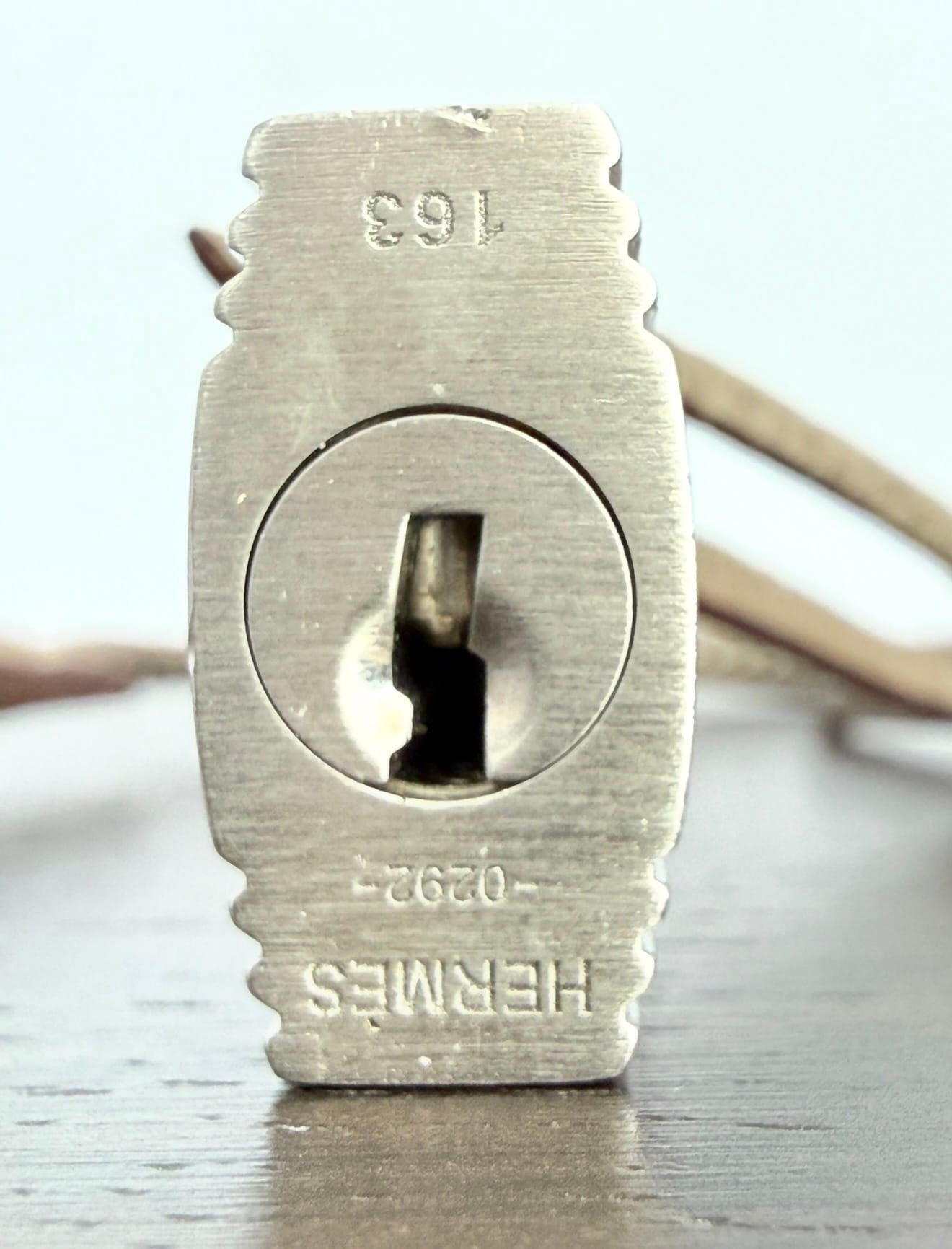
Hermès locks display two different numbers. The four-digit number is commonly associated with the lock’s production month and year, while the three-digit number matches the number engraved on both keys, identifying the original lock-and-key set. We explain how to decode these numbers in a separate guide.
Which Hermès hardware is best for collectors?
Collectors typically seek limited-production finishes such as So Black, Diamond, Electrum and discontinued hardware variations because of their rarity and long-term collectability.
How should I care for Hermès hardware?
Store your bag with its protective felt, avoid perfumes and moisture, and clean the hardware only with a soft microfiber cloth. Proper storage helps preserve both the finish and long-term value.
Related article: How to Store a Hermès Bag Properly
Explore More Hermès Guides
Hermès Front Stamp Guide: Placement, Colors & Collector Details
Hermès Blind Stamp Guide: How to Read Date Code Stamp
Hermès Stamp Symbols Guide: What Hermès Symbols Mean
Hermès Accessories That Protect, Preserve and Personalise Your Bag
Learn More from Bagotica
- How We Reject More Bags Than We Accept
- How to Evaluate the Condition of a Luxury Bag Professionally
- Manual Inspection vs AI Authentication
- What Is Entrupy and How It Protects Buyers
- Why Classic Bags Hold Value Over Time
Looking for an authentic Hermès bag with your preferred hardware finish?