

How to Tell if a Hermès Birkin is Real: 11 Visible Differences That Actually Matter
Introduction
Learning how to authenticate a Hermès Birkin bag has become increasingly important in today’s luxury resale market.
Most guides try to simplify authentication into a checklist.
In reality, it does not work like that.
Some differences are obvious.
Some are subtle.
And some cannot be explained at all — only felt.
This guide focuses only on what can be clearly seen and compared.
No theory. No assumptions. Only real differences.
Based in Rome, I work with pre-owned Hermès pieces that are physically inspected in Italy.
What Was Compared
This comparison is based on:
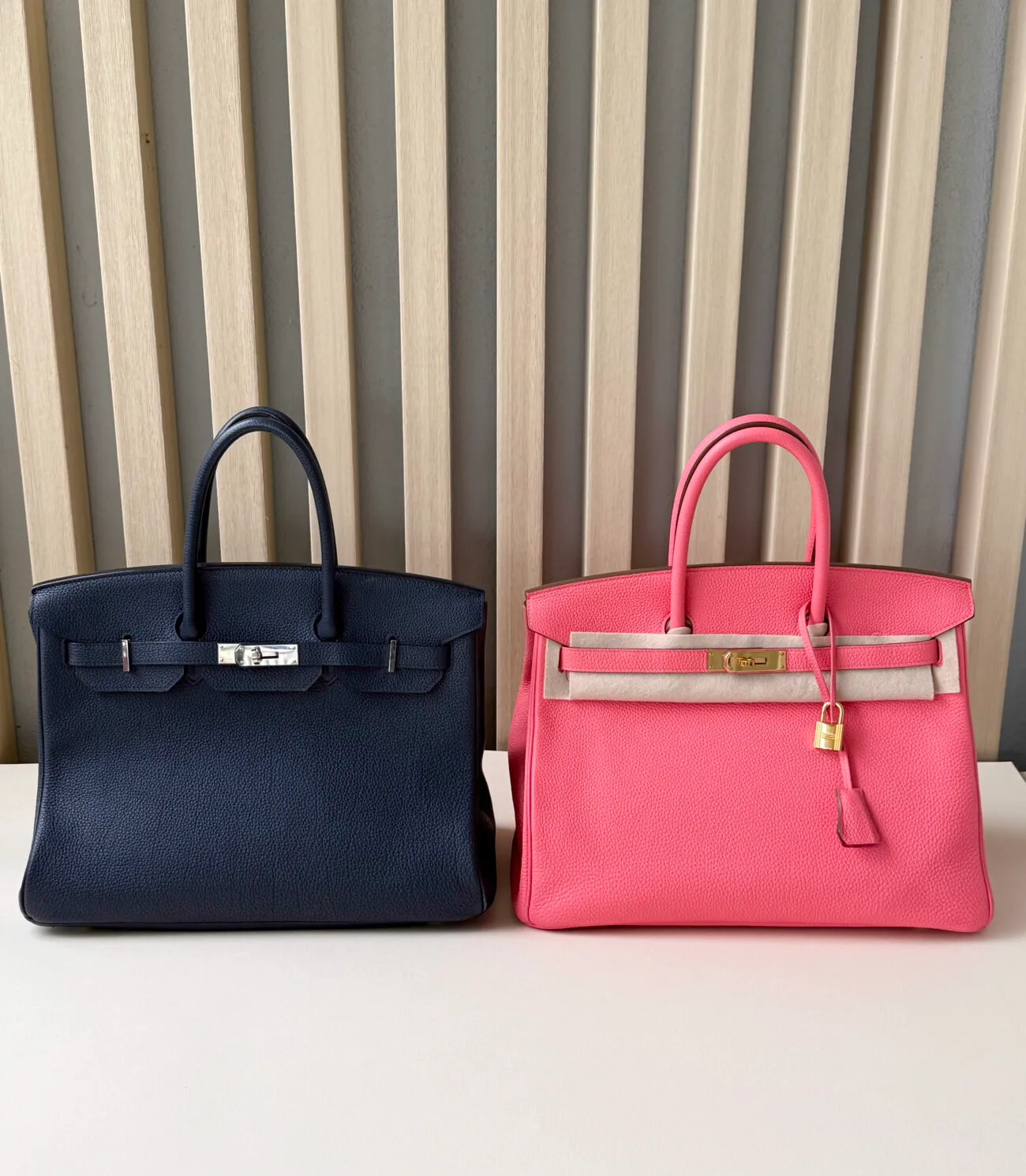
— an authentic Hermès Birkin 35 in Rose Azalee, Togo leather
— a high-quality replica Hermès Birkin 35 in Blue Noir, Togo leather
Both bags share the same size and structure, allowing a direct visual comparison.
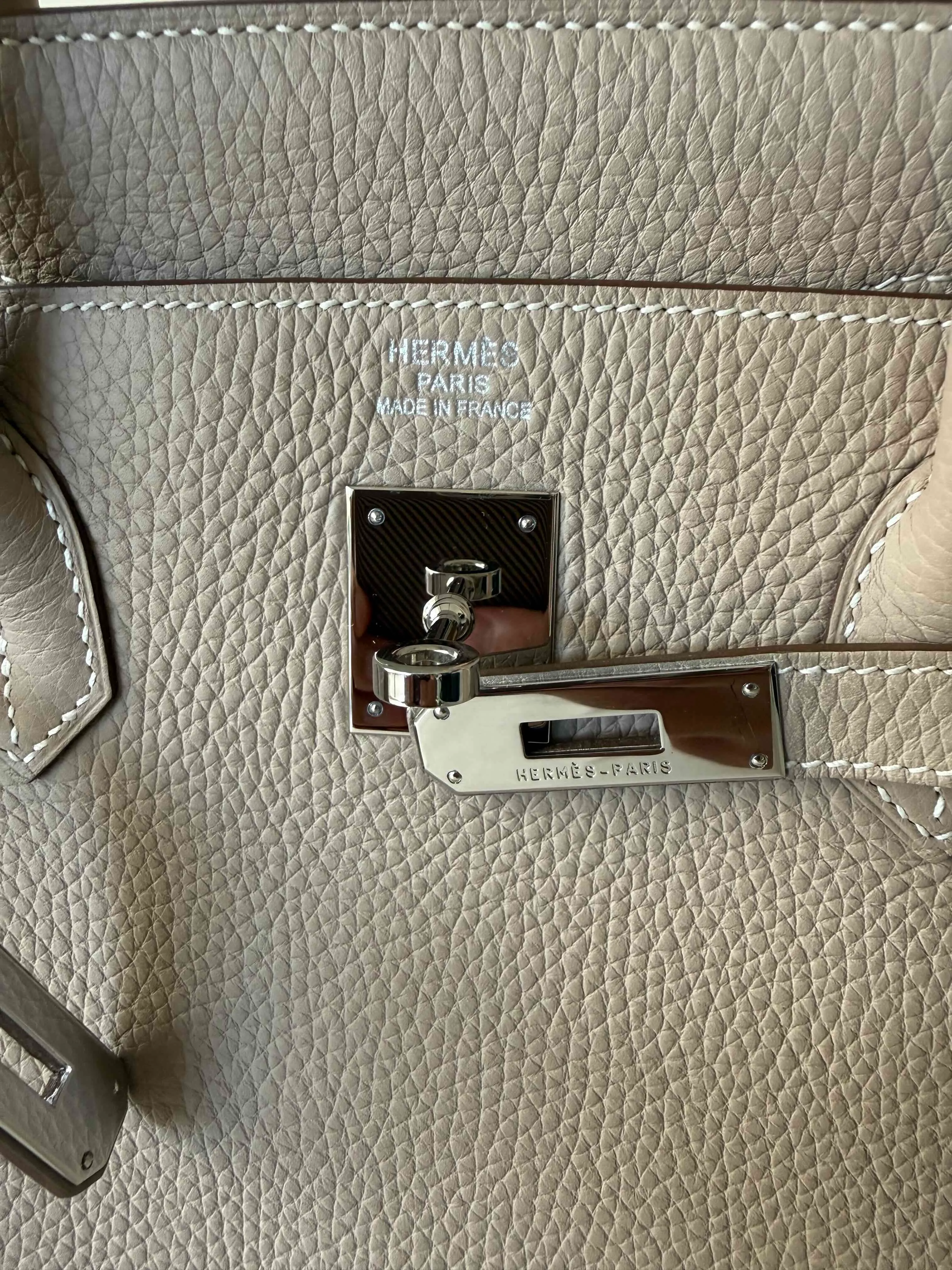
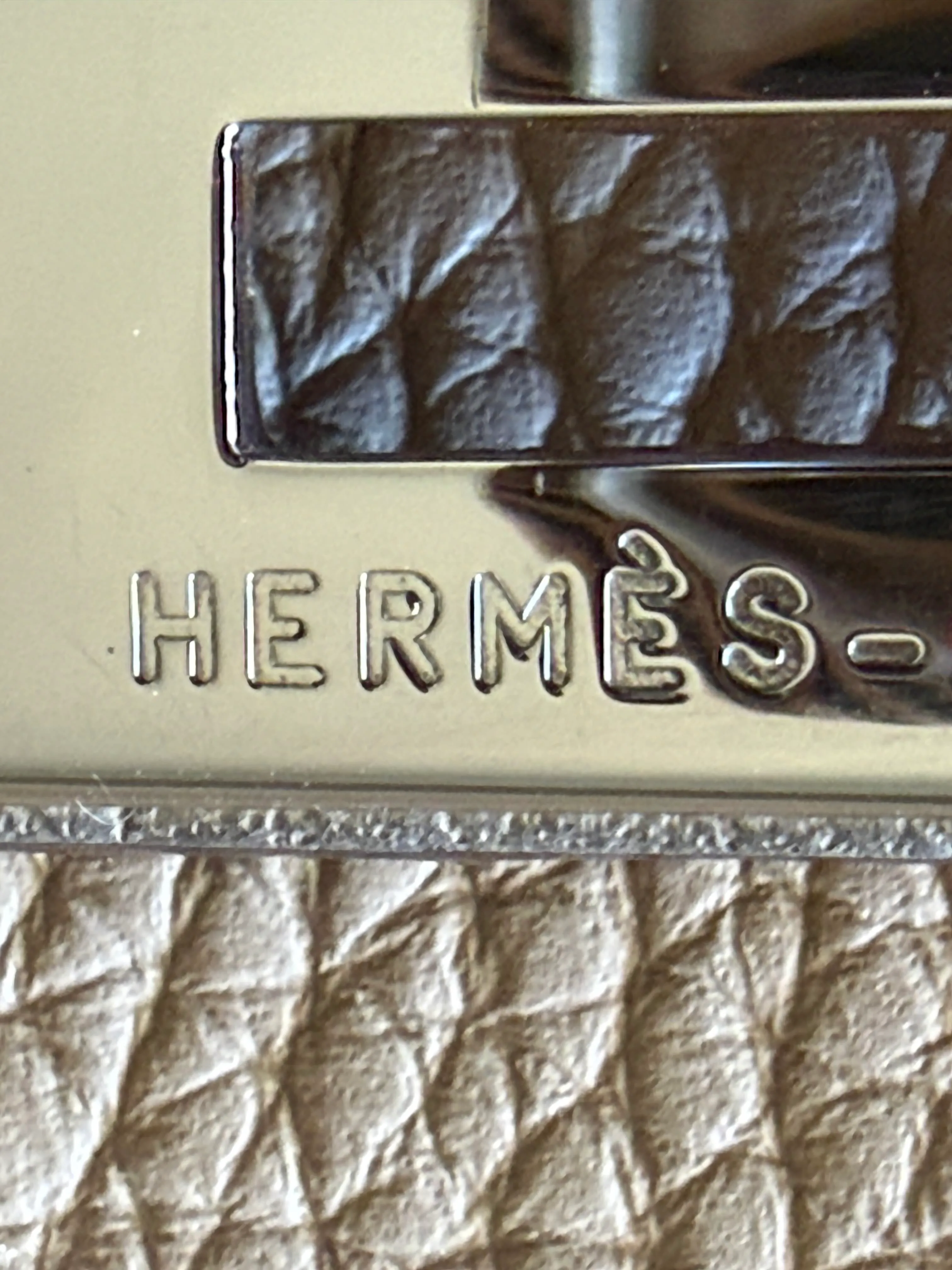
For finer details — including hardware, engraving, and construction elements — an authentic Hermès Birkin 40 in Etoupe Togo leather is also referenced to provide accurate close-up comparisons.
Part I — 11 Visible Differences
Hermès Birkin real vs fake
1. Edge Paint (Edge Finishing)
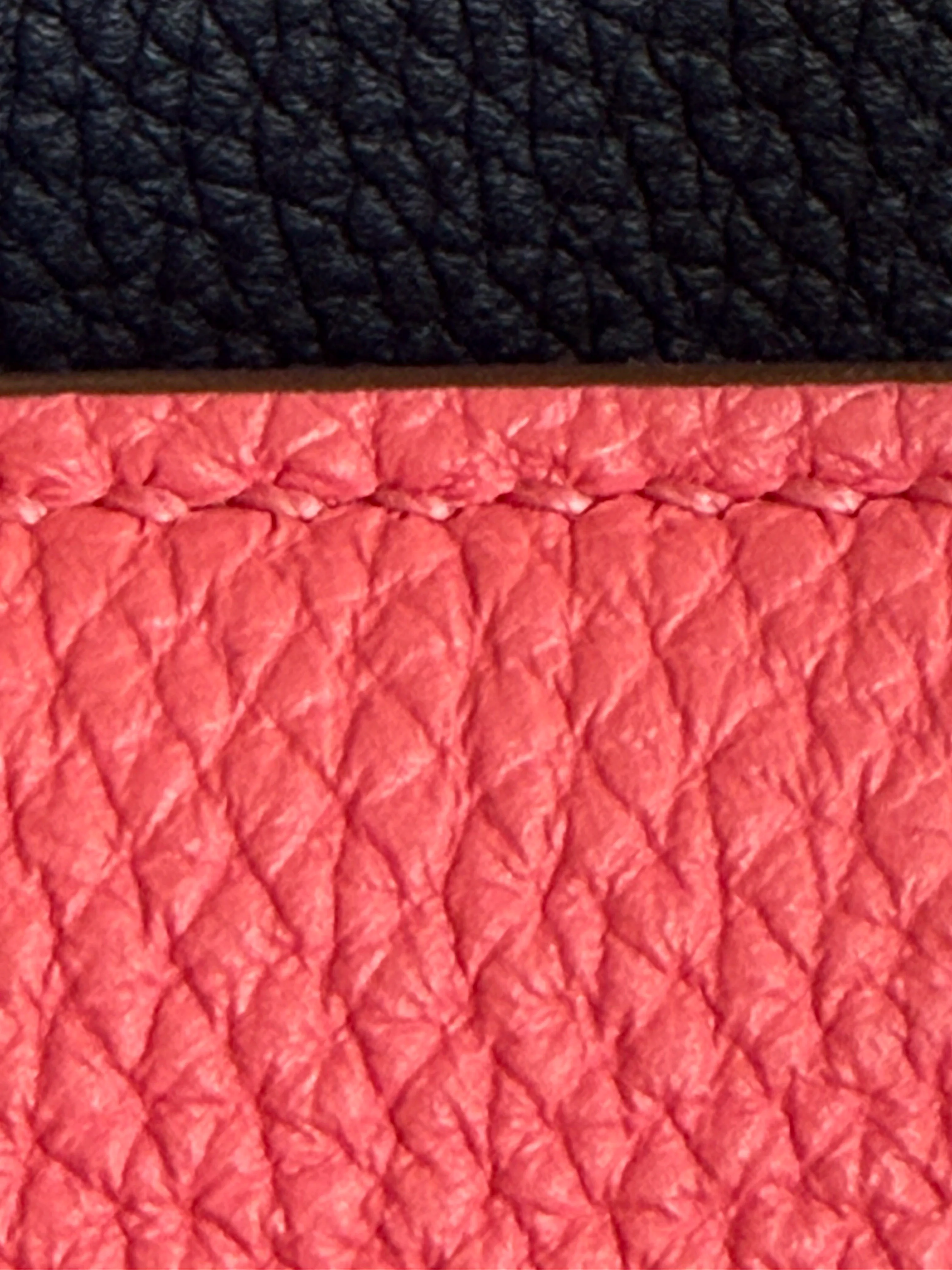
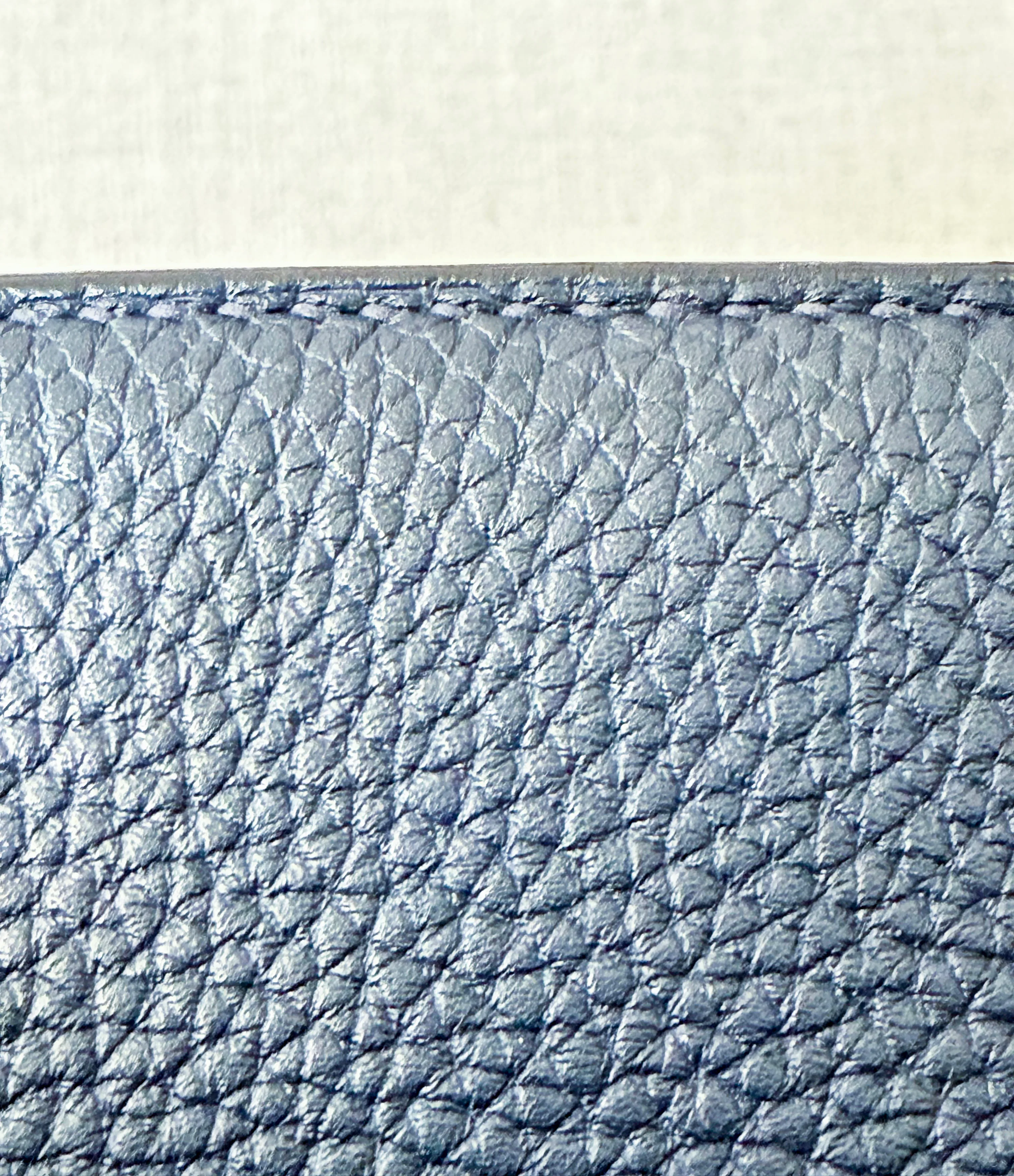
LEFT: REAL – thin, even, controlled line
RIGHT: FAKE – thicker, uneven, drops lower
On an authentic Hermès bag, the edge paint forms a very fine, precise line.
On replicas, it often appears heavier, less controlled, and uneven.
2. Distance Between Edge Paint and Stitching
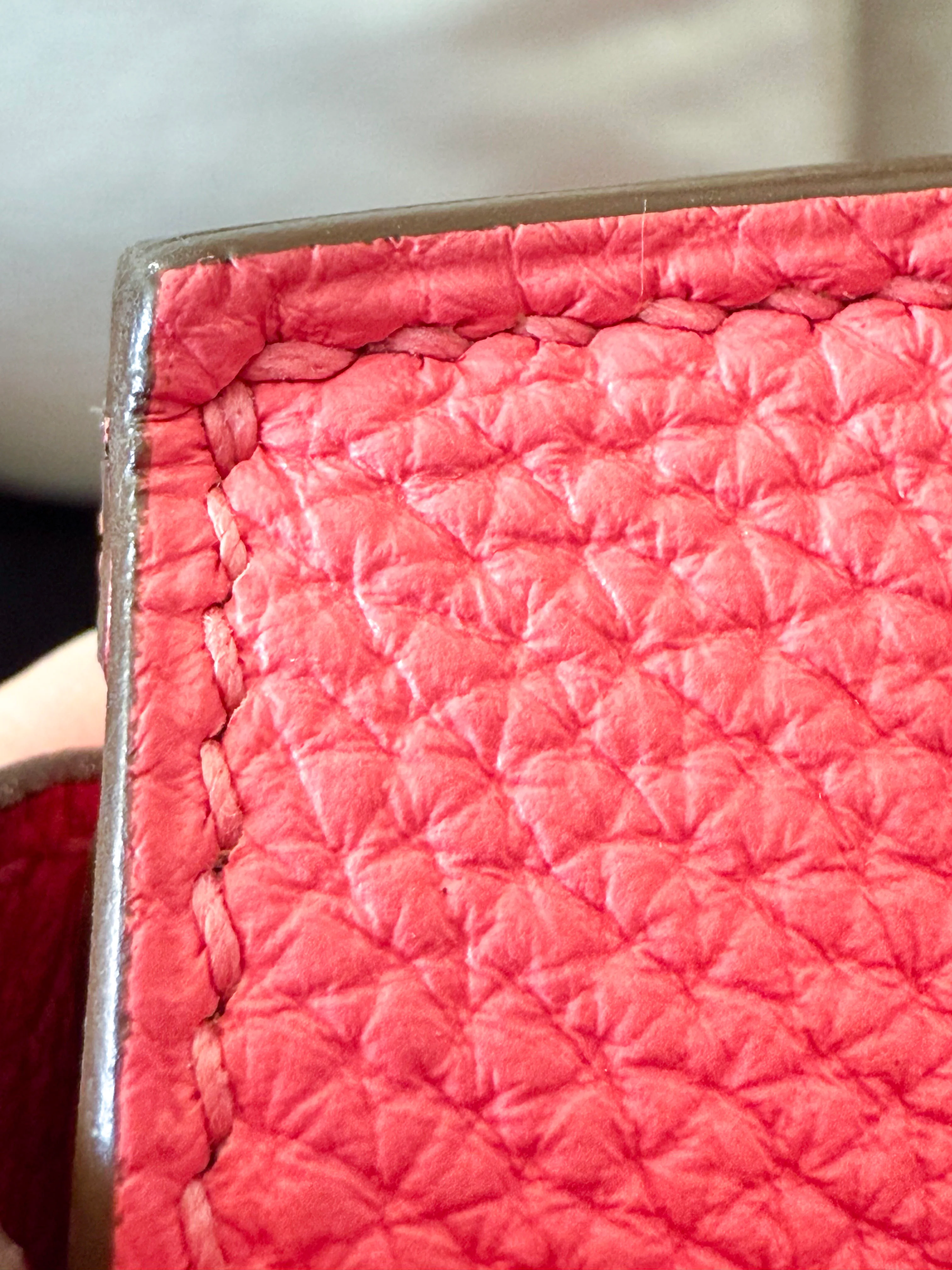
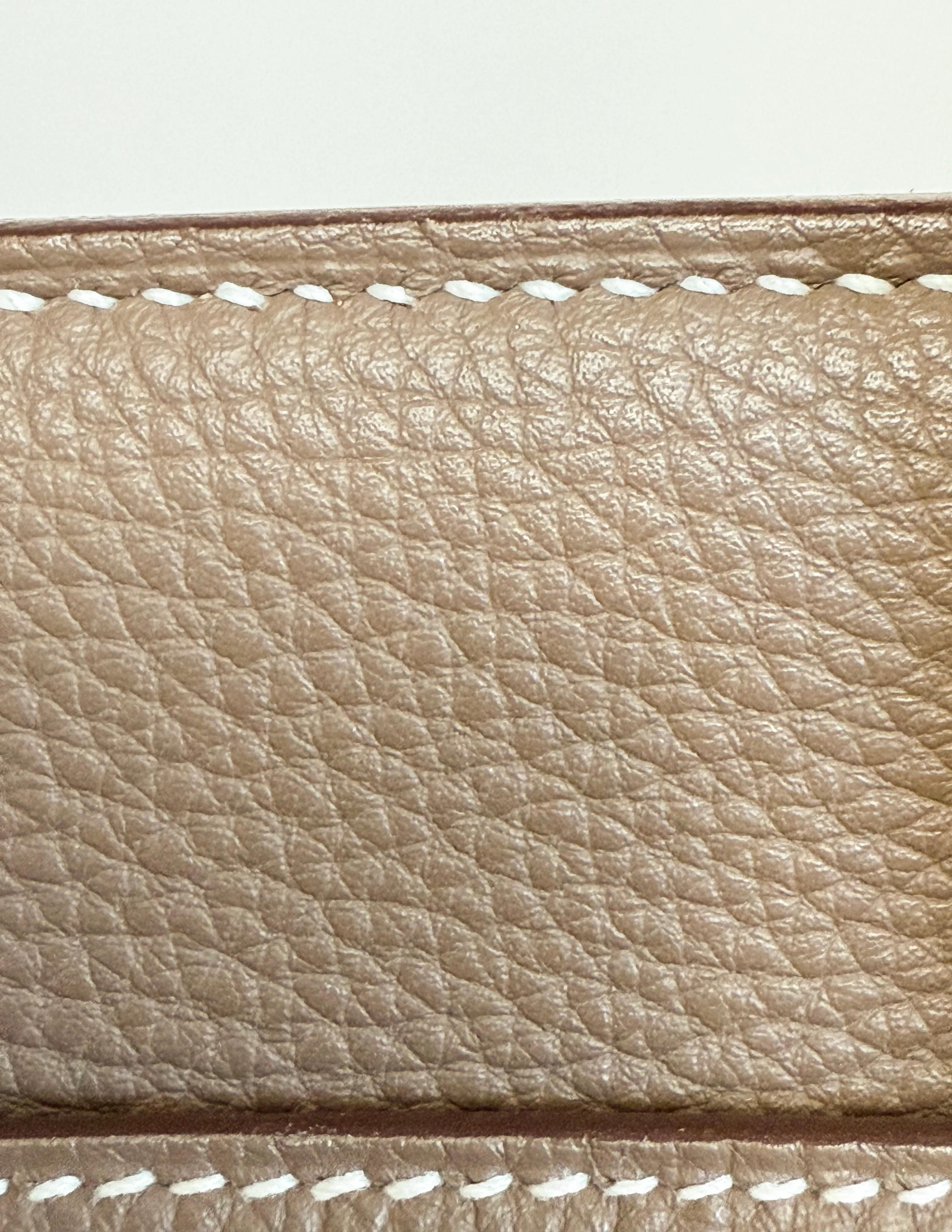
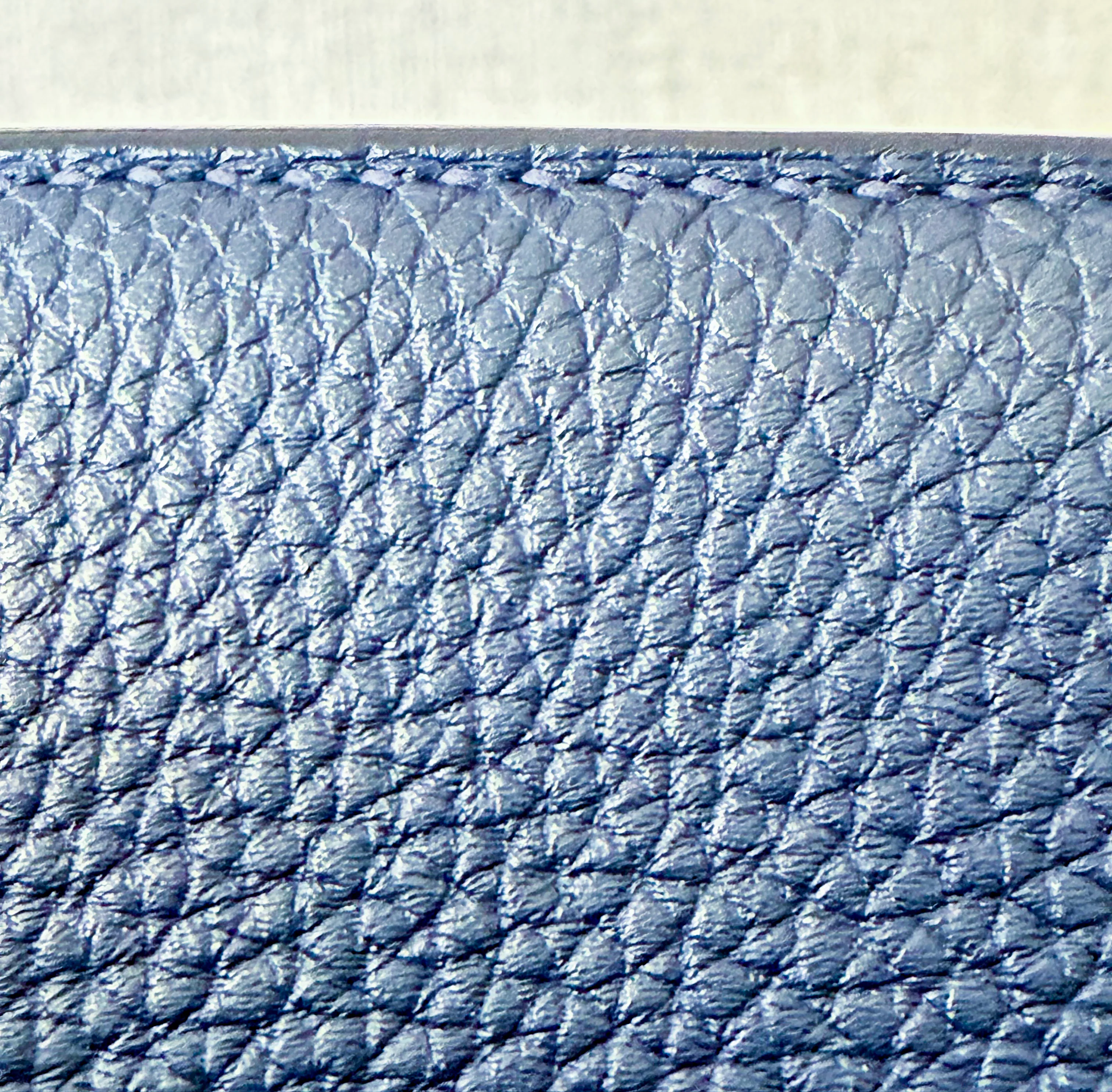
LEFT: REAL — visible gap (~1–1.5 mm)
CENTER: REAL (REFERENCE) — consistent spacing and clean construction
RIGHT: FAKE — stitching touches or overlaps the edge
Authentic Hermès construction always maintains a clean, even separation between the edge paint and the stitching. On replicas, this gap is often missing — the stitching sits too close to the edge or merges into it, creating a heavier, less precise look.
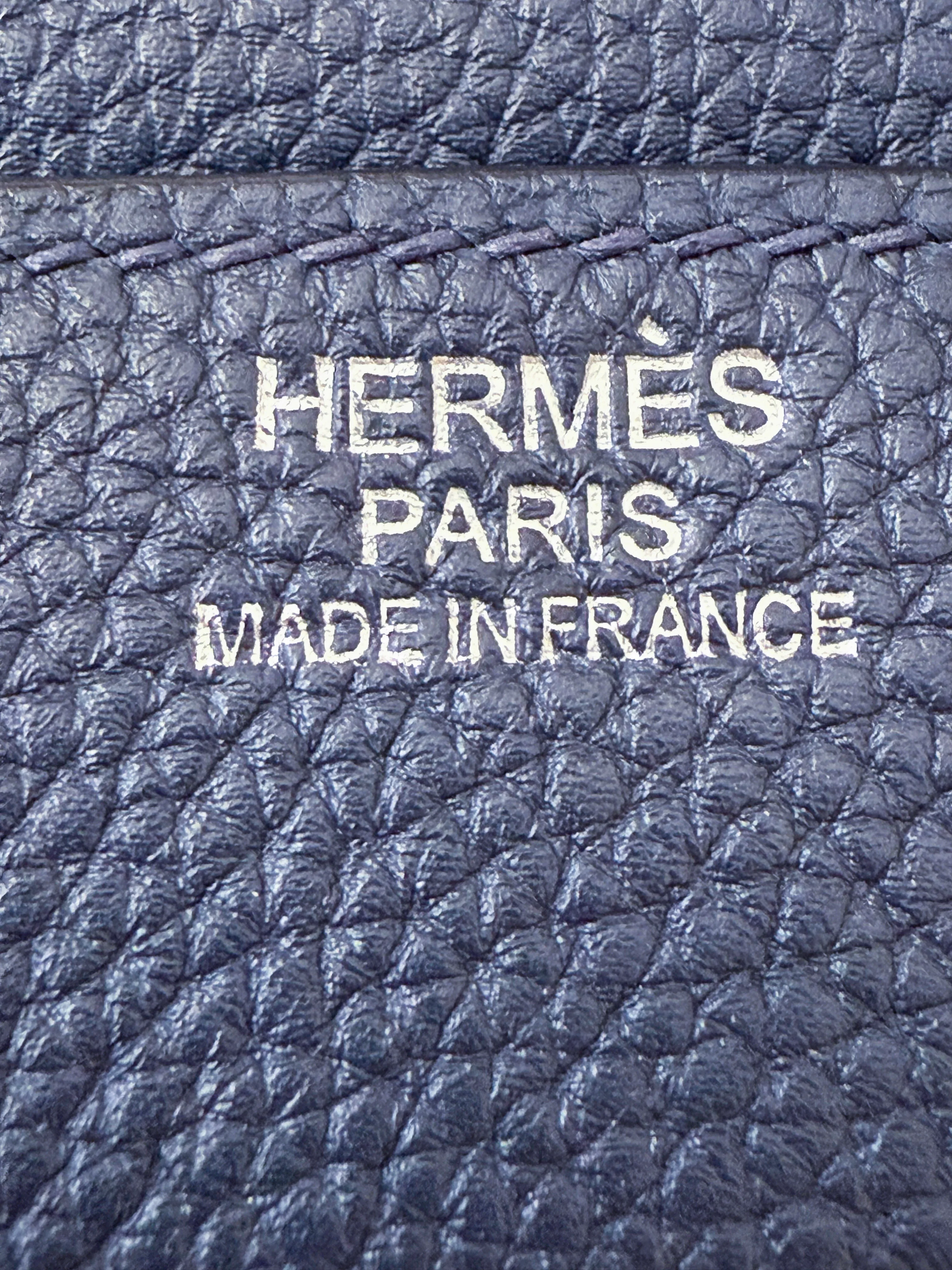
3. Stitching — Needle Angle, Rhythm, Thread
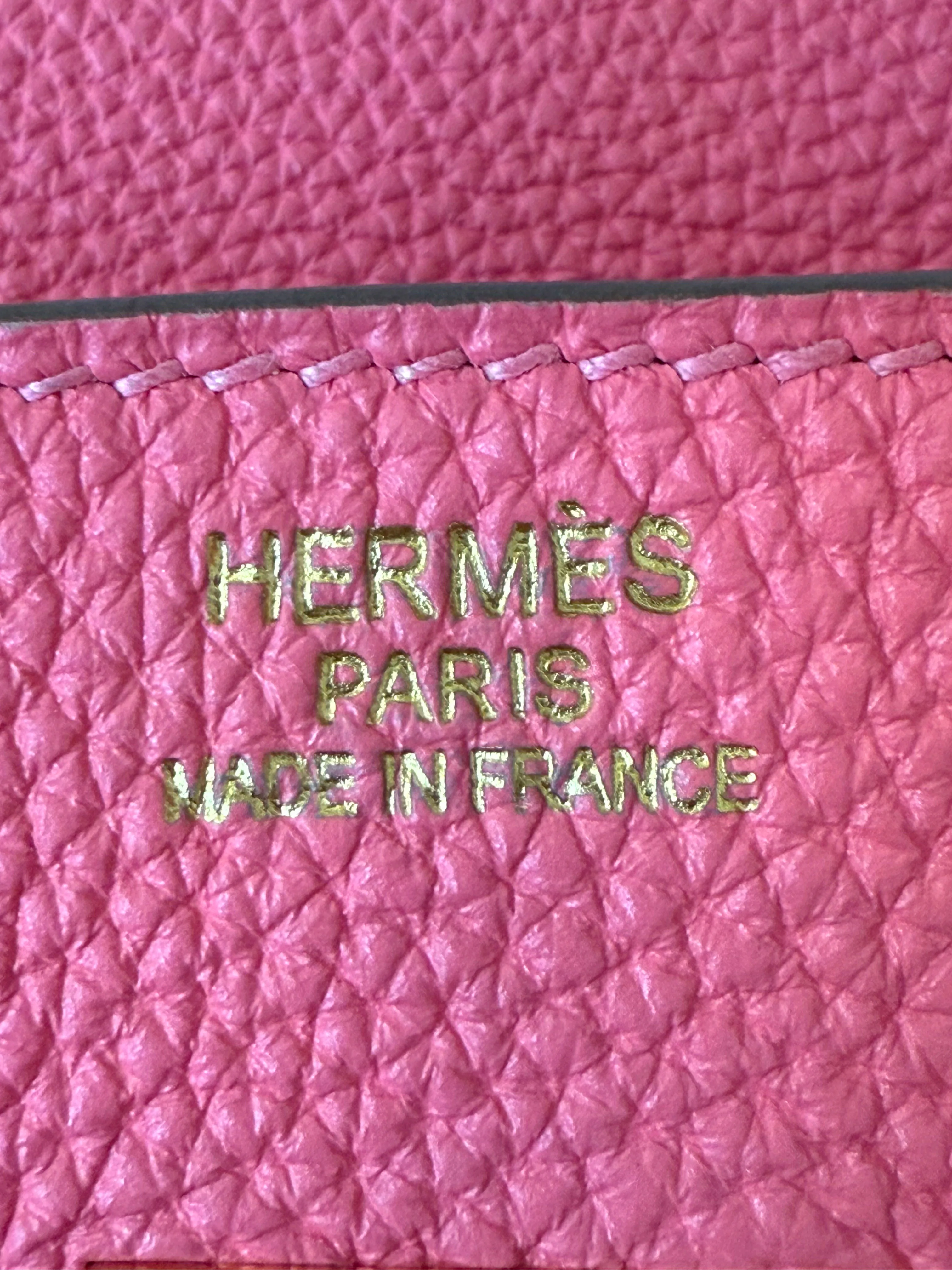
LEFT: REAL — slightly irregular spacing, natural hand-made rhythm
RIGHT: FAKE — overly consistent, mechanically perfect spacing
Hermès stitching is done entirely by hand, which creates subtle variations in spacing and angle.
On replicas, the stitching often appears too regular and controlled — a sign of machine production.
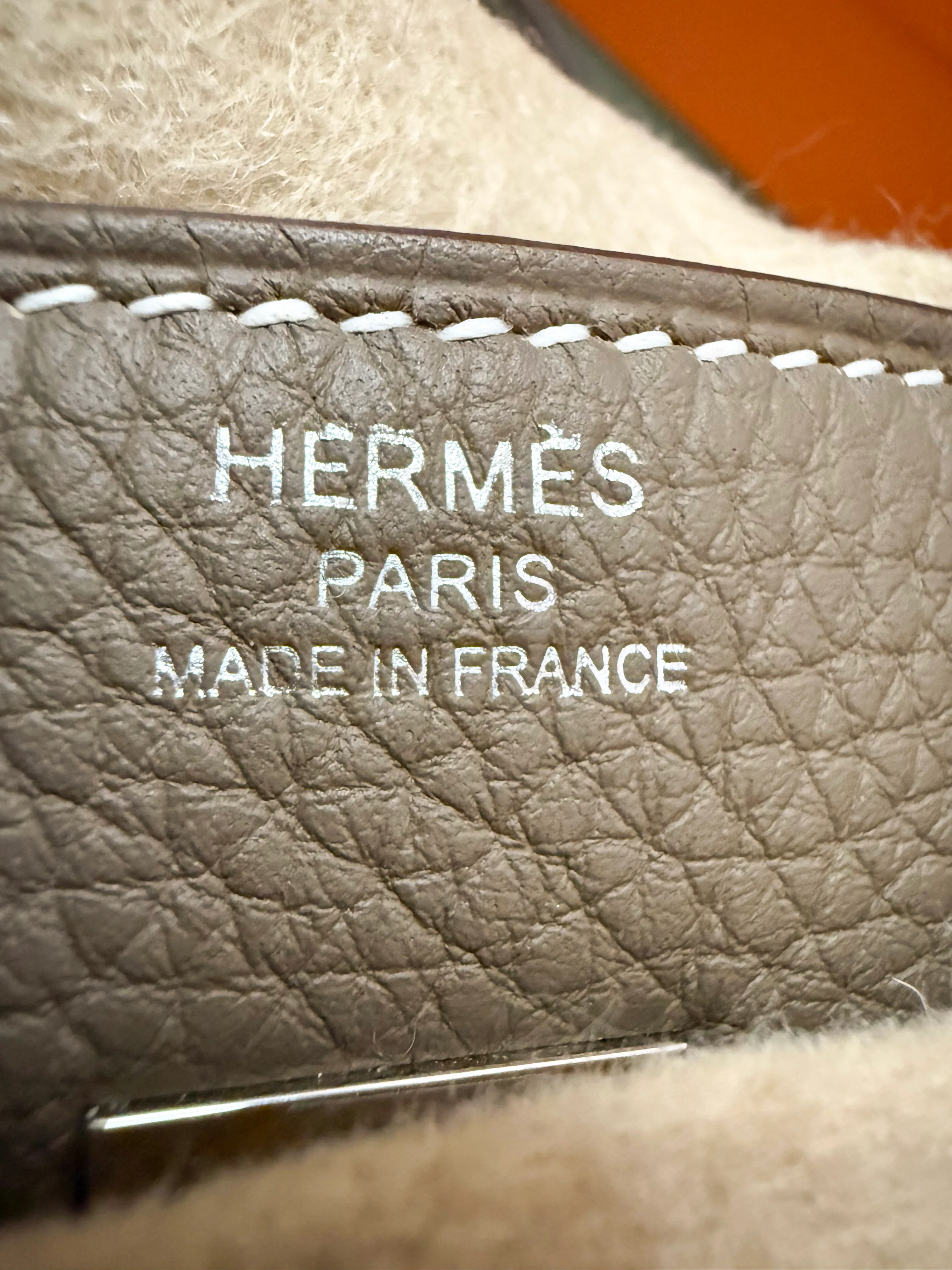
4. Stamp — “Hermès Made in France”
REAL — natural, slightly irregular stamp, adapted to the leather texture
Before looking at this close-up, refer back to point 3 (stitching).
There, you can clearly see how the replica appears overly perfect — the stitching is too uniform, too consistent, almost “machine-clean.
”The same visual logic applies to the stamp.
On authentic Hermès pieces, nothing looks artificially perfect.
The stamp shows slight variation in pressure, depth, and alignment — some letters may appear softer, others slightly more defined.
In this close-up, notice how the stamp follows the leather grain.
It subtly “breaks” across the texture and does not look flat or printed.
This is the key difference: authentic stamps look naturally integrated into the leather, while replicas often appear too precise, too clean, and visually “perfect.”
5. Rectangular Cutouts (Under the Plate)
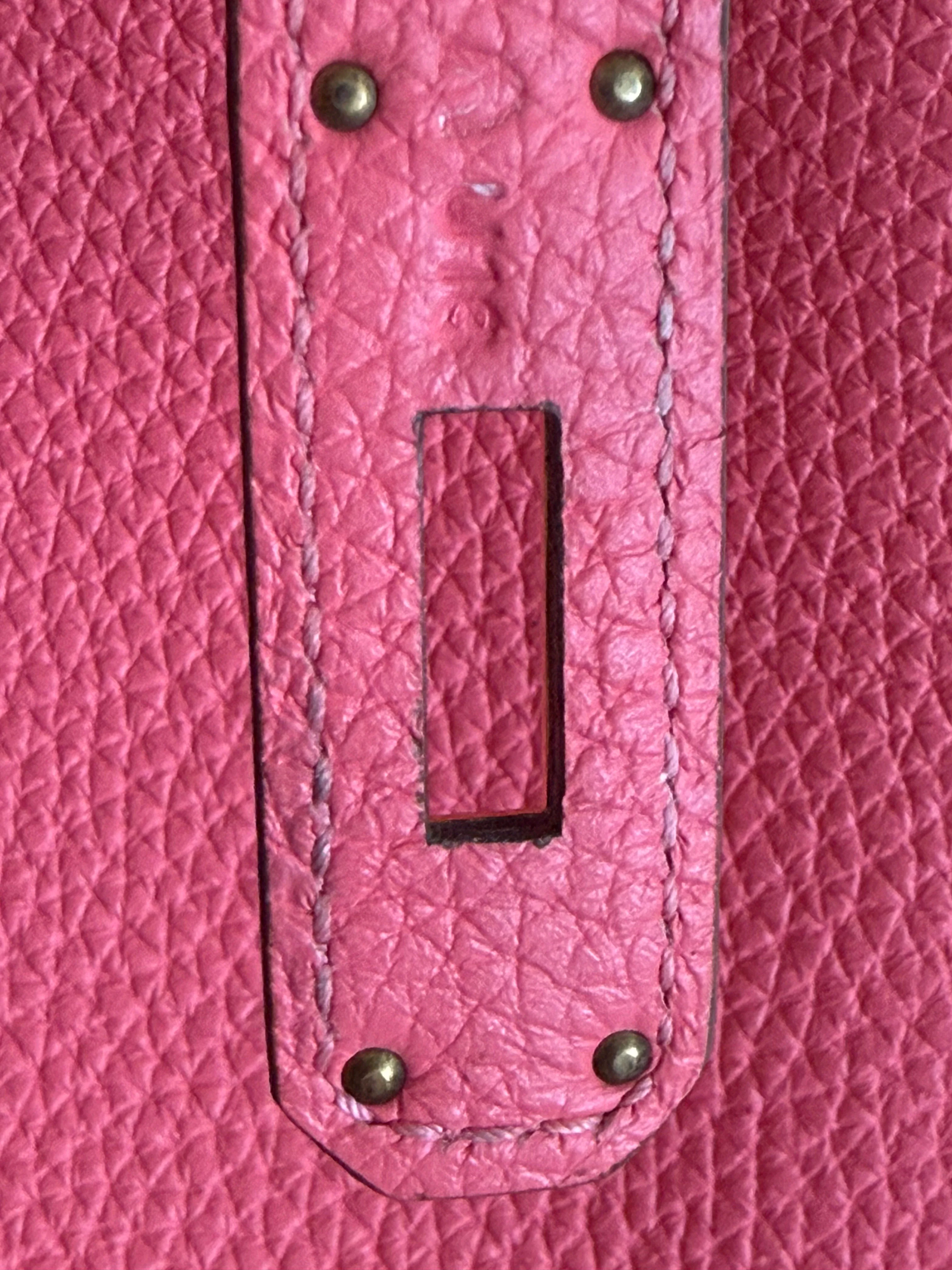
LEFT: REAL — sharp, well-defined rectangular cutout with precise corners
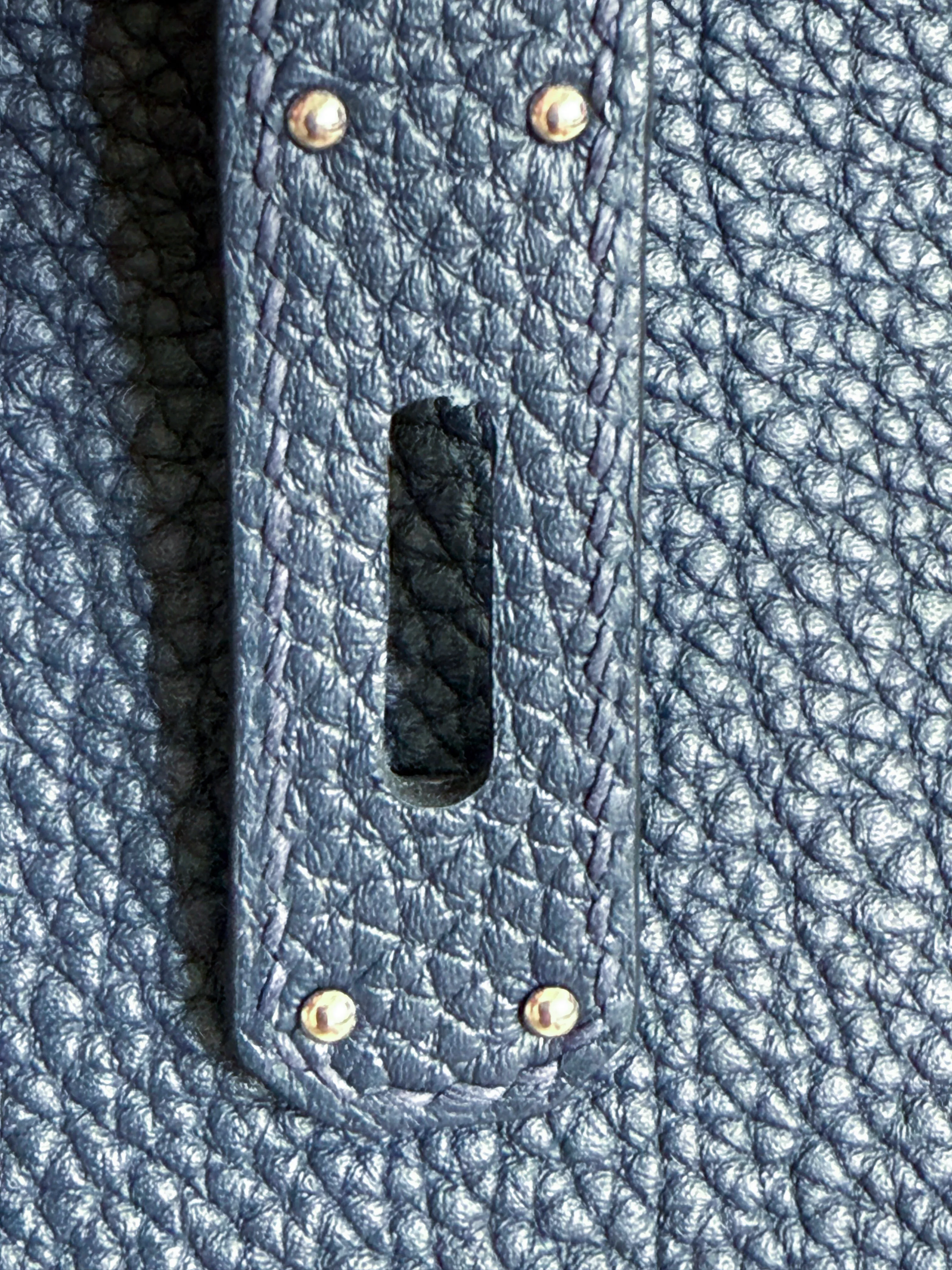
RIGHT: FAKE — softer shape, rounded edges, less precise cut
On an authentic Hermès bag, the strap opening is cleanly cut with sharp, well-defined edges.
The corners are precise, and the rectangular shape remains structured and consistent.
On replicas, the cutout often appears less controlled.
The edges may look softer, slightly rounded, and the shape can feel less defined or subtly distorted.
Even in such a small detail, the difference in precision is clearly visible.
You can also observe the stitching around the plate. On the authentic piece, it appears slightly irregular and natural. On the replica, it looks more uniform and mechanically consistent. This contrast further highlights the difference in craftsmanship.
6. Inner Pocket Edge (Construction)
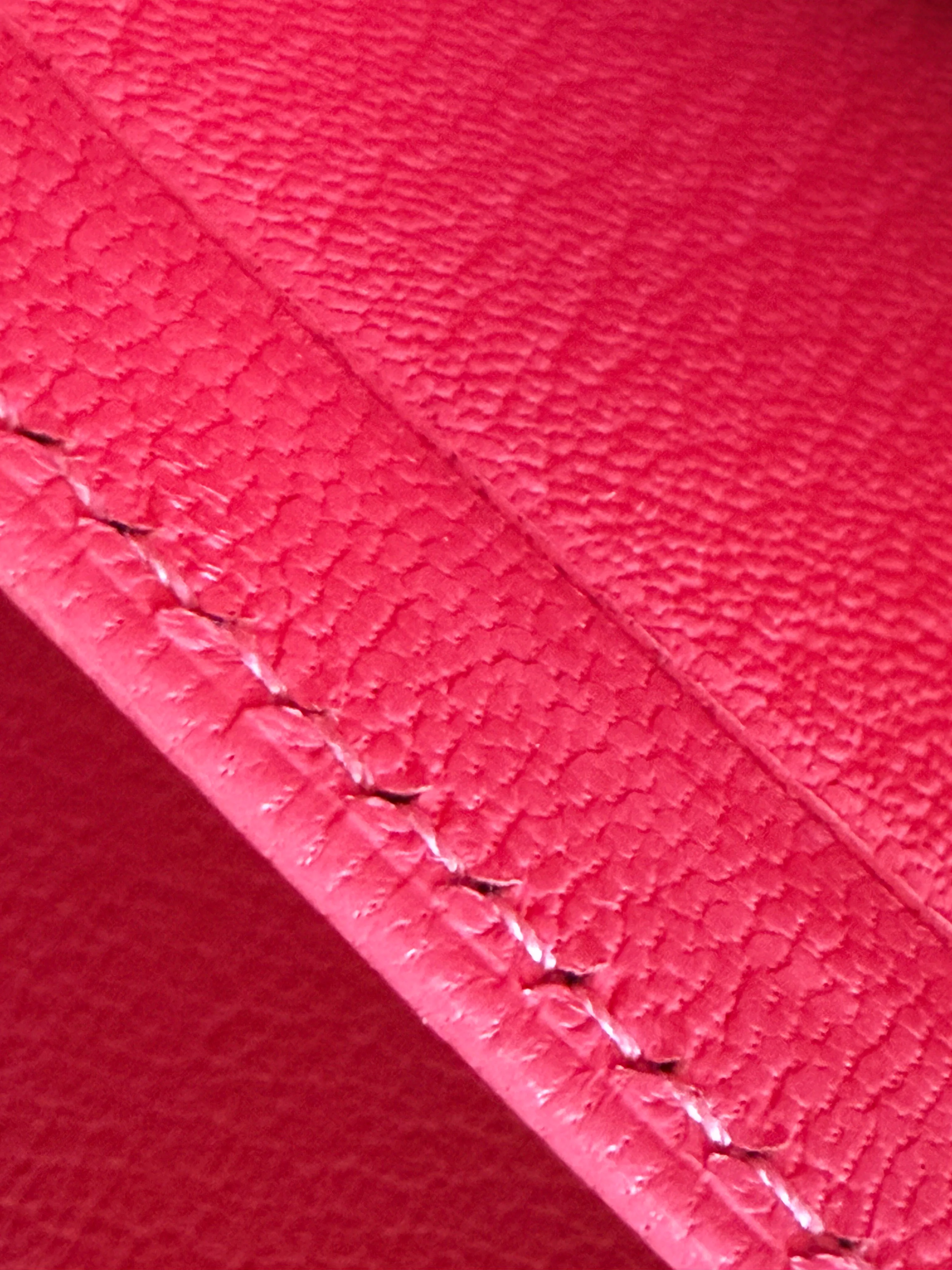
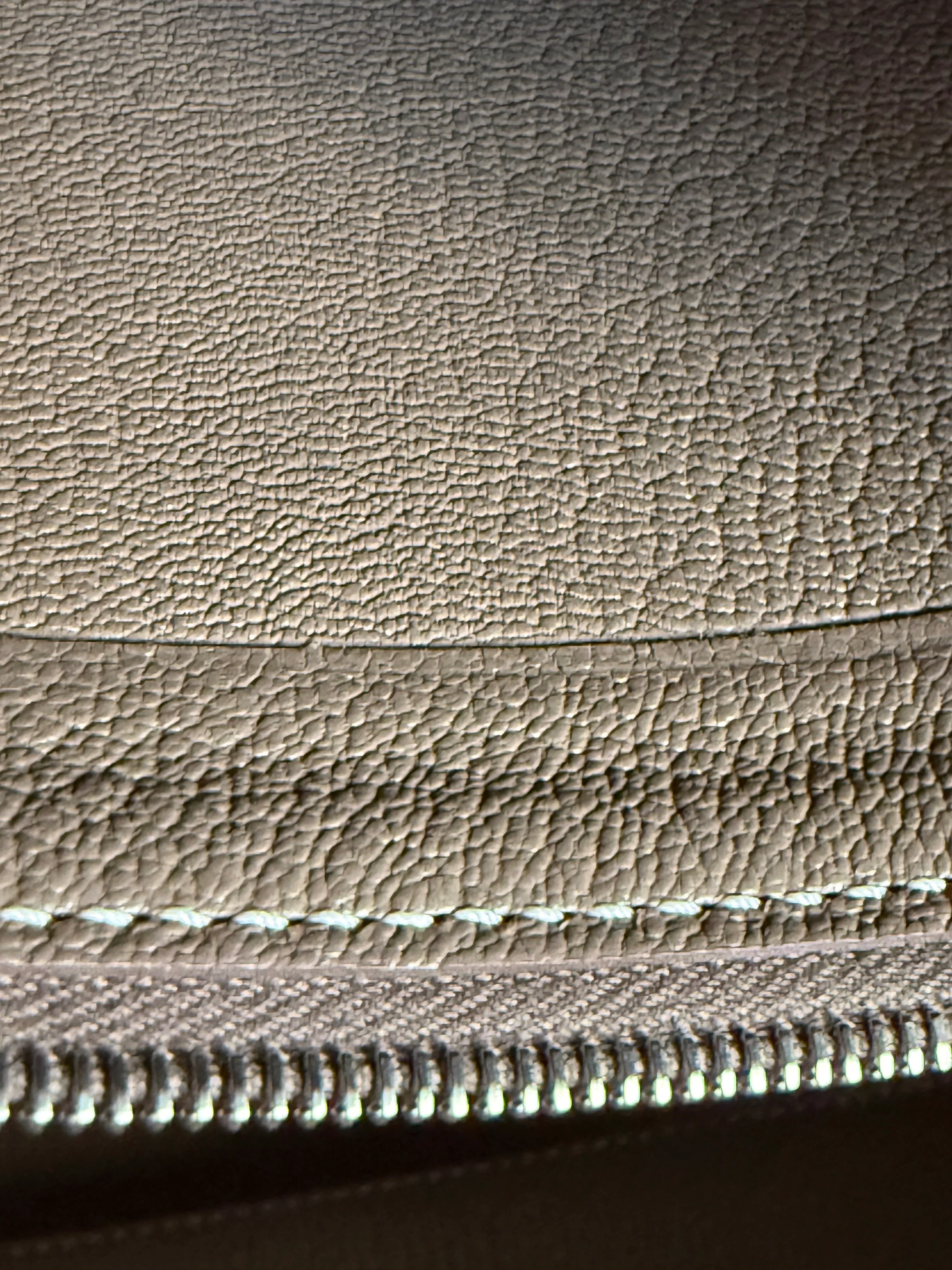
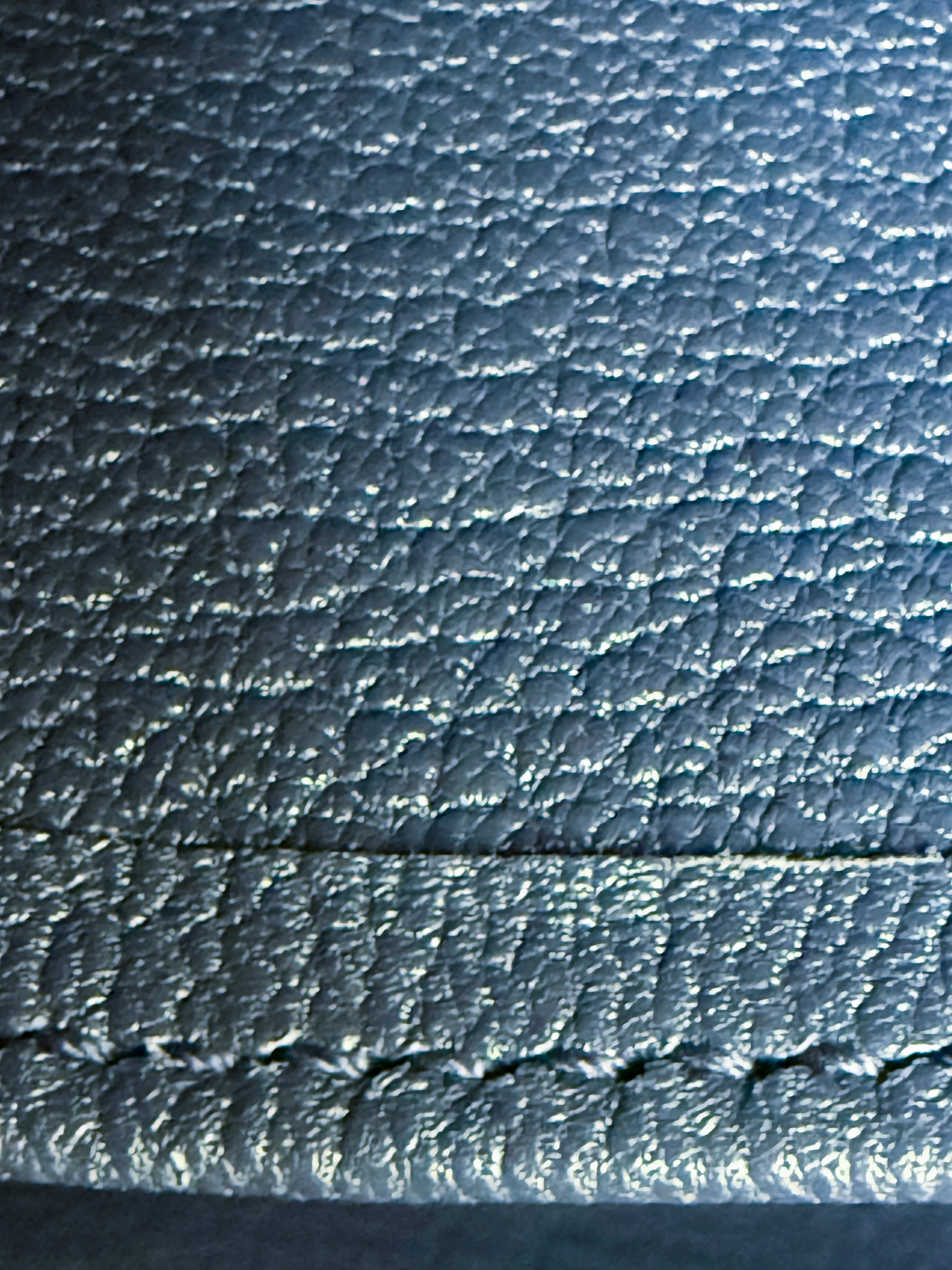
LEFT: REAL — fused, seamless edge integrated into the structure
CENTER: REAL (REFERENCE) — clean, consistent construction with smooth transition
RIGHT: FAKE — glued, layered edge with visible separation
On an authentic Hermès bag, the inner pocket edge is fused into the structure.It appears smooth, continuous, and naturally integrated — not added as a separate layer.
The center image shows a reference example of consistent construction, where the transition remains clean and controlled.
On replicas, this area often looks built in layers.You can notice a visible line, slight lifting, or a glued effect.In close-up, the difference becomes clear:authentic edges feel integrated, while fake ones look assembled.
7. Back Edge Joint (Center Line)
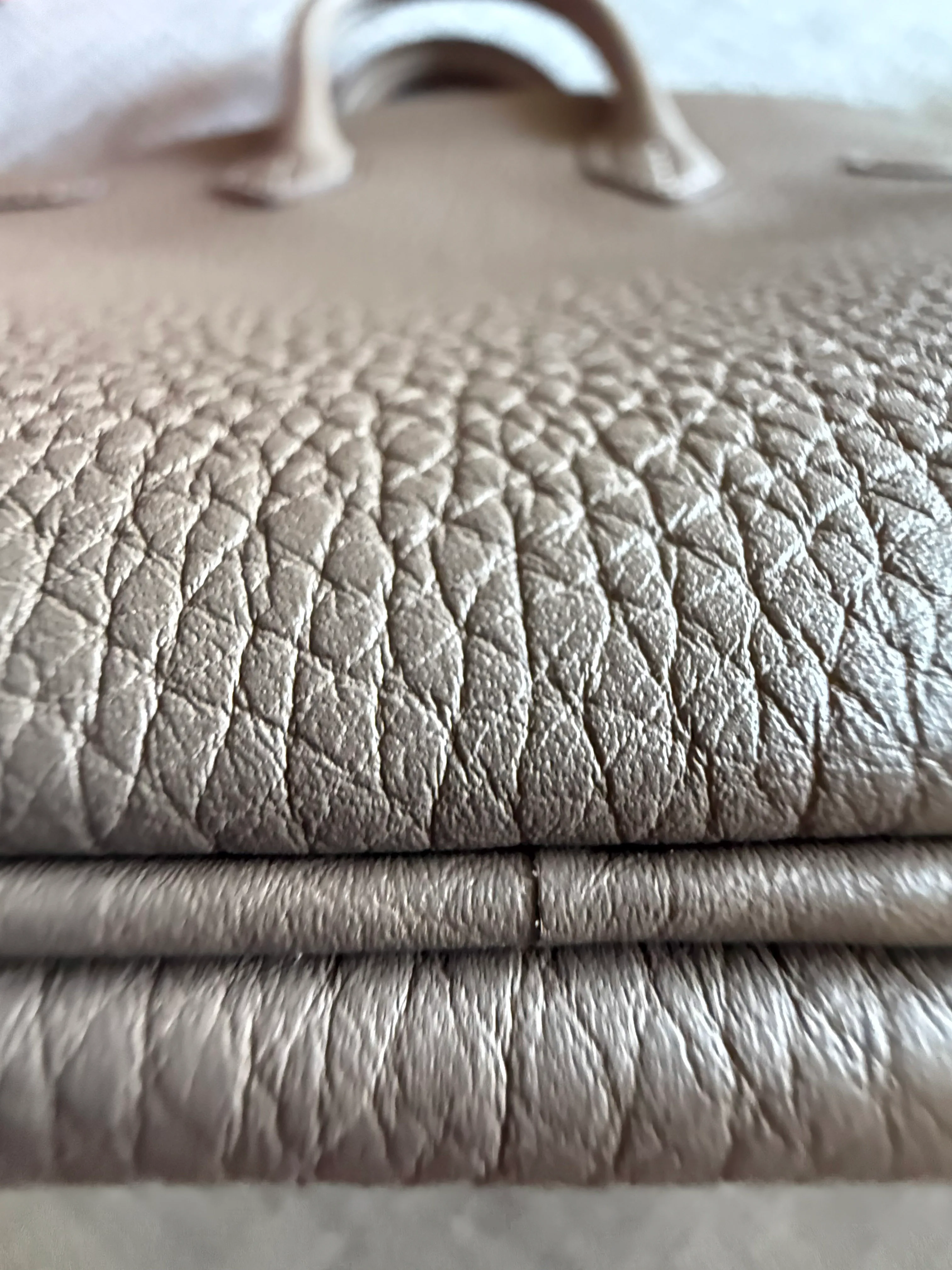
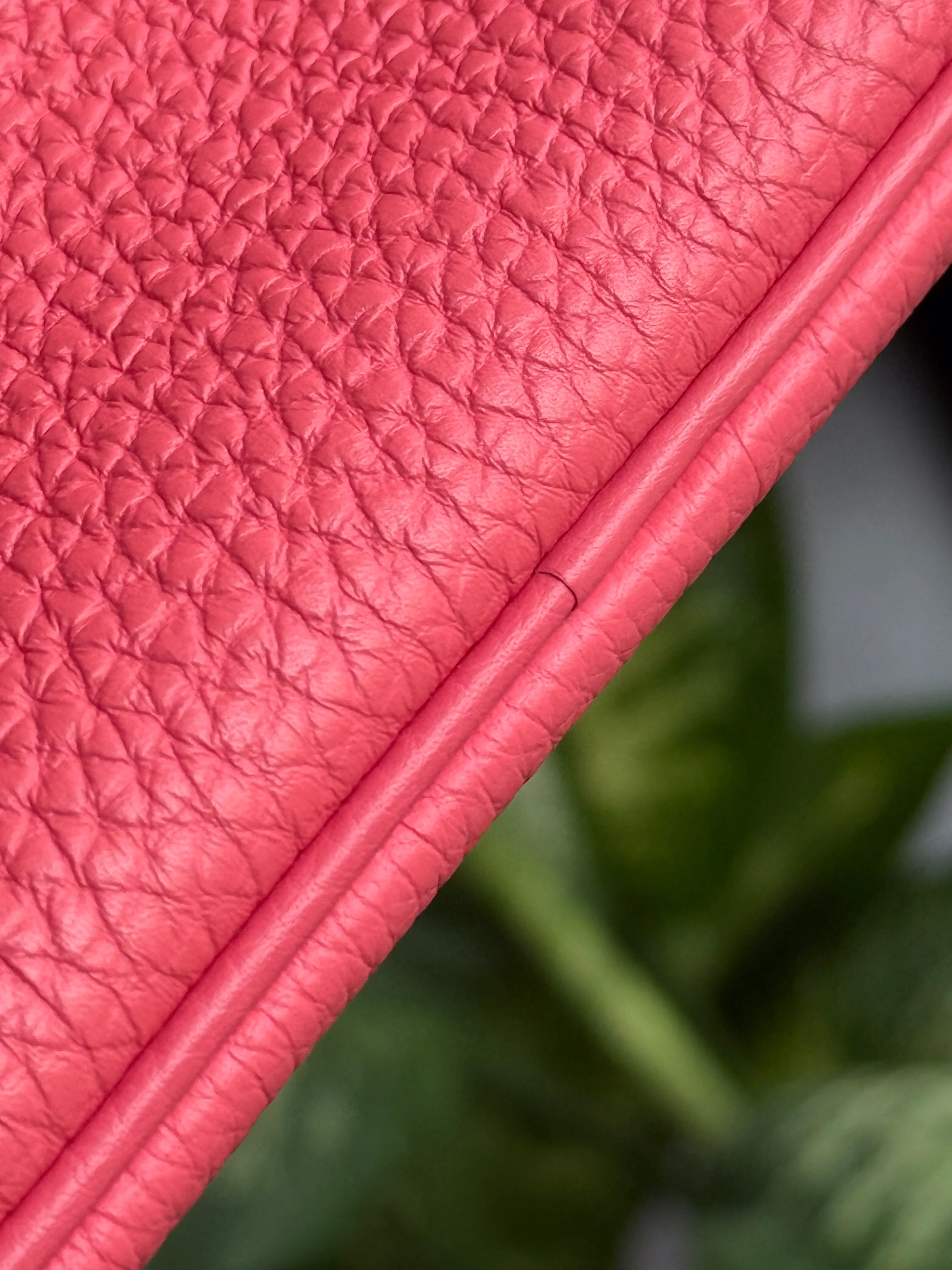
BOTH IMAGES — AUTHENTIC
Left: the back seam is precisely centered and aligned with the handle.
Right: the edge is constructed in overlap, not edge-to-edge.
Replicas often miss both details — the seam is not properly centered, and edges are built flat instead of layered.
8. Bottom Edge/ Base Piping)
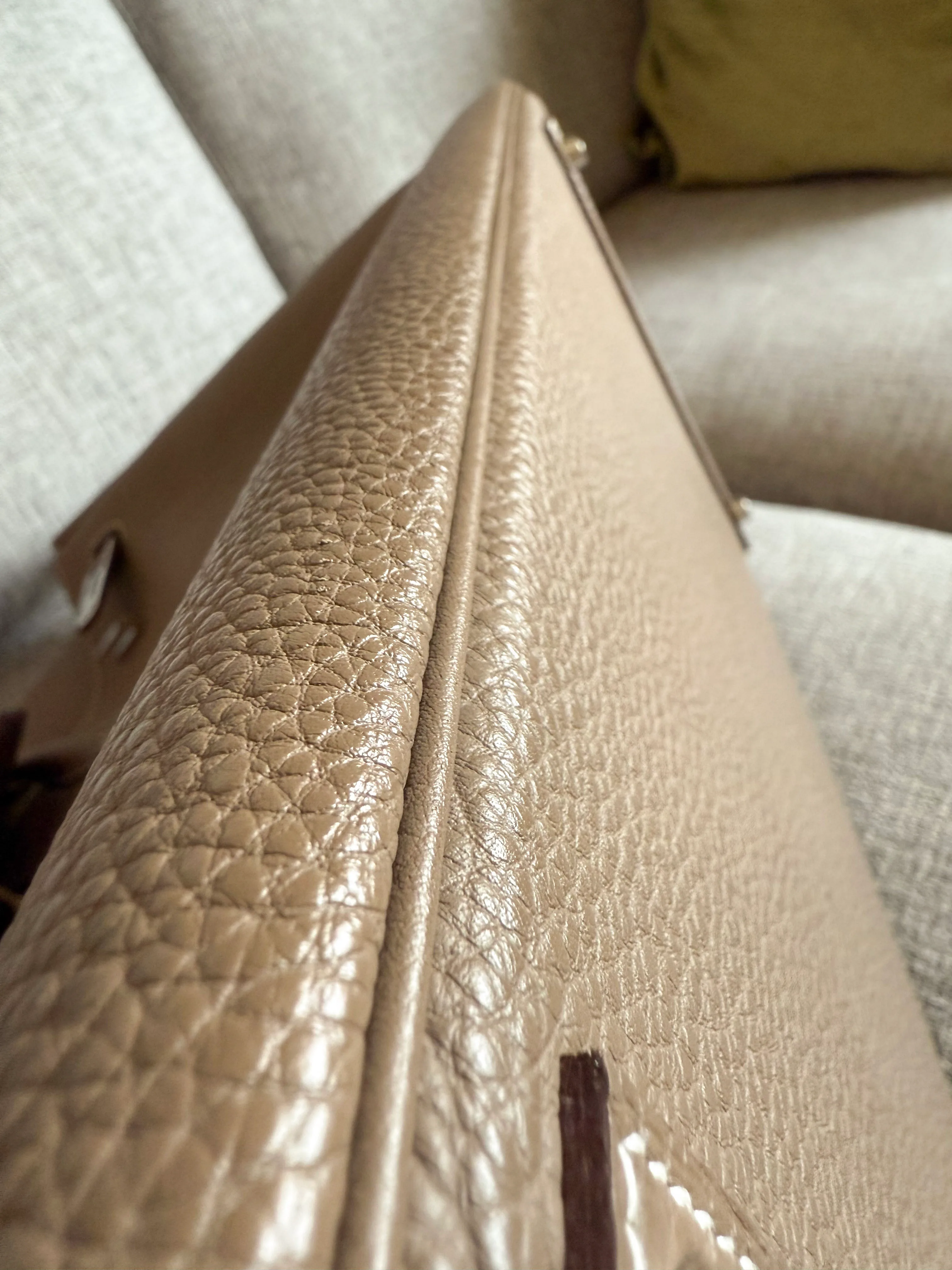
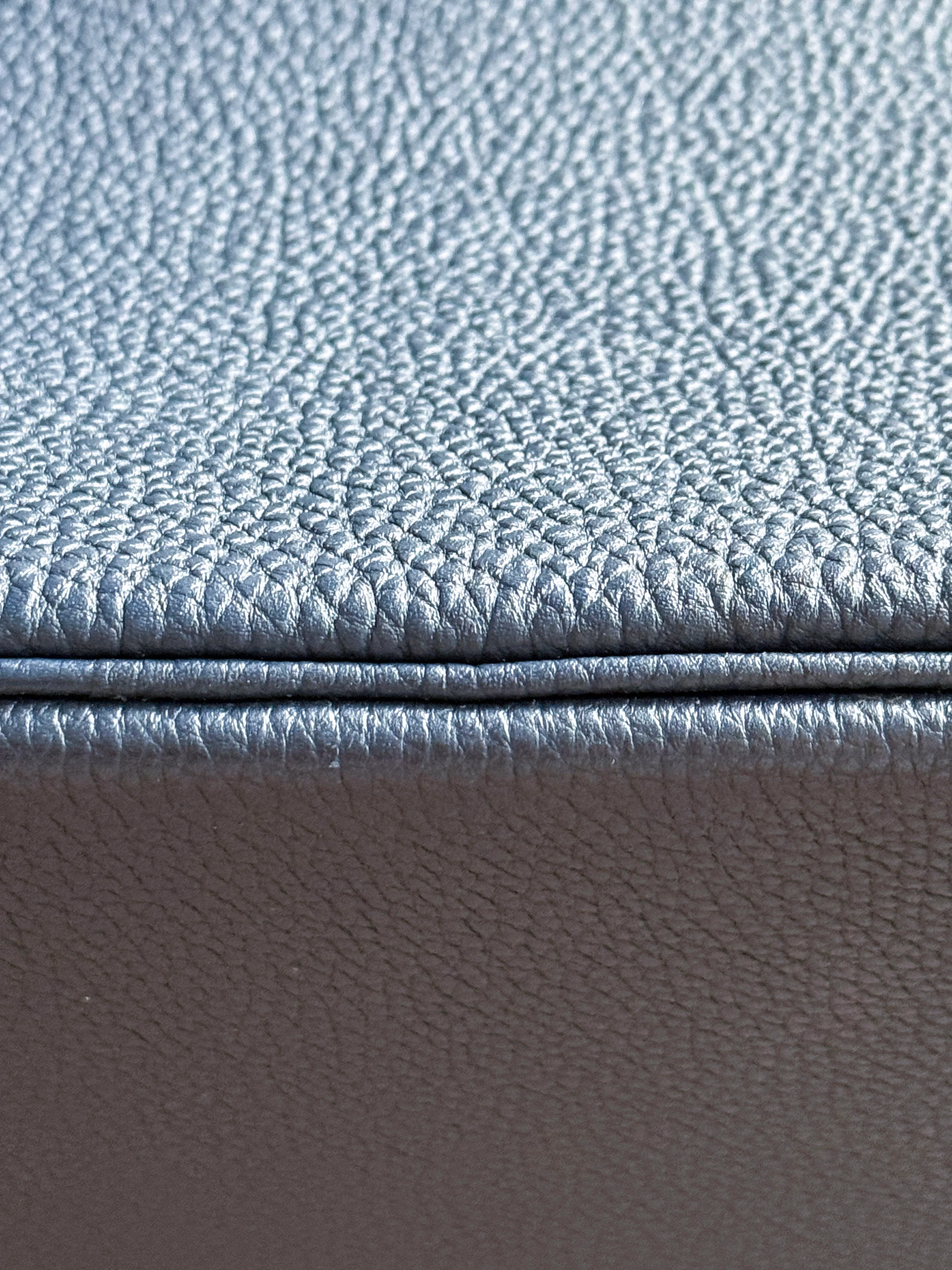
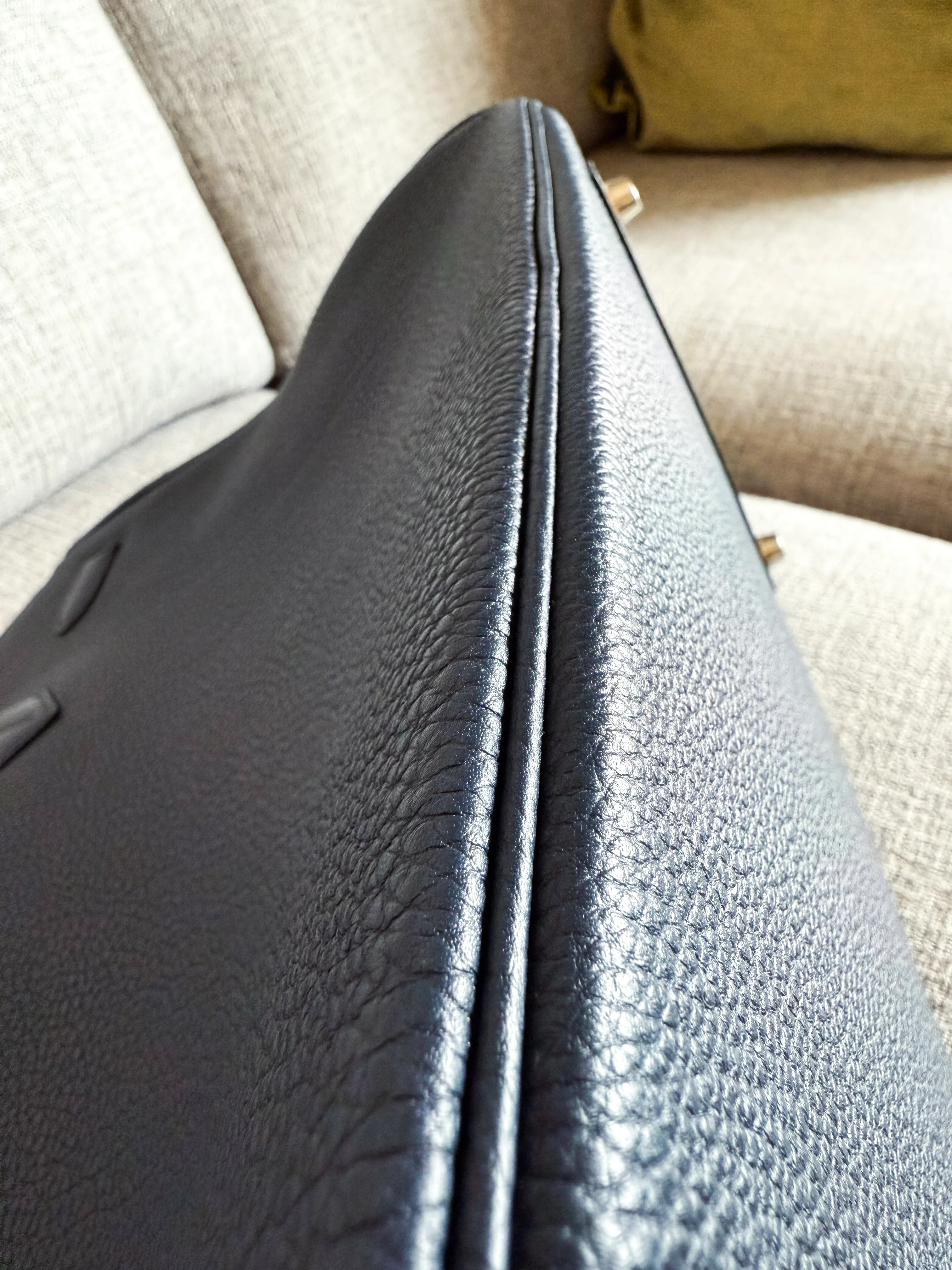
LEFT — REAL: straight, stable edge line
On the authentic bag, the edge line remains perfectly straight along the base.
Even when the bag is at rest, the line is clean, continuous, and fully controlled —there are no breaks, shifts, or irregularities.
⸻
CENTER & RIGHT — FAKE: broken edge line at the construction point
On replicas, the edge line loses its precision — especially at the bonding point.
You can clearly see how the line starts to break, shift, or become uneven in that area.Instead of a continuous straight line, the edge looks unstable and slightly distorted.
This becomes especially visible when the bag is placed on a surface —the irregularity of the line immediately stands out.
⸻
WHY THIS HAPPENS
This is the result of incorrect construction:the layers are joined edge-to-edge rather than built in overlap.
As a result, the edge loses its structural stability —and the line no longer holds its shape.
9. Zip End Geometry (“Akka” Shape)
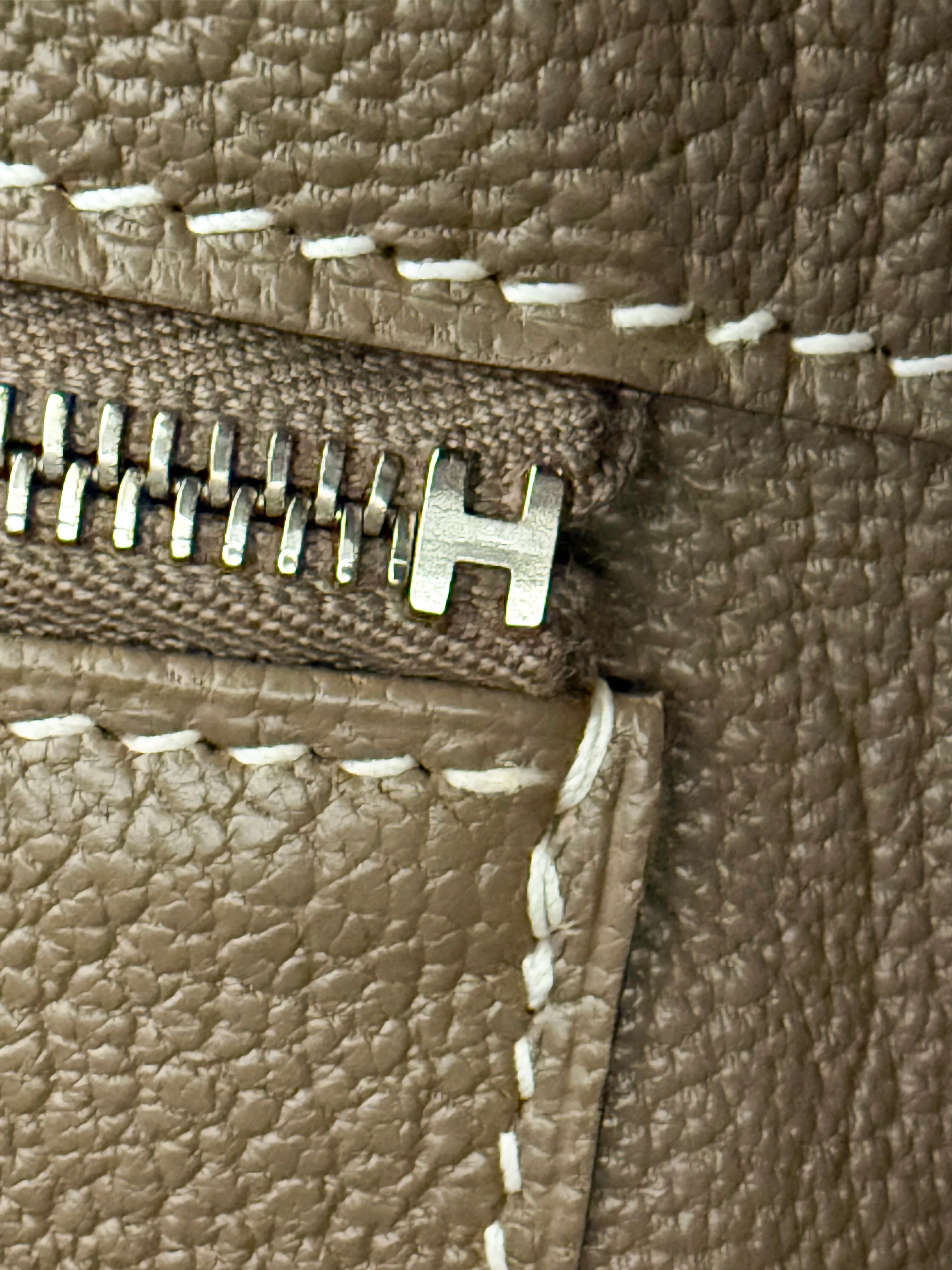
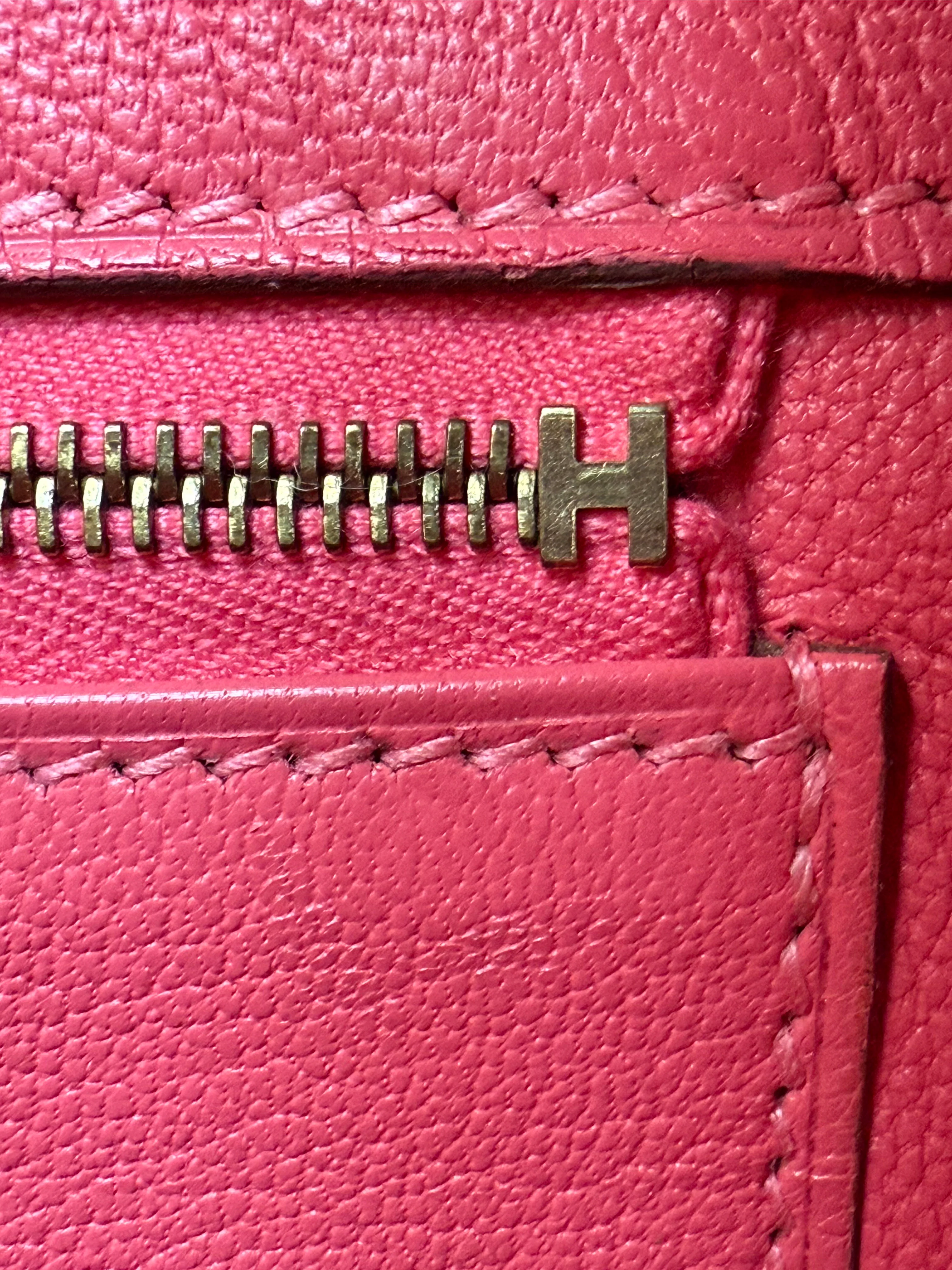
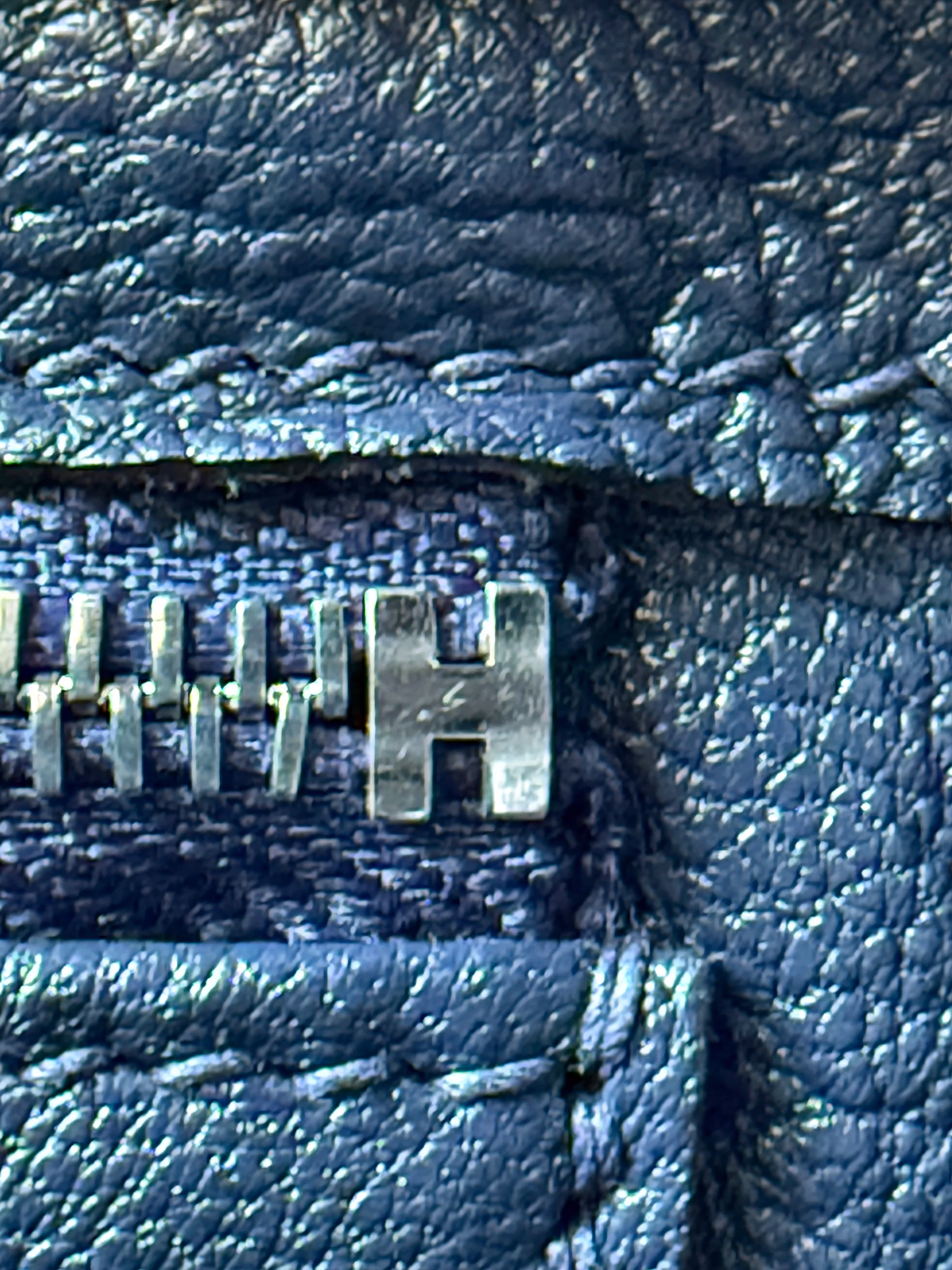
LEFT & CENTER: REAL — open “H” spacing; bottom zipper tooth sits closest to the plate
RIGHT: FAKE — compressed “H” spacing; top zipper tooth touches or aligns with the plate
On authentic pieces, the space between the “H” legs is visibly wider than the width of each leg itself. The spacing appears open and well-defined, not compressed.
On the fake, this space is noticeably narrower and looks squeezed.
Also check the zipper alignment: on authentic examples, the bottom zipper tooth sits closest to the “H” plate and often lightly touches it.
On the fake, the alignment shifts upward — the top zipper tooth sits closest to or touches the plate instead.
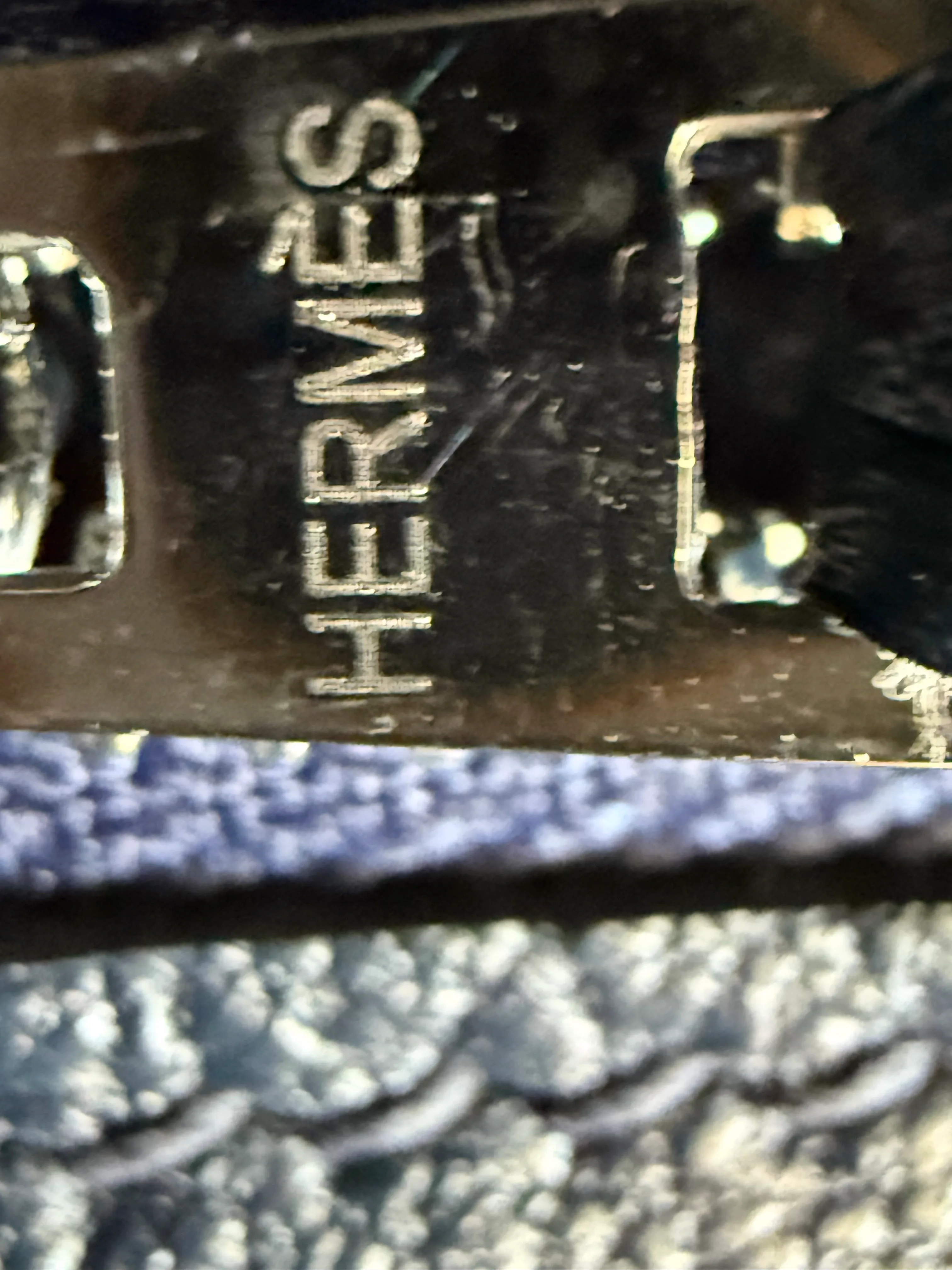
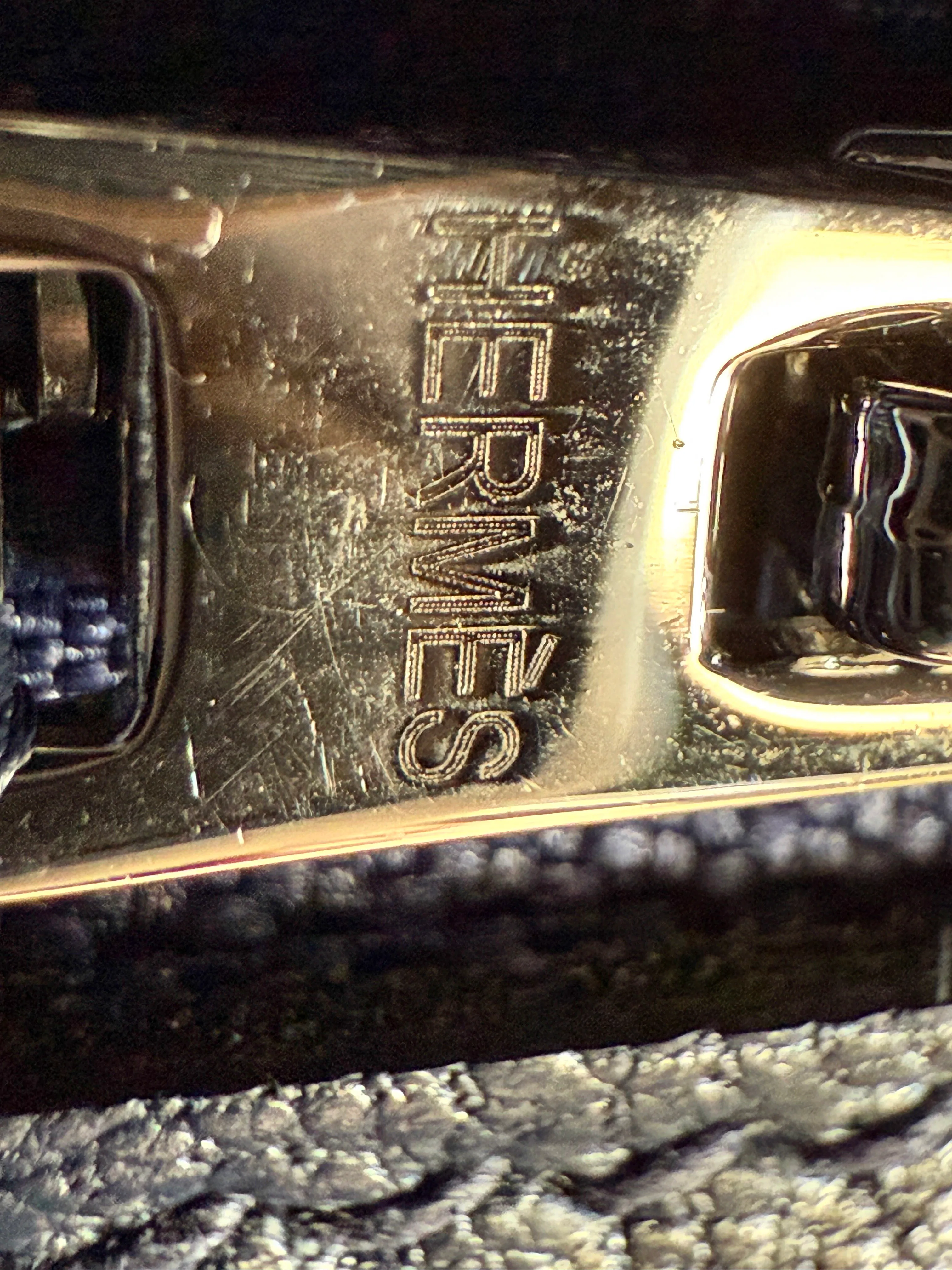
10. Zipper Pull Engraving
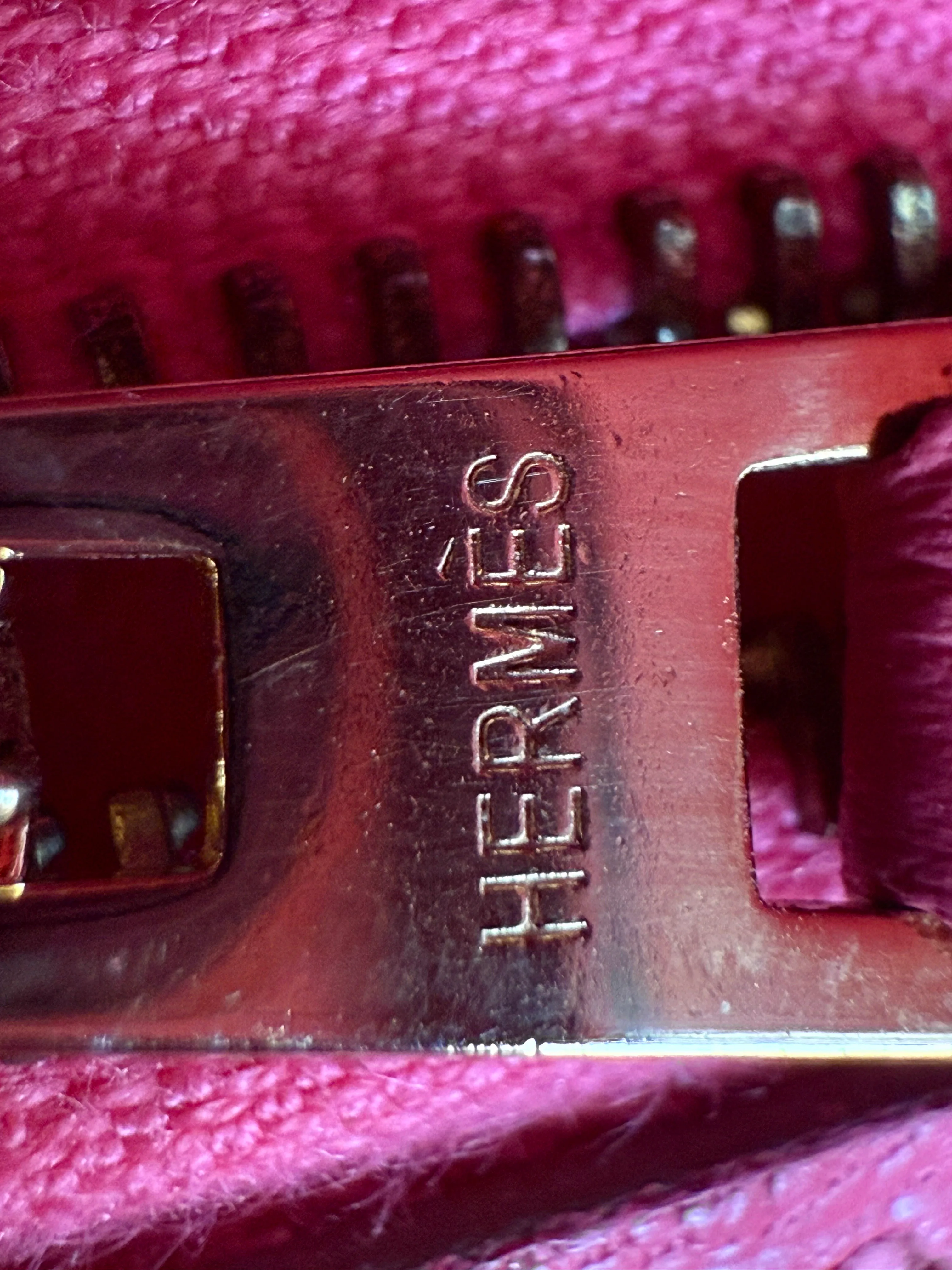
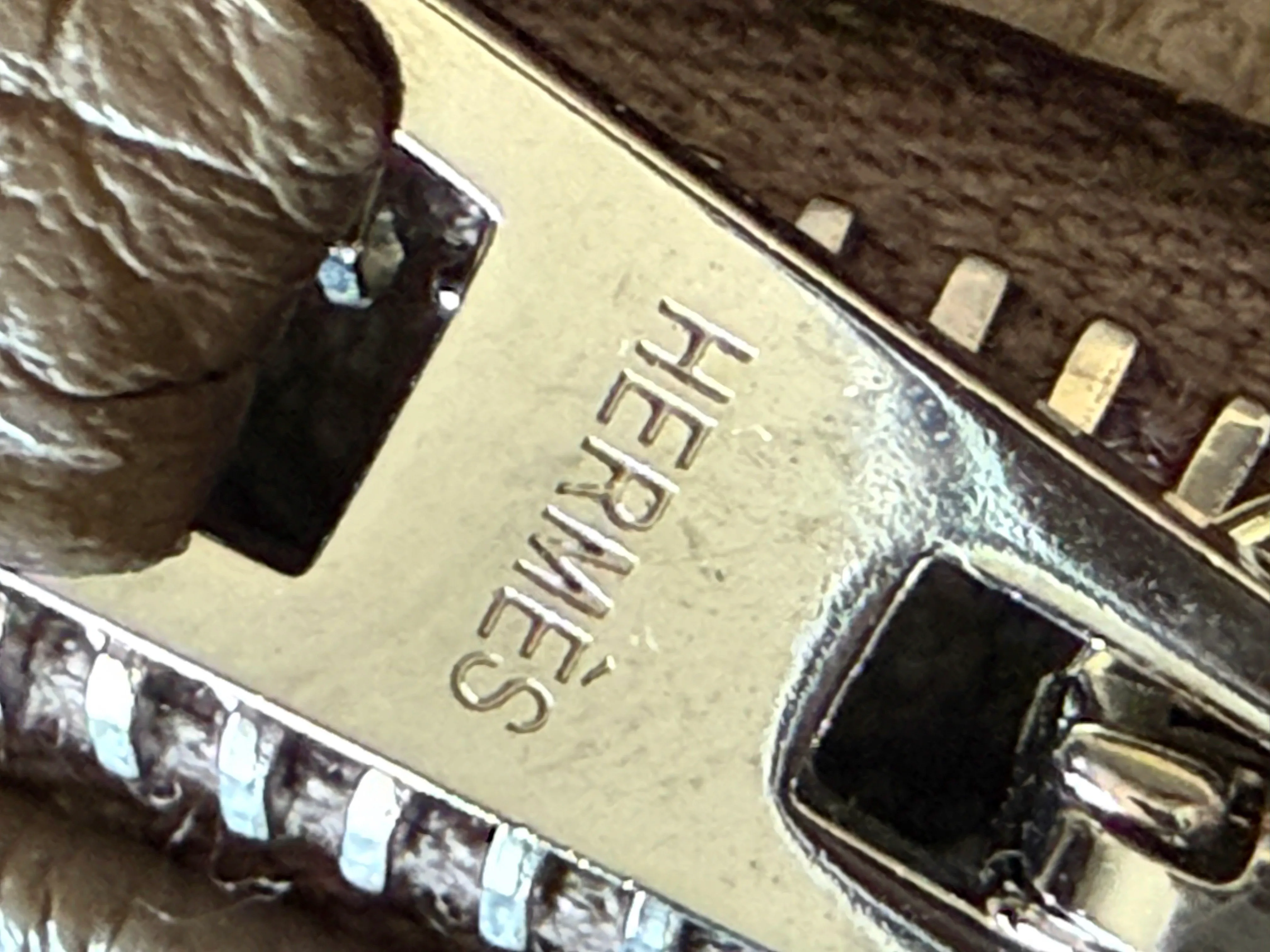
TOP: REAL — clean, solid engraving
BOTTOM: FAKE — grainy, dotted engraving
On authentic pieces, the engraving appears smooth, continuous, and sharply defined. The letters are cleanly cut, with even depth and no visual noise.
On the fake, the engraving looks grainy and uneven, often showing a micro-dotted or porous texture. Instead of a solid cut, the letters appear broken or “pixelated,” as if formed by tiny dots rather than a clean engraving.
This creates a rough, noisy surface — a clear sign of lower-quality manufacturing.
11. Plate Engraving (Light Behavior)
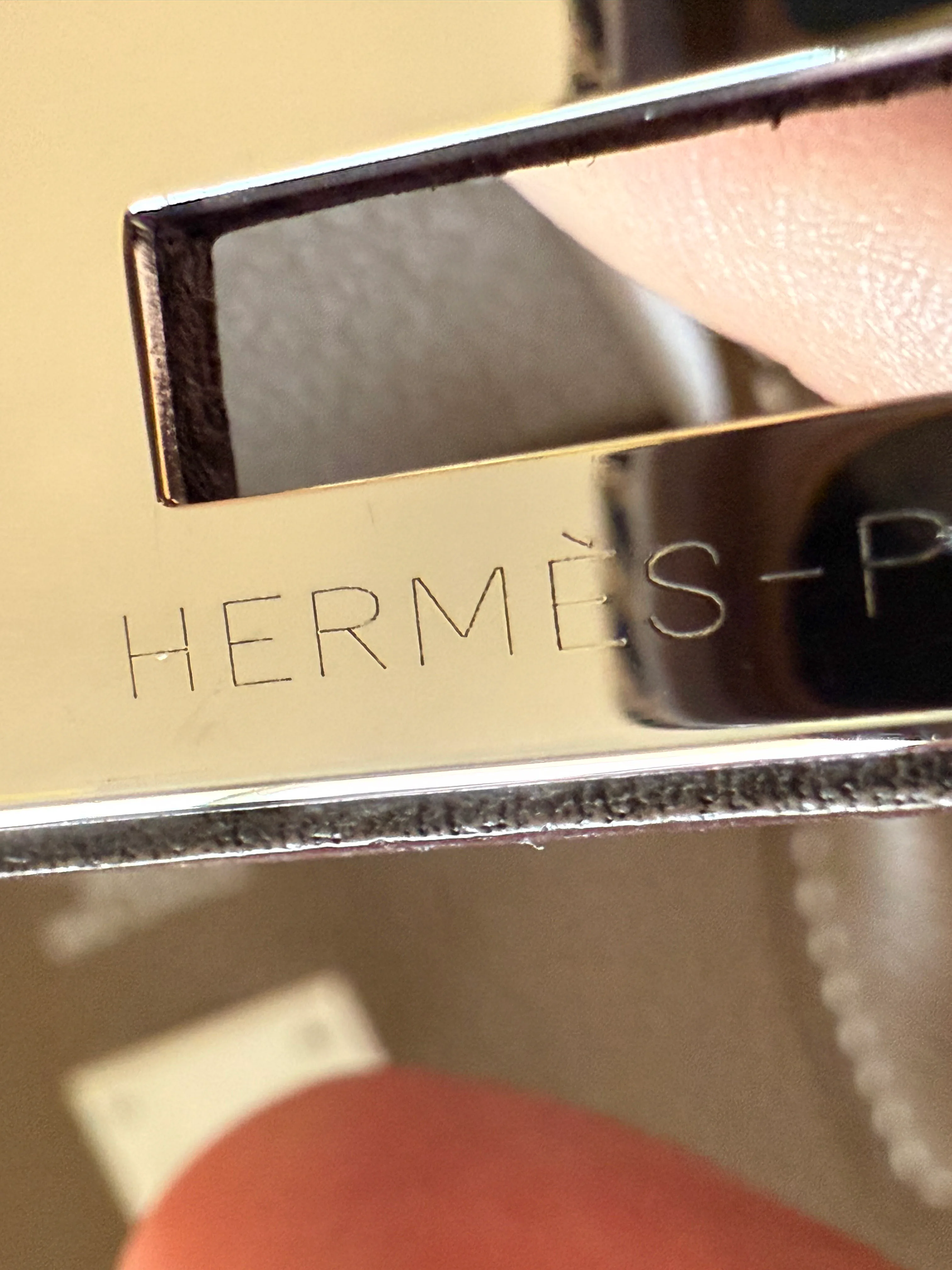
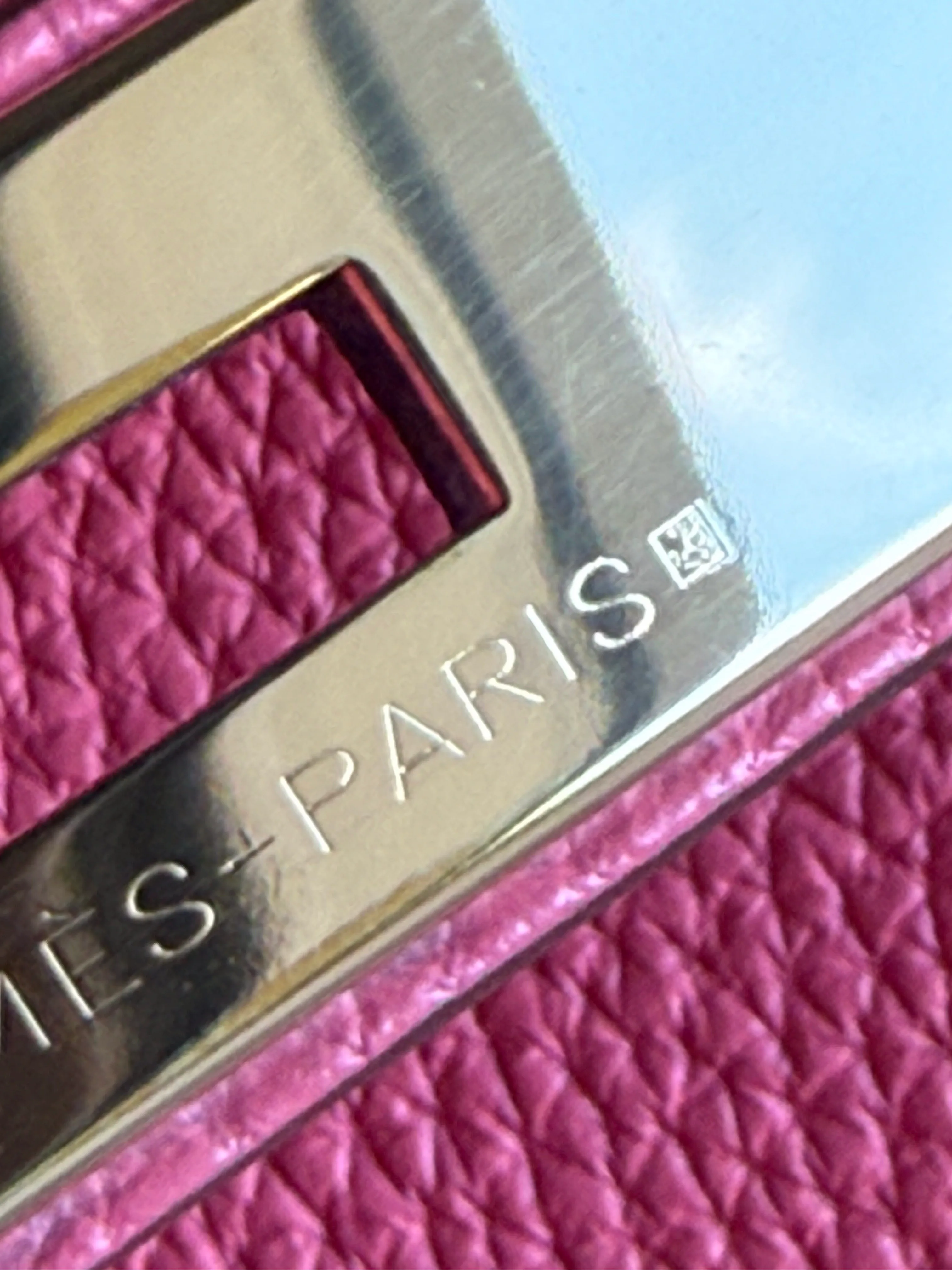
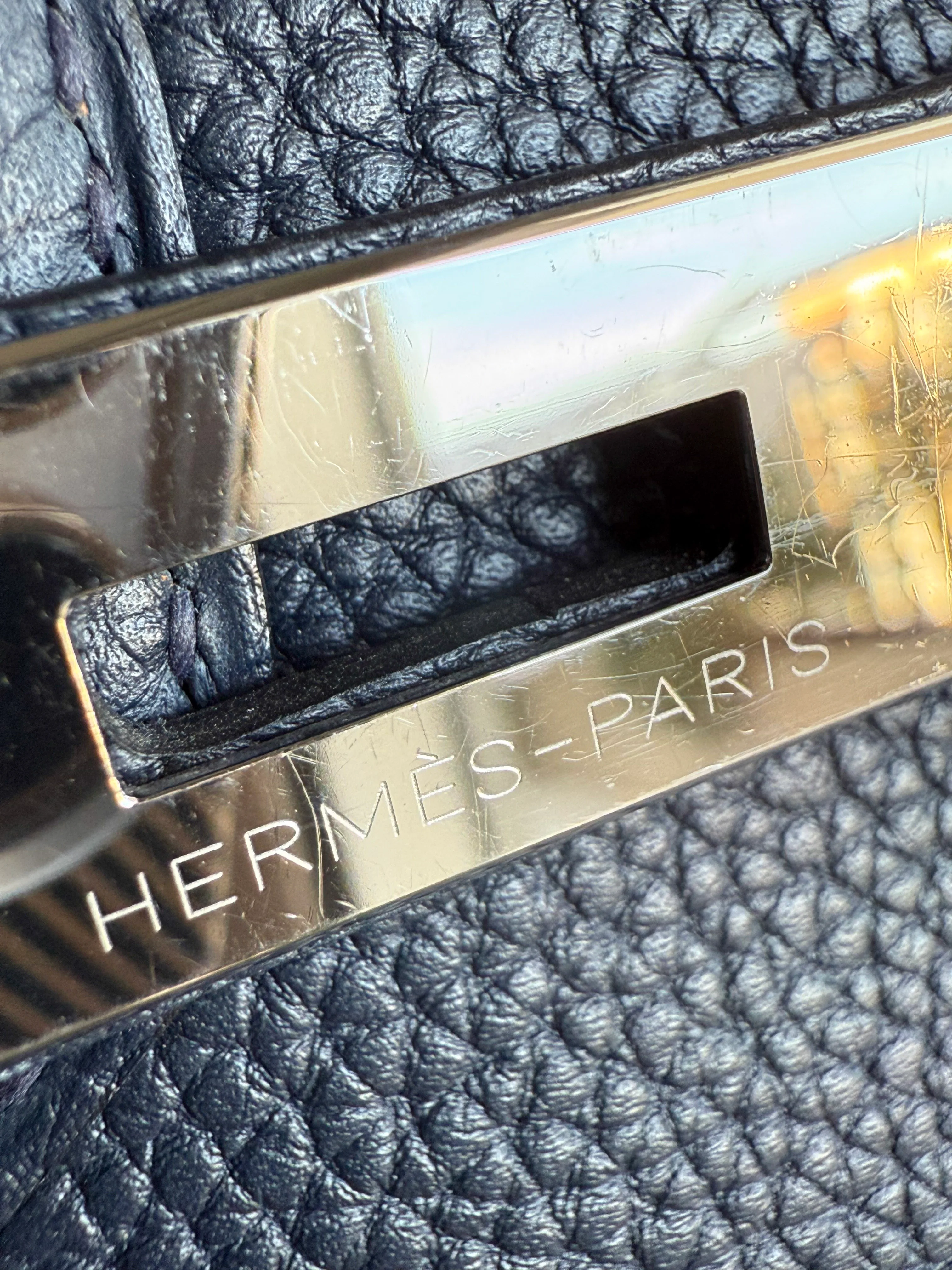
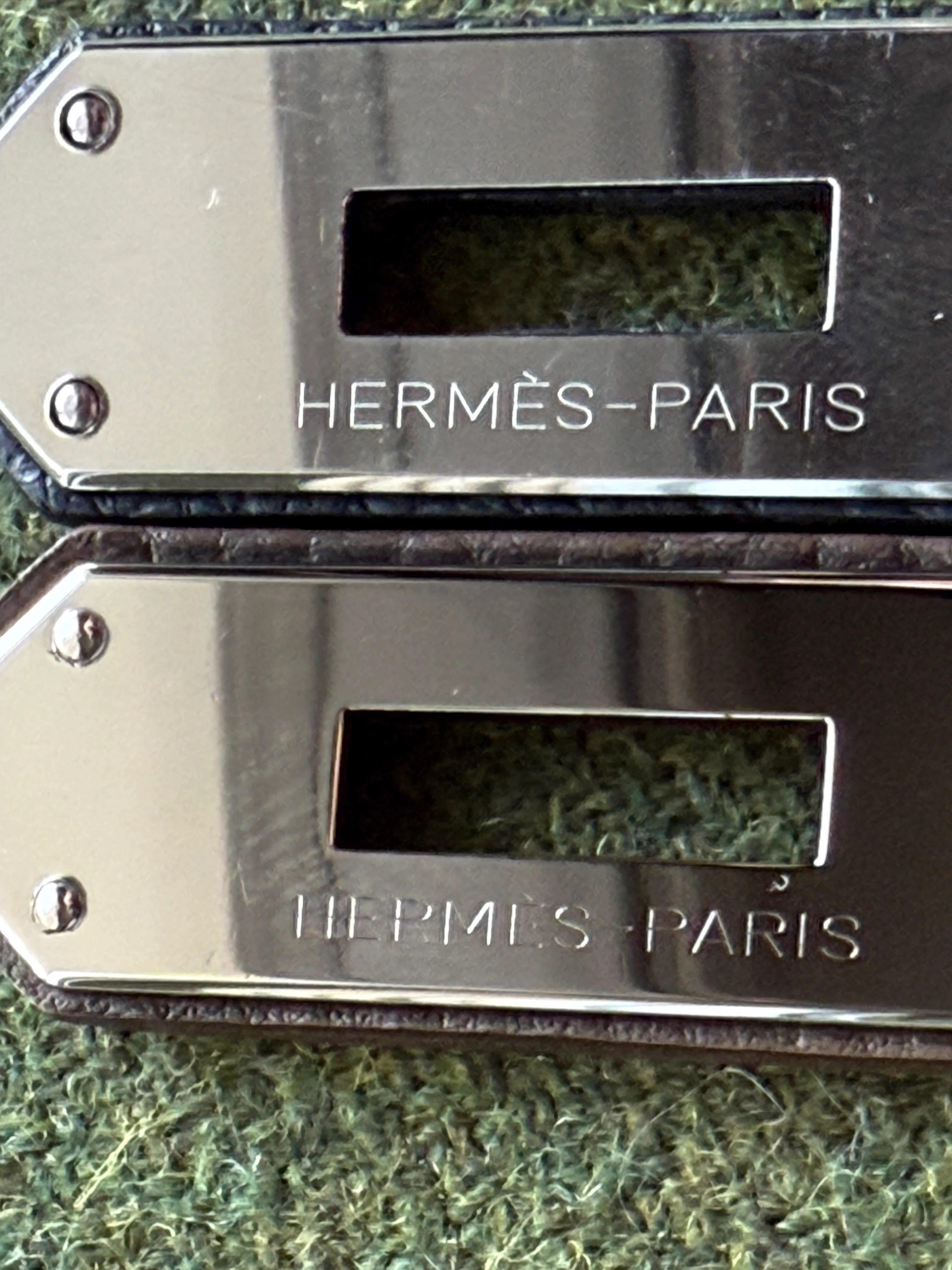
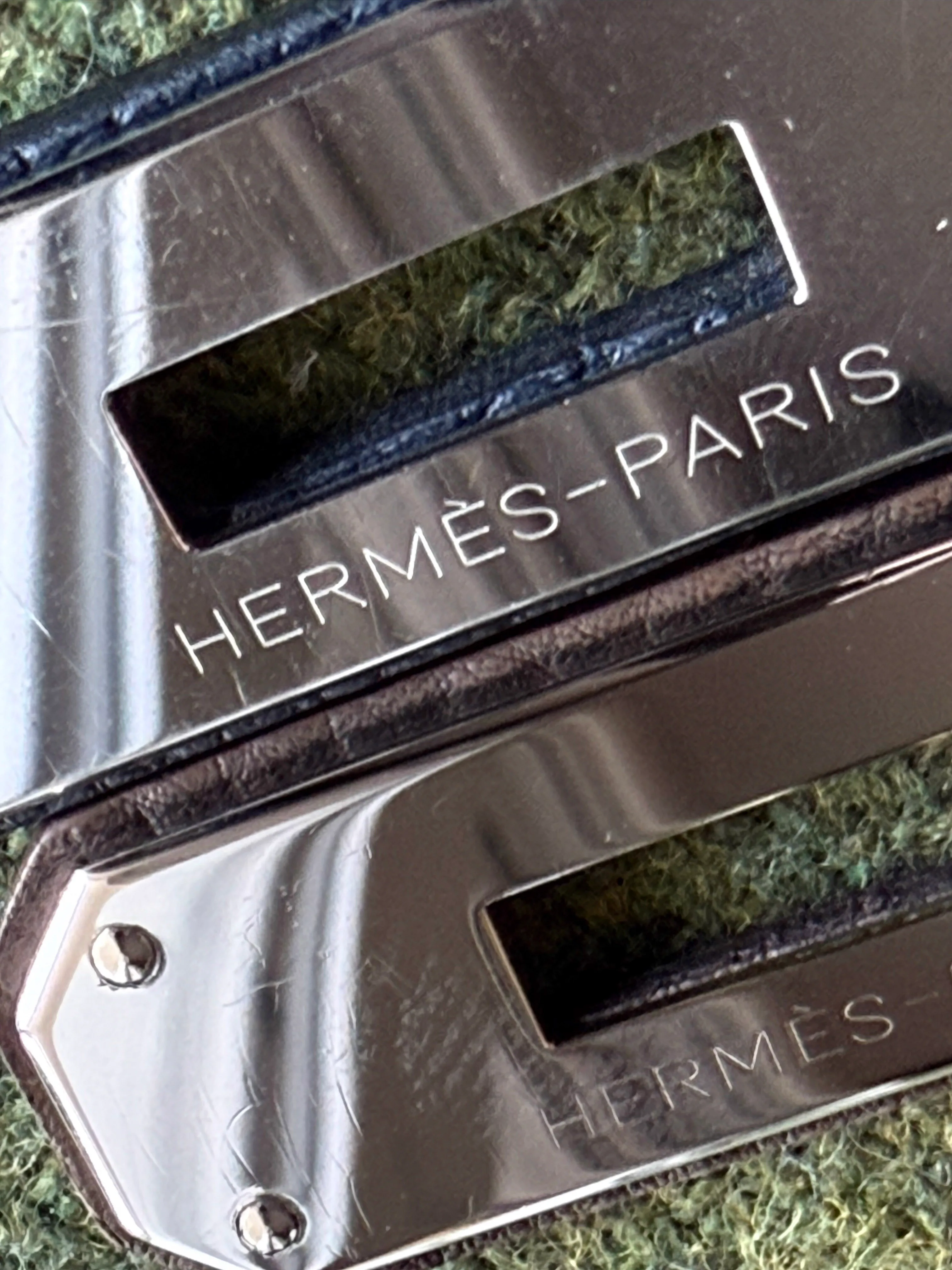
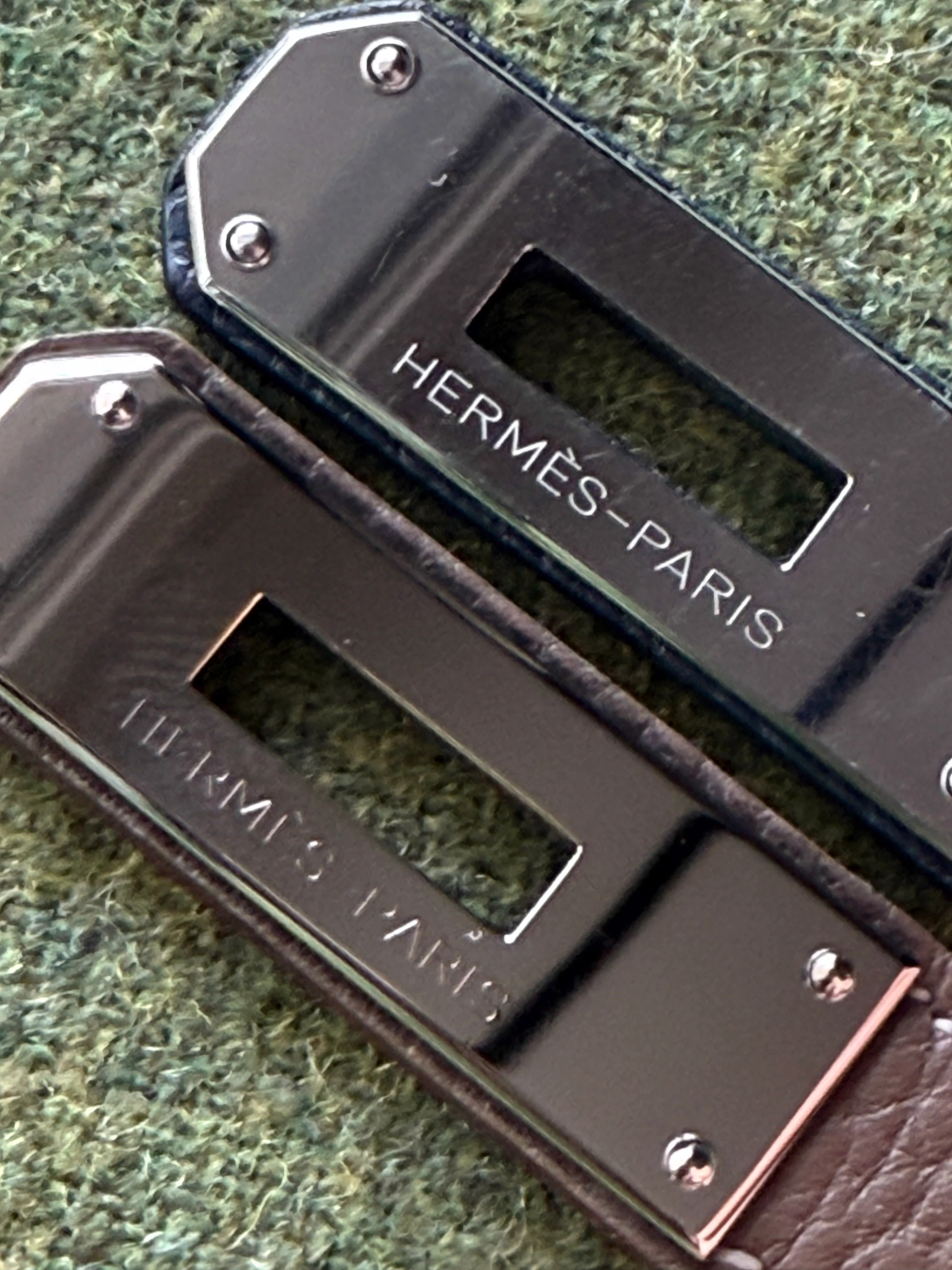
LEFT & CENTER: REAL — engraving remains subtle and angle-dependent
RIGHT: FAKE — engraving appears flat, bright, and overly visible
In real-life conditions, authentic engraving does not present itself immediately. It shifts with light and can appear soft or partially hidden depending on the angle.
Even under direct lighting, the letters do not turn white or overly bright — they maintain a controlled, refined reflection.
On the fake, the engraving is instantly visible and remains consistently bright from every angle. The letters reflect light in a harsh, uniform way, often creating a noticeable whitish effect.
This lack of depth and light variation makes the engraving look flat and artificially prominent.
If the engraving is immediately visible from any angle — it’s a red flag.
Important: Hermès engraving has evolved over time.
On some older Birkin bags, the hardware engraving may appear noticeably deeper, wider or more pronounced than on later examples. This alone should not be considered a sign of inauthenticity. Engraving must always be evaluated in the context of the bag’s production period, hardware, construction and other authentication details.
Transition — Process
Every piece I select goes through this exact visual inspection —
before it is ever offered to a client.
Part II — What You Can Only Feel
how to spot a fake Hermès Birkin
12. Lock Movement (Touret / Turn-lock)
REAL: smooth, controlled, fluid
FAKE: too loose, too stiff, or inconsistent
The movement should feel precise — not loose, not resistant.
13. Leather Scent
REAL: warm, natural, recognizable
FAKE: neutral or chemical
This cannot be explained — only recognized.
14. Inner Pocket Edge (Touch)
REAL: seamless, no transition
FAKE: detectable edge
Even if it looks similar, your finger will detect the difference.
Part III — How to Read These Signs
Hermès Birkin authentication guide.
This guide highlights visible differences, but they should never be taken in isolation.
Each point described above is a signal, not a standalone conclusion.
A single inconsistency may be overlooked or misinterpreted. But when multiple irregularities appear together, they form a clear pattern.
If you notice two, three, or more of these signs on the same piece, this should be considered a strong red flag.
Even high-level replicas can replicate certain details correctly while failing in others. This is why authentication should always be based on the combination of factors, not a single element.
No single detail makes you an expert. But consistent patterns always tell the truth.
The better the replica, the smaller the difference.
And the more attention you need to see it.
This Guide Will Evolve
This is not a closed system.
Many important elements are not yet covered here, including stitching behavior, stamp details, handle construction, clochette and keys, hardware finishing, base structure, and date code variations.
This guide is based primarily on observed comparisons, including Birkin 35 examples. Other formats may require additional points of analysis.
Real understanding develops over time through observation, comparison, and experience.
Final — Rome & Collection
All pieces are sourced and inspected in Italy,
with a focus on condition, structure, and authenticity.If you are looking for a verified Hermès piece in Rome,
you can explore the current selection below.
→ Explore the Collection
How can you authenticate a Hermès Birkin bag at home?
While some details can be checked visually, learning how to authenticate a Hermès Birkin bag properly requires analyzing the stitching, leather texture, hardware engraving, proportions, blind stamp, and overall craftsmanship. Professional authentication is always recommended for expensive purchases.
What is the most important detail when trying to authenticate a Hermès Birkin bag?
There is no single detail that can fully authenticate a Hermès Birkin bag. Authenticity should always be evaluated through multiple elements together, including leather quality, stitching precision, hardware finishing, structure, and date stamp consistency.
Can fake Hermès Birkin bags look authentic?
Yes. Modern counterfeiters have become increasingly sophisticated, and some fake Birkin bags may appear convincing at first glance. This is why experienced authenticators rely on a combination of visual inspection, craftsmanship analysis, and professional expertise rather than one isolated detail.
Is the Hermès blind stamp enough to authenticate a Birkin bag?
No. A blind stamp alone cannot authenticate a Hermès Birkin bag, as counterfeit bags often replicate stamps convincingly. The stamp must always match the leather, construction period, typography, and overall craftsmanship of the bag.
Why is professional authentication important for Hermès Birkin bags?
Professional authentication helps identify subtle inconsistencies that are often invisible to inexperienced buyers. For high-value luxury pieces such as Hermès Birkin bags, expert verification significantly reduces the risk of purchasing counterfeit items.
Interested in Hermès Home pieces? Read our guide: How to Authenticate Hermès Mosaique au 24 Platinum: 5 Signs to Check.